Organic Chemistry I · Lesson 03
Resonance
Resonance describes molecules where electrons are delocalized, or put simply, distributed across more than two atoms. No single bond-line drawing fully captures the movement of electrons. So resonance structures are multiple drawings of the same molecule, each showing one possible electron arrangement.
Learning Goals
- Define resonance and explain what a resonance structure is.
- Apply the three rules to determine if a resonance structure is valid.
- Draw curved arrows to show electron movement in resonance.
- Rank resonance contributors by stability.
- Recognize delocalized electrons and the resonance hybrid.
- Identify common resonance patterns: carboxylate, allyl, nitrate, benzene.
Section 1
What Is Resonance?
Some molecules cannot be accurately represented by a single Lewis structure. Benzene is the classic example: it has six carbons in a ring, and the electrons are not locked into one place, but are rather alternating across each bond. The real molecule sits somewhere between the two drawings you can write, which is why you may have seen benzene drawn with a circle in the middle.
Here is the idea I want you to keep in mind, resonance structures are not different molecules, but are the same molecule flipping back and forth between different electron arrangements. The actual molecule is a single structure where the electrons are delocalized.
Key distinction
The one line I want you to never forget: resonance structures differ only in the position of electrons, never in the position of atoms. The moment atoms move, you are looking at a different molecule entirely.
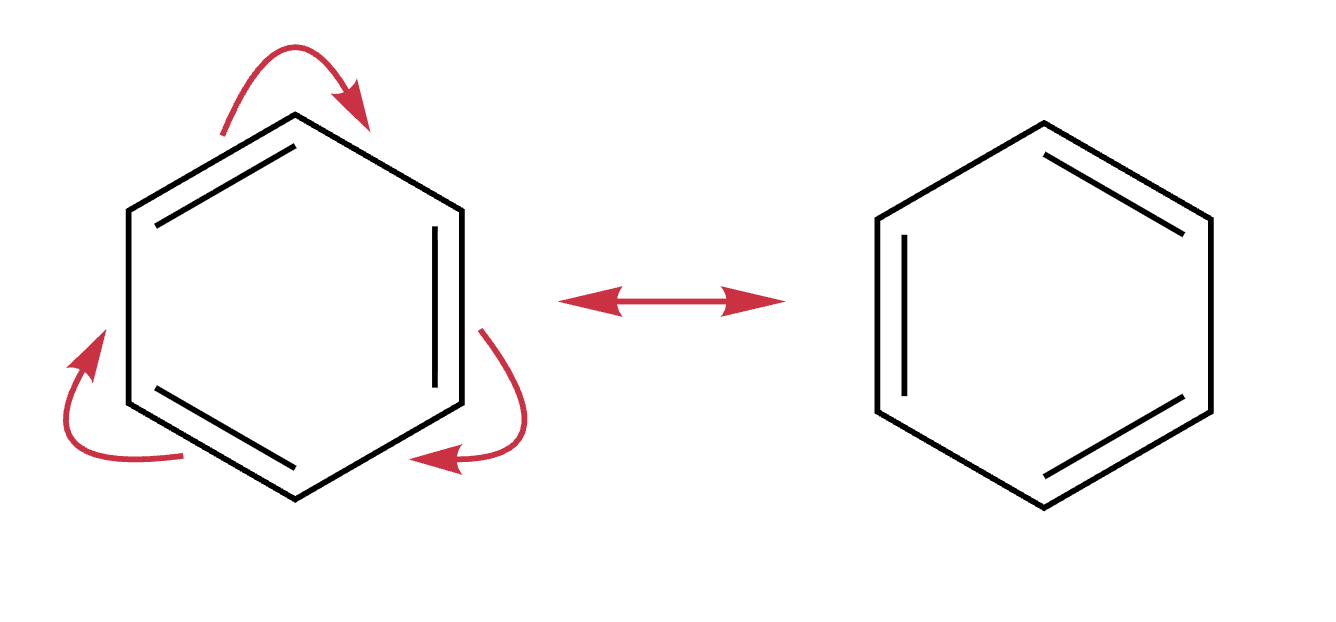
Two resonance structures of benzene, neither is the real molecule
Section 2
The Three Rules of Resonance
Every resonance structure you draw has to satisfy all three of these rules. Break even one and the structure is invalid, so I want all three living in the back of your head every time you push electrons.
Never exceed the octet for second-row elements.
Carbon, nitrogen, oxygen, and fluorine cannot have more than 8 electrons around them. Going below the octet is allowed, giving you carbocations and other reactive intermediates, but going above is never allowed for second-row elements.
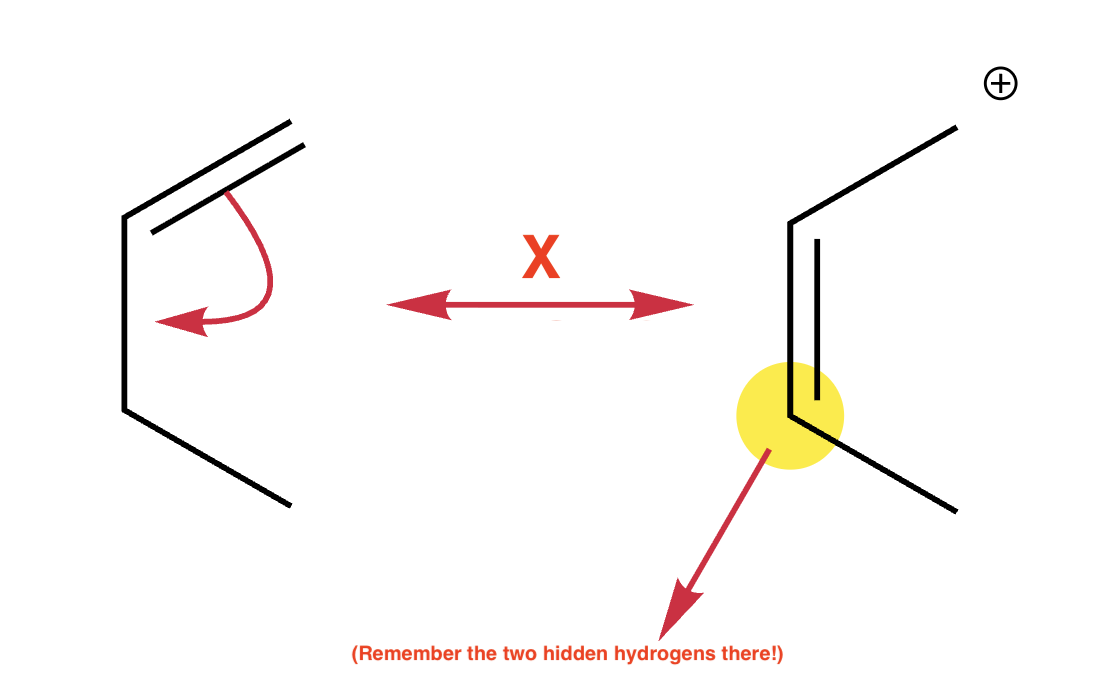
Invalid: carbon cannot have 5 bonds
Never break a single bond.
Curved arrows in resonance only move electrons from lone pairs or π bonds. You cannot move σ bond electrons. Breaking a single bond between two atoms changes the connectivity of the molecule, which means it is no longer a resonance structure and is another structure entirely.
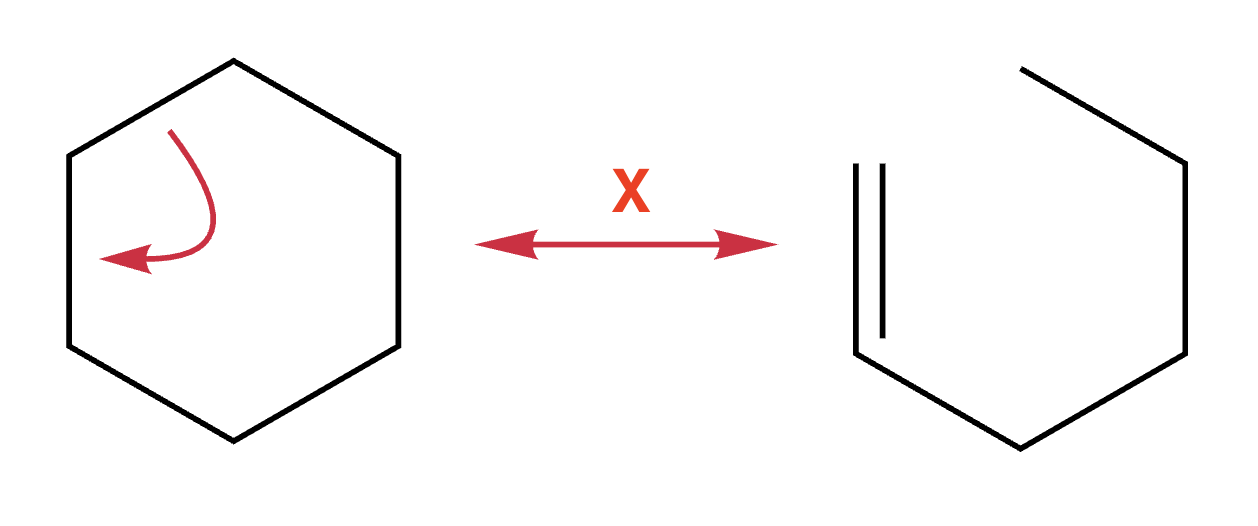
Invalid: single bond cannot be broken
The overall formal charge of the molecule must stay the same.
The total charge cannot change between structures. If your starting structure has an overall charge of +1, every valid resonance structure must also have an overall charge of +1.
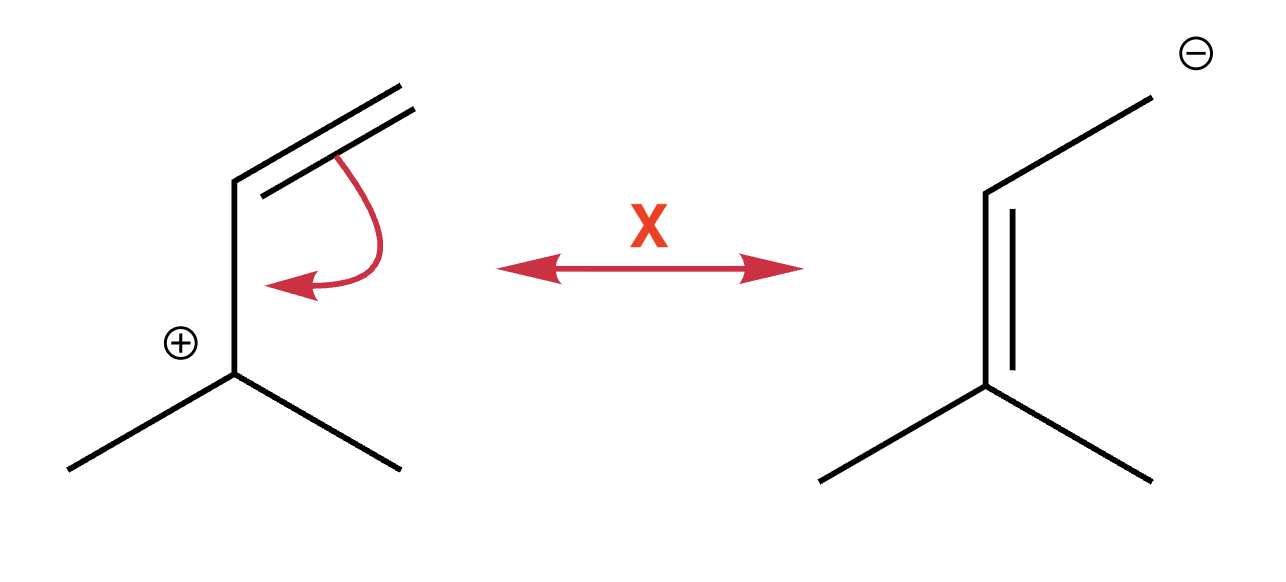
Invalid: total charge changed between structures
Memory tip
The way I keep all three straight: no broken octet, no broken σ bonds, no changed total charge. If any of those three happened, you drew something wrong.
Section 3
Drawing Curved Arrows
Curved arrows show which electrons moved and where they went. They are the notation for converting one resonance structure into another.
Tail on the electron source
The tail of a curved arrow always starts at the electrons that are moving, either a lone pair or a π bond.
Head points to the destination
The head of the arrow points to where the electrons are going. This is usually the next atom or the position of the new bond.
Only lone pairs and π bonds move
σ bonds never move in resonance. Only electrons in lone pairs and pi bonds are delocalized.
One arrow = one pair of electrons
Each curved arrow represents the movement of two electrons or one lone pair.
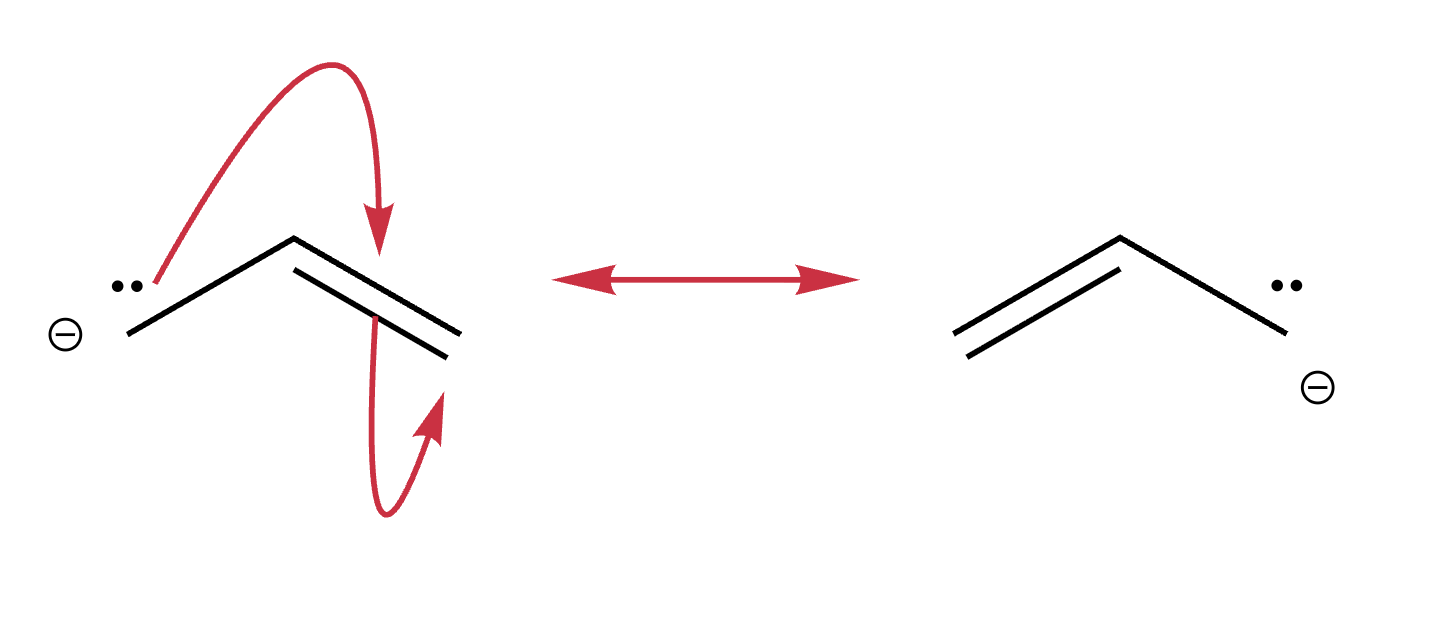
Lone pair moving into π system
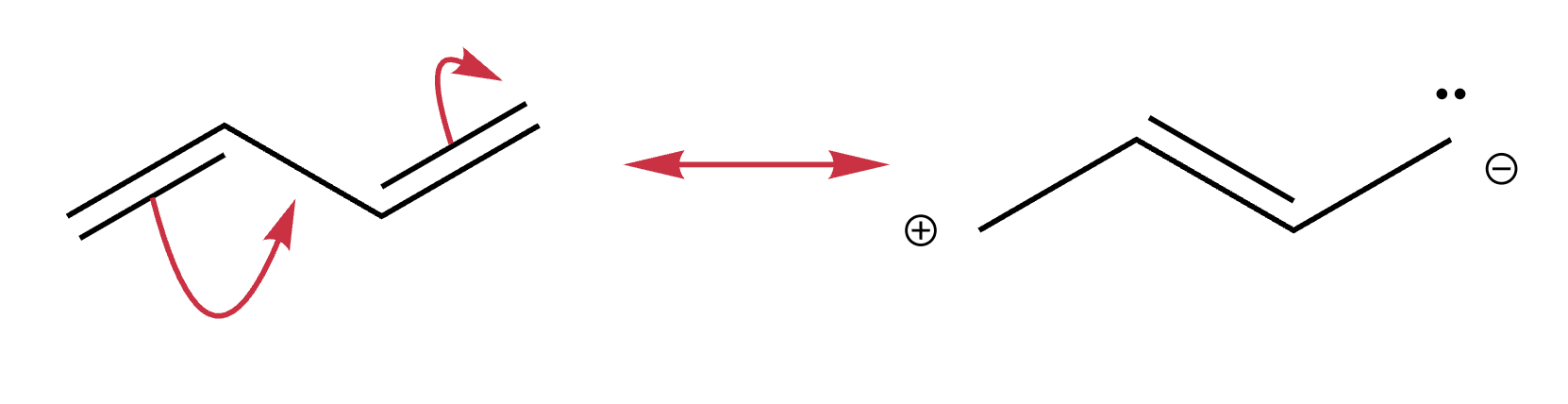
π bond electrons shifting position
Section 4
The Resonance Hybrid
The actual molecule is the resonance hybrid, which is the "weighted average" of all valid resonance contributors. More stable contributors contribute more to the hybrid.
For benzene, both Kekulé structures contribute equally. The result is a molecule where all six C–C bonds are identical in length, between single and double. No alternating bonds exist in the real molecule.
For the carboxylate group (COO⁻), both C–O bonds are equal in length and both oxygens share the negative charge equally. The hybrid is drawn with dashed lines to indicate partial bonds, or in the special case of benzene, a circle.
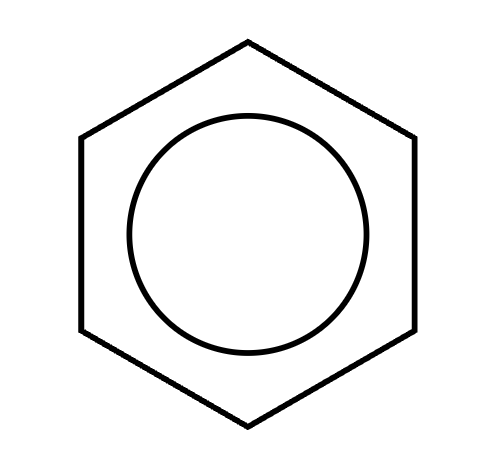
Resonance hybrid, dashed lines show delocalized electrons
Analogy
The analogy I always remember: a mule is a hybrid of a horse and a donkey. It's not a horse and a donkey switching back and forth, instead, it's one real animal. The resonance hybrid works the same way: a single real entity, not structures flipping between two drawings.
Section 5
Ranking Resonance Contributors by Stability
Not all resonance structures contribute equally. The more stable a contributor is, the more it looks like the real molecule, so it pulls more weight in the hybrid. Here are the rules I rank them by.
Complete Octet.
A complete octet is always more stable than an incomplete octet, even if generating complete octets adds a charge.
Negative charge on more electronegative atom. Positive charge on less electronegative atom (unless it is carbon).
A negative charge on oxygen is more stable than on nitrogen or carbon. A positive charge on nitrogen is more stable than on oxygen. But a positive carbon is less stable than on oxygen or nitrogen. Why? Because a carbocation has an incomplete octet.
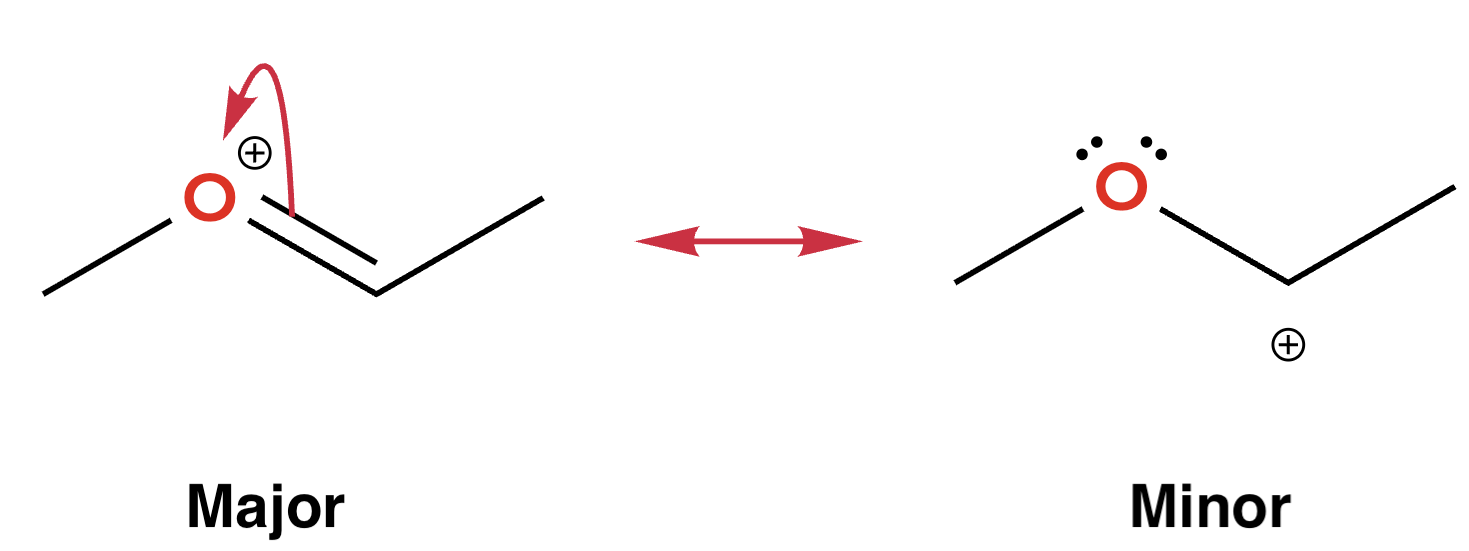
Complete octet usually gives the more stable contributor
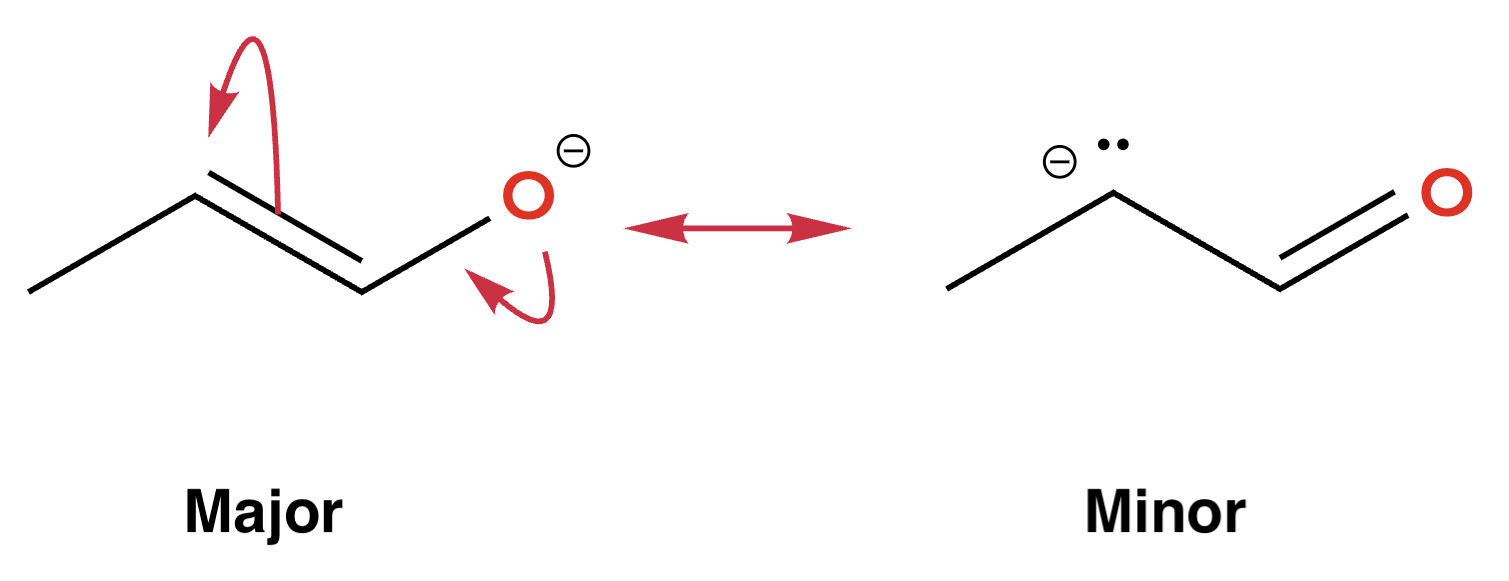
Negative charge on O more stable than on C
Section 6
Common Resonance Patterns
These patterns show up constantly throughout organic chemistry, so I want you recognizing them on sight rather than rederiving them every time.
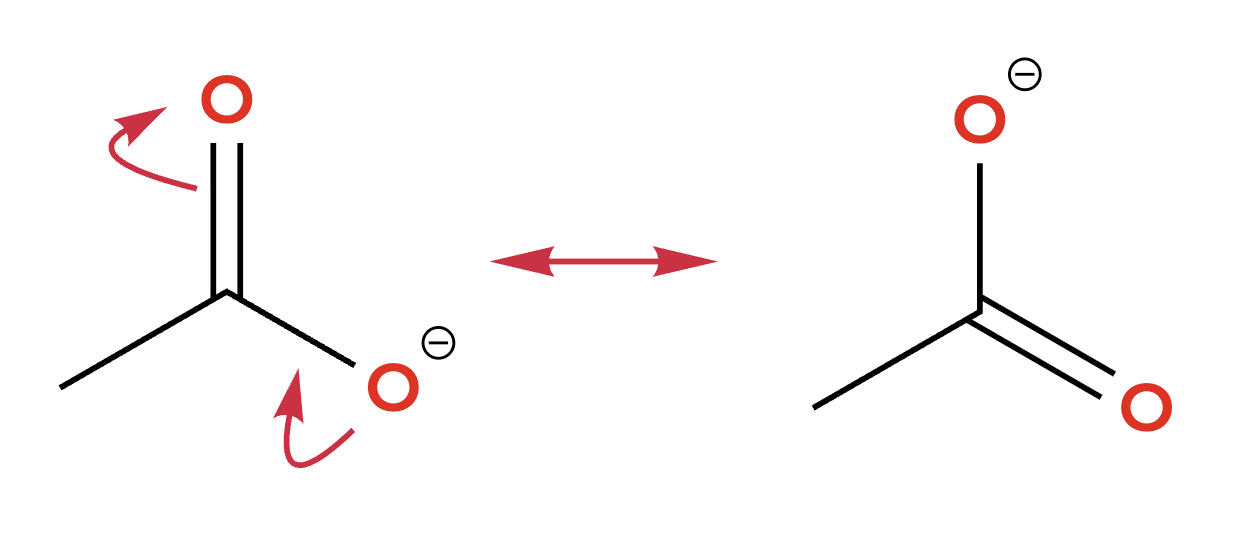
Carboxylate (COO⁻)
The negative charge is delocalized equally across both oxygens. Neither C–O bond is purely single or double, both are equivalent. To put it simply, if a single and double bond have bond orders of 1 and 2 respectively, then the hybrid in this case has a bond order of 1.5.
Benzene
Six π electrons are delocalized over all six carbons. The two Kekulé structures are equivalent contributors, neither is more stable.
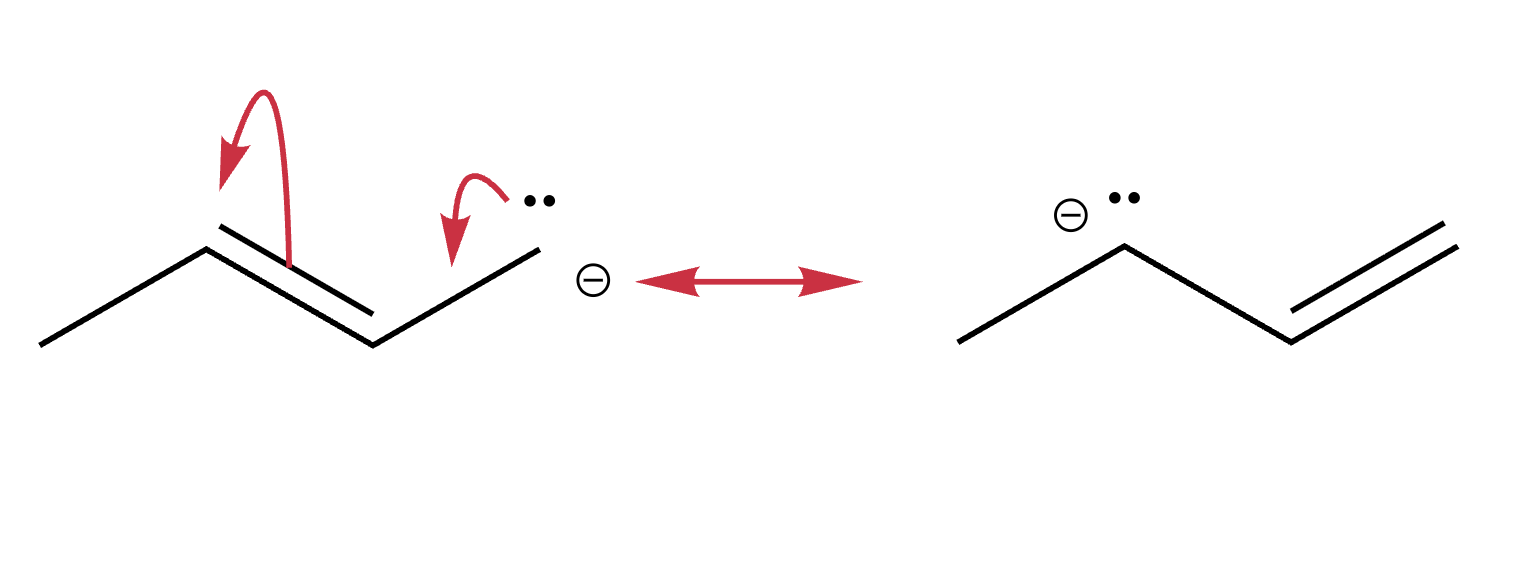
Allyl anion
A lone pair on the terminal carbon delocalizes into the adjacent π bond, spreading the negative charge across C1 and C3.
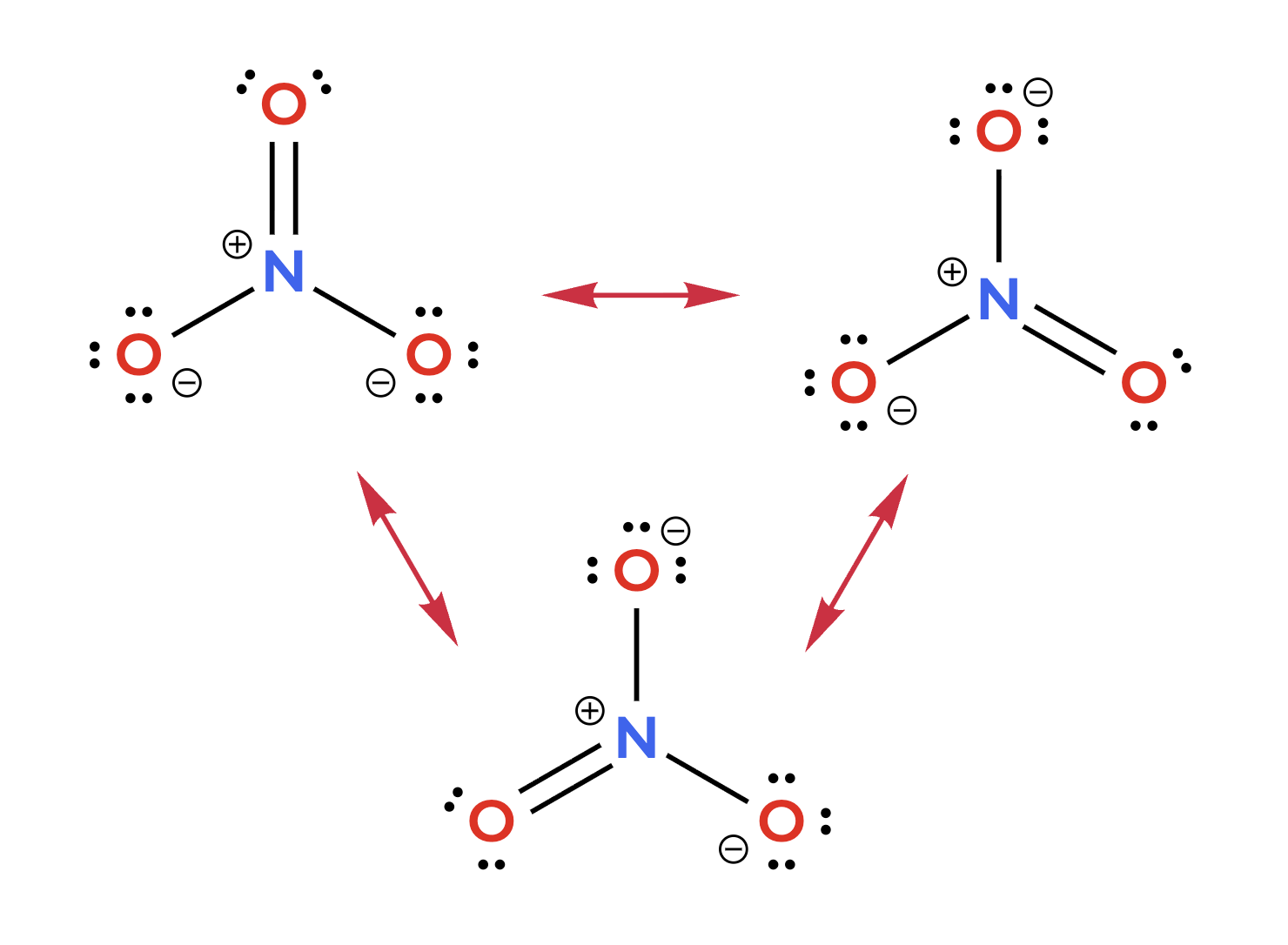
Nitrate (NO₃⁻)
Three equivalent resonance structures. The −1 charge is spread equally across all three oxygens. All N–O bonds are equivalent.
Section 7
Common Mistakes
Practice Set
Try each question before opening the answer.
1. Can you move a σ bond electron pair to draw a resonance structure?
Answer: No. Only lone pairs and π bonds move in resonance. Moving a σ bond changes the connectivity and produces a different molecule, not a resonance structure.
2. A resonance structure shows carbon with 5 bonds. Is this valid?
Answer: No. Carbon is a second-row element and cannot exceed 8 electrons (4 bonds). This violates Rule 1.
3. A starting structure has an overall charge of −2. One proposed resonance structure has an overall charge of −1. Is this valid?
Answer: No. Rule 3 states the overall charge must remain the same across all resonance structures. −2 must stay −2.
4. Which is a more stable resonance contributor: one with a negative charge on oxygen, or one with a negative charge on carbon?
Answer: Negative charge on oxygen. Oxygen is more electronegative and stabilizes negative charge better than carbon does.
5. In benzene, are the two resonance structures the actual structures of benzene?
Answer: No. Neither Kekulé structure represents the actual molecule. Benzene is the resonance hybrid, a blend of both structures with equal C–C bond lengths between single and double.
6. What does a curved arrow represent in a resonance structure?
Answer: The movement of two electrons (one pair). The tail starts at the electron source (lone pair or π bond) and the head points to the destination.
7. Can a resonance structure have a carbon with only 6 electrons (below octet)?
Answer: Yes. Going below the octet is allowed for second-row elements. A carbocation has only 6 electrons around carbon and is a valid structure.
8. In a carboxylate (COO⁻), are the two C–O bonds different lengths?
Answer: No. The negative charge is delocalized equally across both oxygens, so both C–O bonds are the same length, intermediate between single and double.
Ready for a bigger set?
Work through the full Resonance practice page: curved arrow drawing, resonance structure validity, stability ranking, and hybrid identification.
Do Resonance PracticeLesson Summary
Resonance describes electron delocalization across connected π systems. The three rules, no octet violation for second-row elements, no broken single bonds, and no change in total charge, define what makes a resonance structure valid. Curved arrows show how electrons move. The actual molecule is the resonance hybrid, and more stable contributors resemble it more closely. Get the resonance patterns like carboxylate, benzene, allyl, and nitrate into your reflexes, because they will serve you through the entire course.