Resonance · Practice Workbook
Resonance Practice Questions
Fifteen questions across three skills: drawing resonance structures, evaluating stability and validity, and spotting curved arrow mistakes. Try each one before checking the answer.
Part A
Draw the Resonance Structure
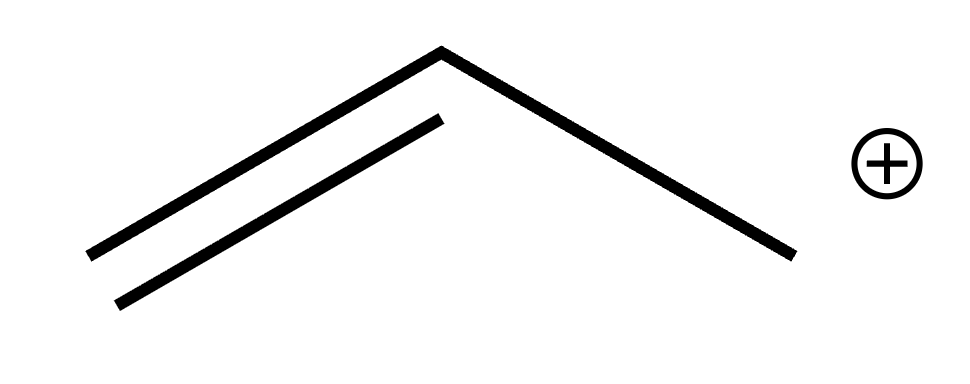
Draw the second resonance structure for this allyl cation. Use a curved arrow to show the electron movement.
Show answer
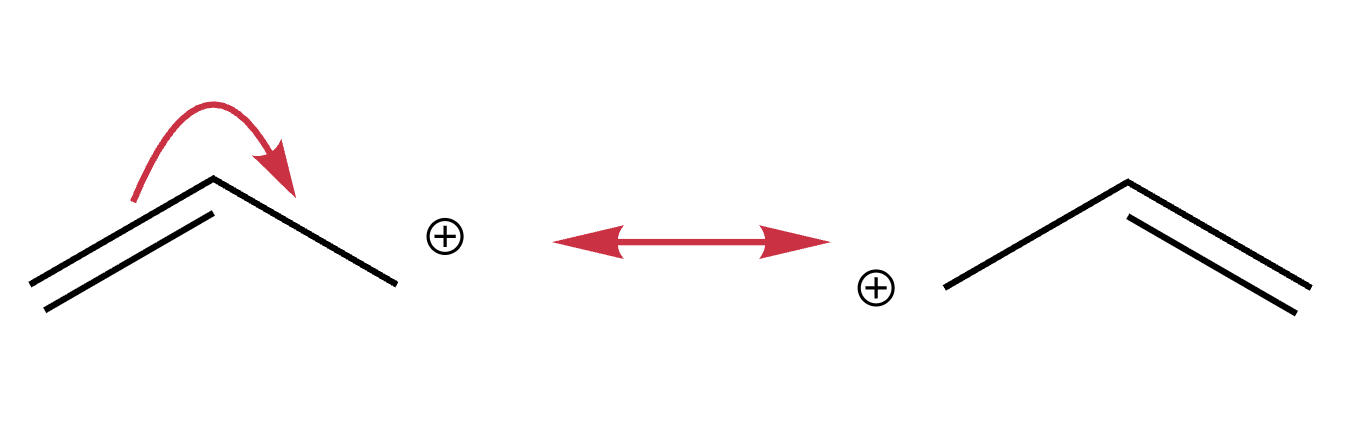
The π bond between C1 and C2 shifts toward C3, moving the positive charge. The curved arrow tail starts at the C1=C2 π bond and the head points to C2-C3, forming a new π bond there.
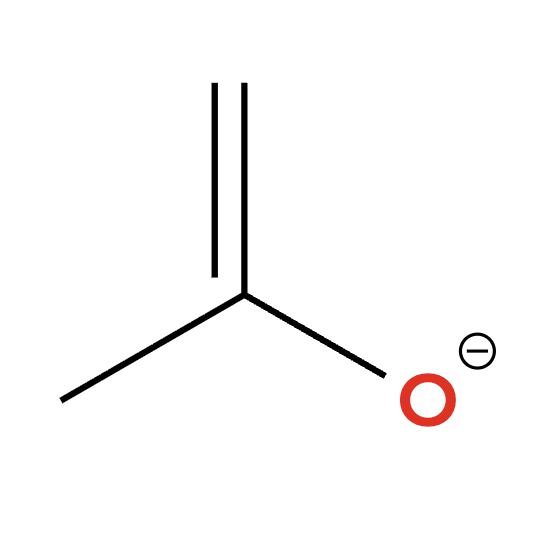
This enolate has a negative charge on oxygen, adjacent to a C=C. Draw the resonance structure that moves the negative charge onto carbon.
Show answer
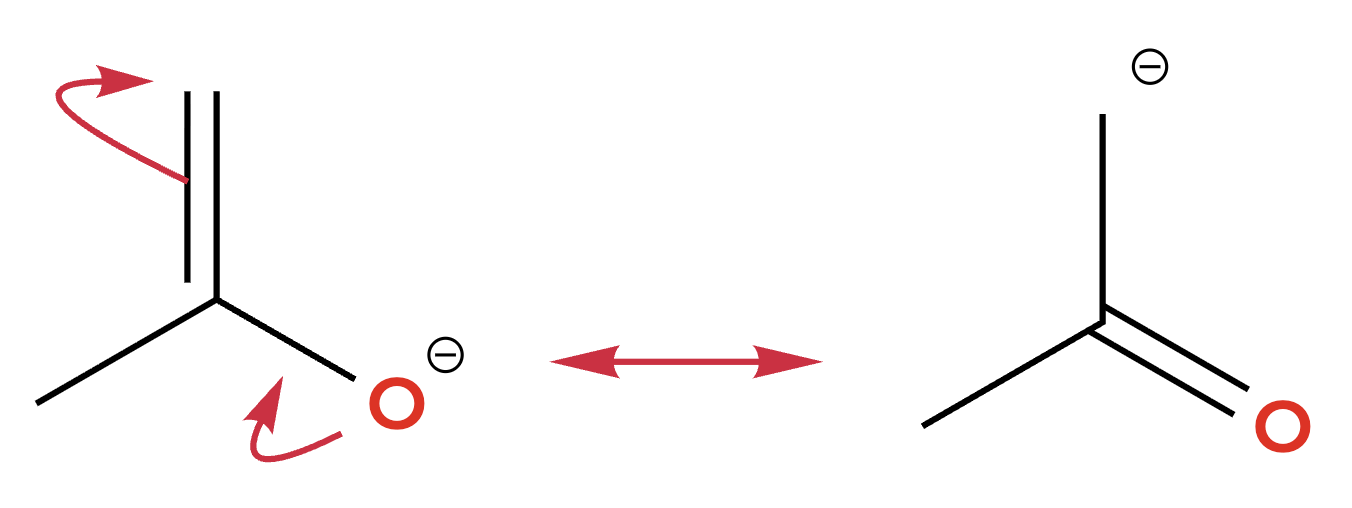
A lone pair on the negatively charged oxygen pushes in to form a C=O π bond, while the original C=C π bond shifts outward, placing the negative charge on the terminal carbon.
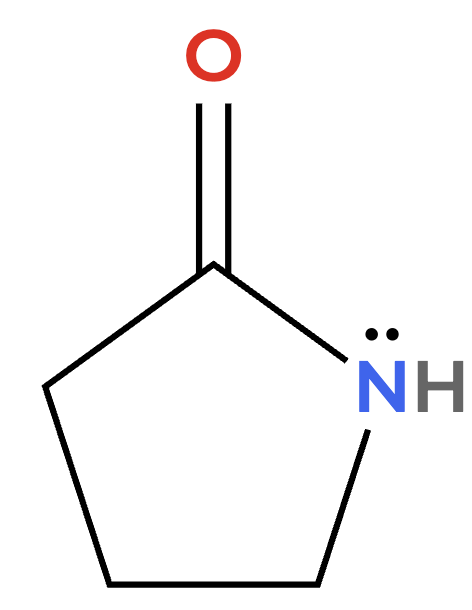
An amide has a lone pair on nitrogen adjacent to a C=O. Draw the resonance structure showing this lone pair delocalizing into the carbonyl.
Show answer
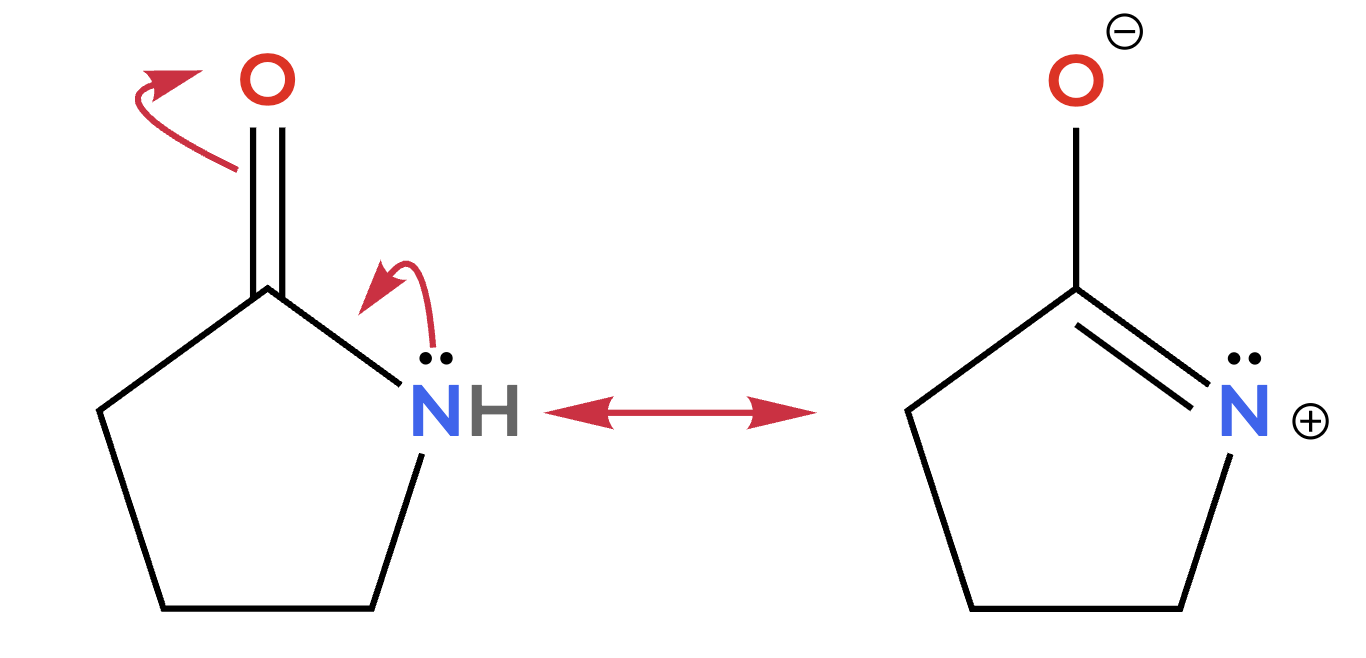
The lone pair on nitrogen pushes into the N-C bond, forming N=C. The original C=O π bond shifts onto oxygen alone, giving oxygen a full negative charge and nitrogen a positive charge. This is why amide nitrogen is a poor base — its lone pair is tied up in resonance.
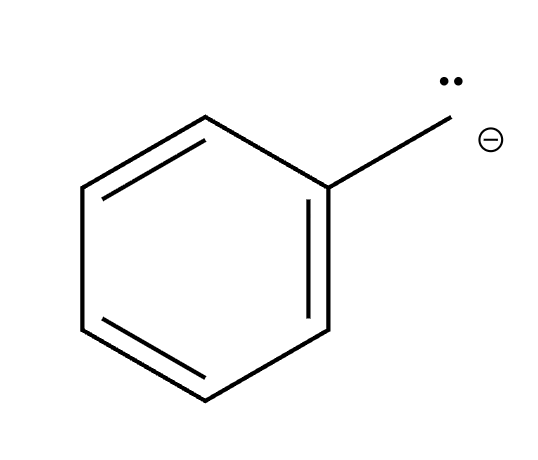
A CH2- group is attached directly to a benzene ring. Draw one resonance structure showing the negative charge delocalizing into the ring.
Show answer
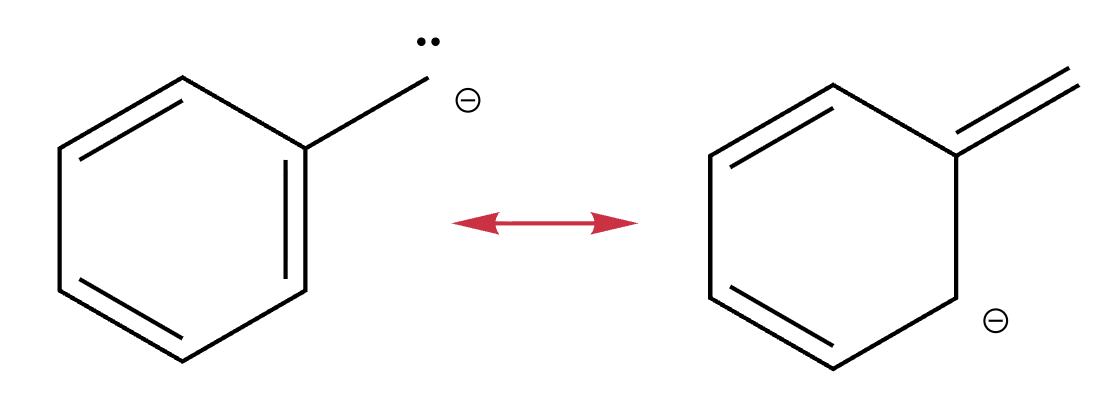
The lone pair on the CH2- carbon pushes into the adjacent ring π bond, shifting the double bonds around the ring and placing the negative charge on a ring carbon (notice the hidden lone pair on the negative ring carbon). This delocalization is why benzylic anions are very stable.
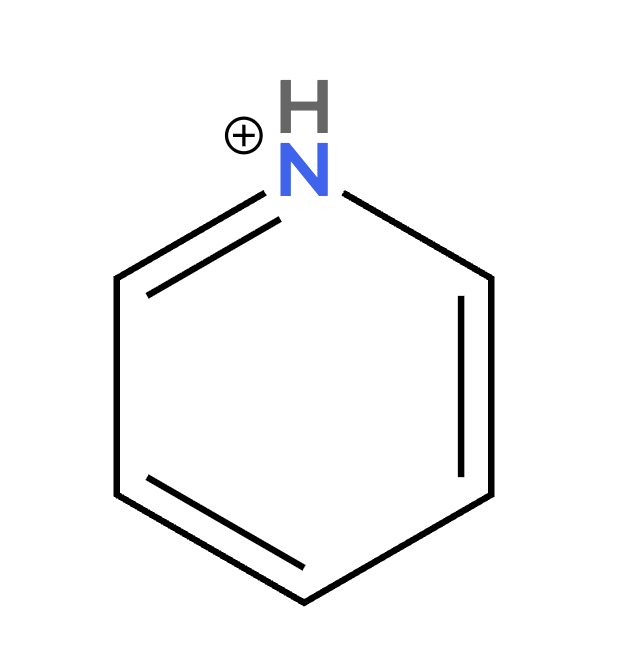
Pyridine has been protonated on its ring nitrogen lone pair is now used in a bond to H, giving N a positive charge. Draw a resonance structure that delocalizes this positive charge into the ring.
Show answer
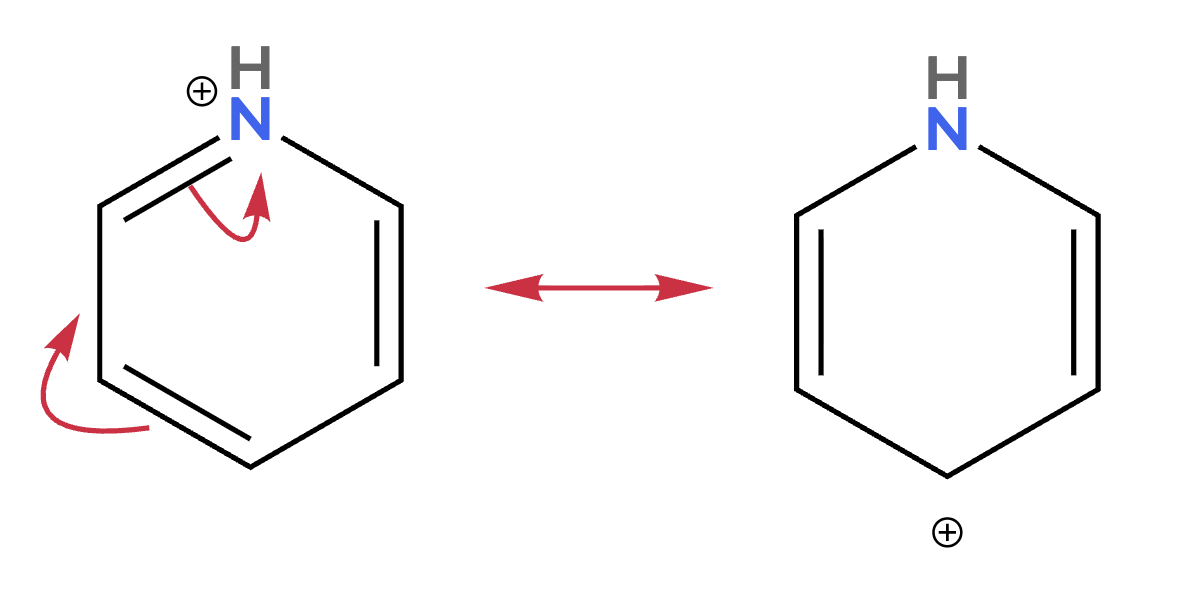
A ring π bond adjacent to nitrogen shifts toward nitrogen, but since nitrogen's lone pair is already used in the N-H bond, this instead moves the positive character onto an adjacent ring carbon. This shows why protonated pyridine is much less stable than protonated aniline's nitrogen lone pair.
Part B
Stability, Validity, and the Hybrid
Three resonance contributors of an allylic system are shown. Rank them from most to least stable.

Show answer
I>II>III.
When ranking contributors, prioritize: full octets, fewer formal charges, or charges on more stabilizing atoms. In this case, all structures do not possess full octets, thus we are looking at charge, specifically a (+) charge. Recall, carbon is an electron DONATING group, unlike Fluorine for example, which is an electron WITHDRAWING group. Since a (+) charge LACKS negativity, being surrounded by more electron donating groups, carbon in this case, makes the tertiary carbocation is the most stable. Hence the ranking for carbocations is ALWAYS 3° > 2° > 1°.
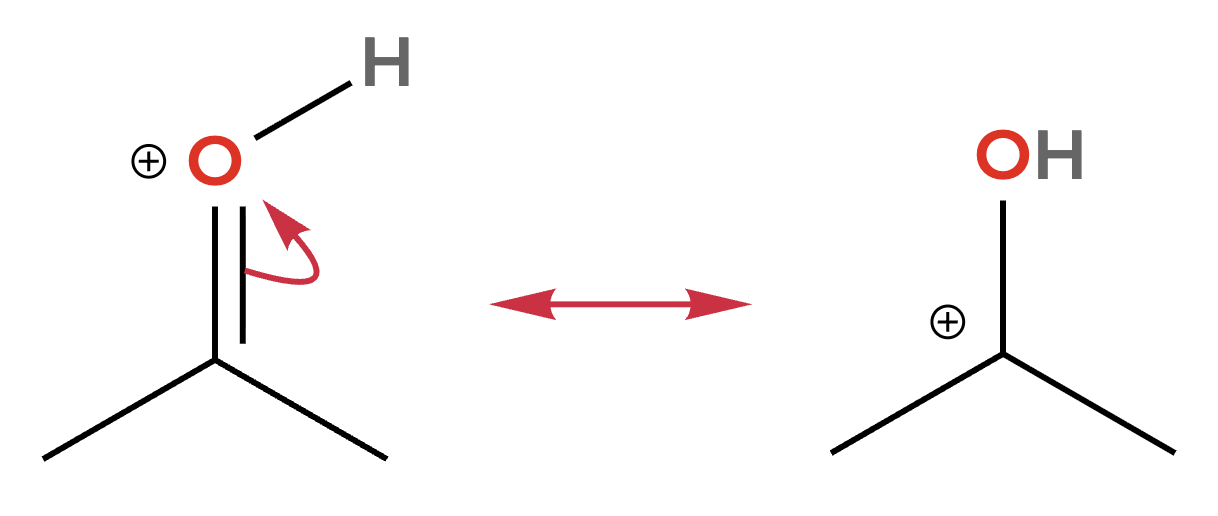
A protonated carbonyl shows two resonance contributors. One has positive charge on oxygen, the other on carbon. Which contributes more to the hybrid?
Show answer
The contributor with positive charge on oxygen contributes more (left structure), because oxygen already has a complete octet and a full set of bonds in that structure, while the carbocation version has an incomplete octet.
Even though we usually prefer negative charge on the more electronegative atom, for positive charges, the structure with more complete octets generally wins, which here happens to the left structure.
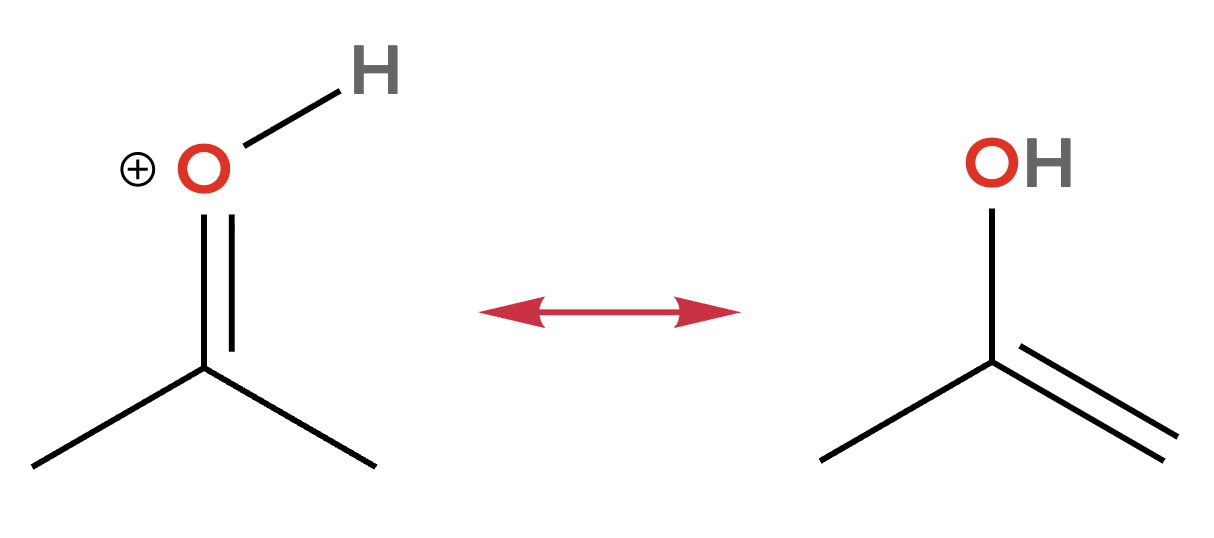
A student draws a resonance structure for a given starting material. Is the resulting structure a valid resonance structure?
Show answer
Invalid. The atoms have moved position relative to each other, which means this is a different molecule (a tautomer or isomer), not a resonance structure. Resonance structures must have identical atom connectivity (pay close attention to the hydrogens).
Always check: did any atom change which atoms it is bonded to? If yes, it is not resonance. Only electron position can change.
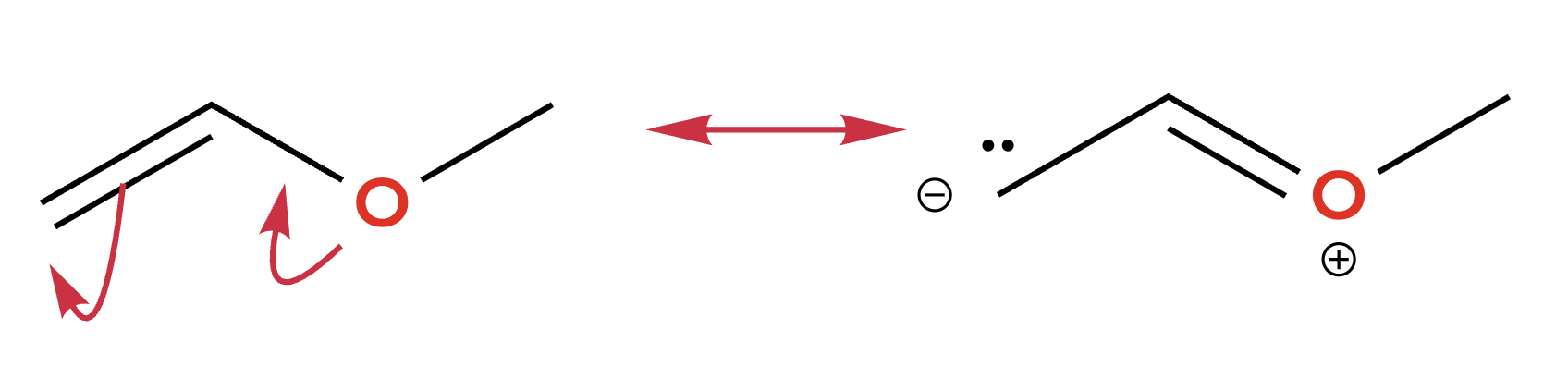
A molecule has two resonance contributors with a C-O single bond in one and a C=O double bond in the other. What does this predict about the actual C-O bond length in the real molecule?
Show answer
The actual bond length will be intermediate between a single and double bond length — shorter than a typical single bond but longer than a typical double bond.
The real molecule is the resonance hybrid, an average of all contributors. Bond lengths and charges are blended, not switching back and forth.
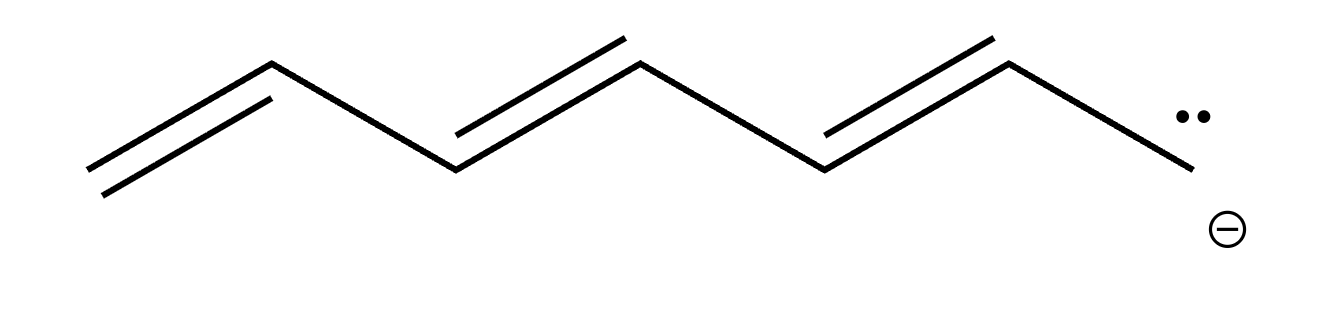
How many significant resonance contributors does this anion have, not counting structures with separated unlike charges far from the negative charge already shown?
Show answer
Four significant contributors — the negative charge can sit on any of the four positions connected by the continuous conjugated π system.
Trace the conjugation path. Every atom directly connected through alternating single and multiple bonds (or adjacent to the charge through a π system) is a potential site for the charge to land in a resonance structure.
Part C
Spot the Curved Arrow Error
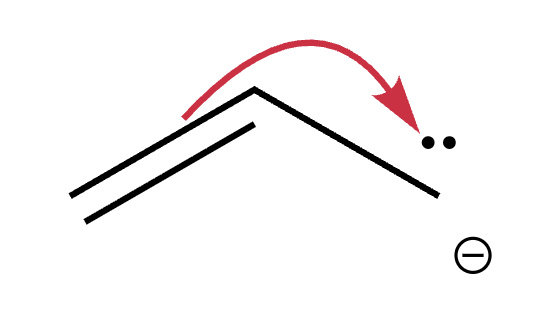
Find the error in this curved arrow.
Show explanation
The arrow is drawn backward. The tail must start at the electron source (the lone pair or π bond) and the head must point to where the electrons are going.
A simple way to check: ask where the electrons currently are. That is always the tail. Where do they end up? That is always the head.
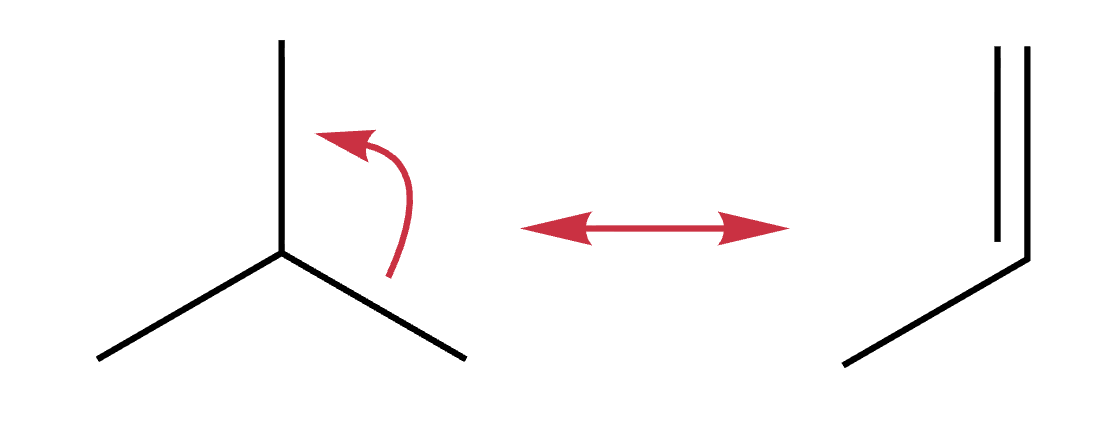
Find the error in this curved arrow.
Show explanation
The arrow starts at a σ bond. Only lone pairs and π bonds can move in resonance. σ bonds (like C-H or C-C single bonds not part of a π system) never move.
This is Rule 2 from Lesson 3: never break a single bond. If you see an arrow originating from a single bond between two atoms that are not part of an adjacent π system, that is the error.
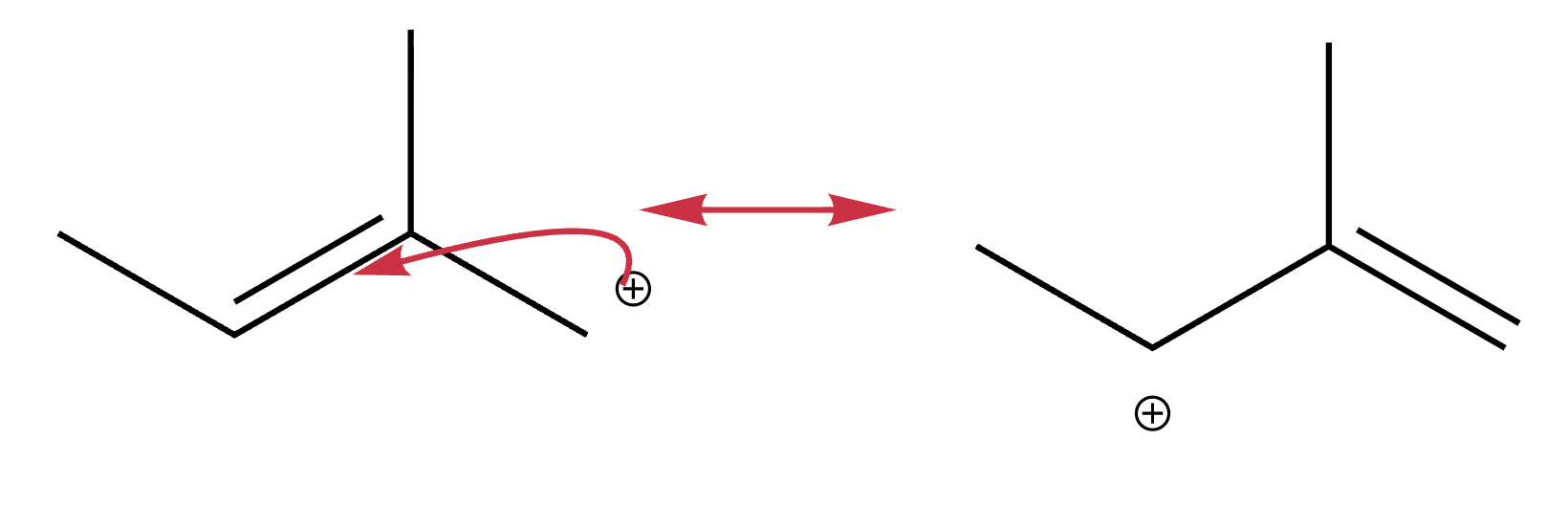
Find the error in this curved arrow.
Show explanation
The tail is placed on an atom or position that does not actually have available electrons to move, but no lone pair and no π bond touches that point.
Before drawing any arrow, identify exactly where the moving electrons currently sit. If the tail doesn't touch an actual lone pair or π bond, the arrow has no electron source and is invalid.
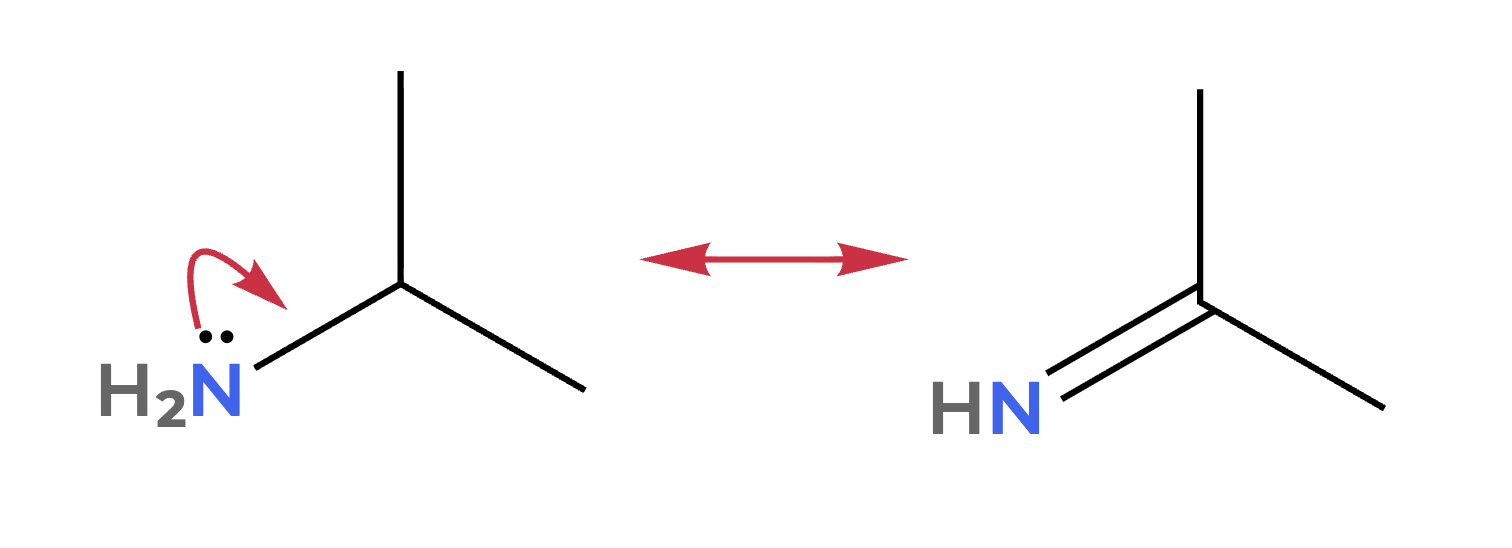
Find the error in this curved arrow and the resonance structure it produces.
Show explanation
The arrow pushes electrons into a carbon that already has four bonds. The resulting structure would give carbon five bonds, violating the octet rule for second-row elements.
Before drawing an arrow, check the destination atom. If it is carbon, nitrogen, oxygen, or fluorine, count its existing bonds and lone pairs first. Pushing more electrons in when it's already at capacity creates an invalid structure.
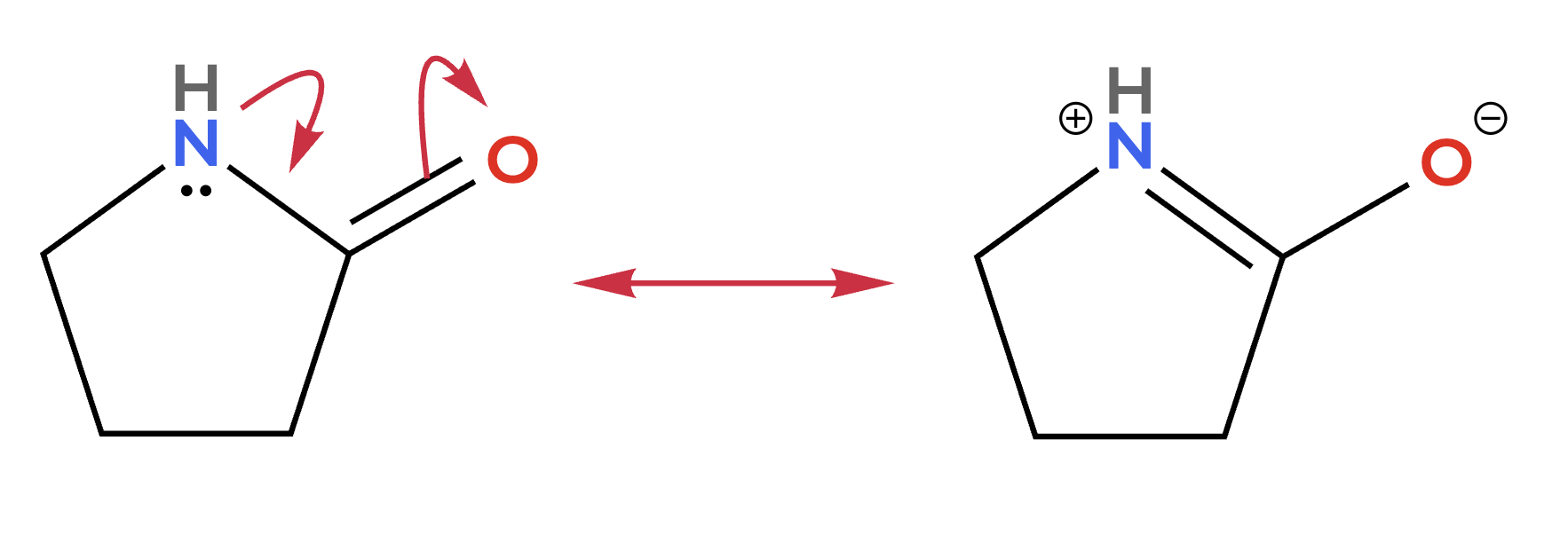
A curved arrow is drawn correctly, but the resulting resonance structure is missing something. What is the error?
Show explanation
After the electrons moved, the formal charge was not updated on the new structure. The overall charge of the left structure is 0, while the resonance structure has an overall charge of -1.
Every time you draw a curved arrow, immediately recheck formal charge on every atom involved in the arrow, both the source and the destination. Forgetting to update charges is one of the most common resonance mistakes.
Summary checkpoint
Ready to move on?
You are ready for Acids and Bases when you can draw a resonance structure from scratch, rank contributors by stability, and catch a curved arrow mistake without needing to be told what's wrong.
Go to Acids and Bases