Organic Chemistry I · Lesson 01
Bond-Line Drawings
Organic chemistry is written in drawings. Before you can understand mechanisms, reactions, or synthesis, you need to read those drawings correctly. Bond-line drawings are the standard way organic chemists show molecules quickly and clearly.
Learning Goals
- Explain why organic chemists use bond-line drawings.
- Count carbons from endpoints, corners, and branches.
- Recognize double bonds and triple bonds.
- Determine hidden hydrogens on carbon.
- Convert expanded structures into bond-line drawings.
- Compare reactants and products to describe what changed.
Section 1
Why Organic Chemists Use Bond-Line Drawings
Organic molecules often contain many carbon and hydrogen atoms. If every carbon and every hydrogen were written out, structures would become slow to draw and harder to compare. Bond-line drawings remove clutter to keep the important structure visible.
Main idea
Here is what I want you to remember: bond-line drawings are NOT missing any information. The carbons and most carbon-bound hydrogens are still there, and you must infer them.
Section 2
The Basic Rules
The carbon skeleton is typically the longest chain, or ring of carbon atoms that forms the backbone of the molecule. Functional groups such as OH, Br, Cl, N, or O are shown because they strongly affect the molecule's properties and reactions.
Section 3
How to Count Carbons
Count every endpoint and every corner as a carbon atom unless a different atom is written there. Branches count too. Rings follow the same rule. Each ring corner is a carbon unless labeled otherwise.
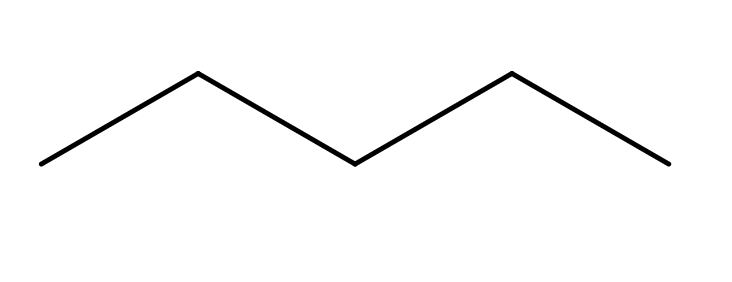
Straight-chain example
5 carbons
There are two endpoints and three corners. Endpoints count too.
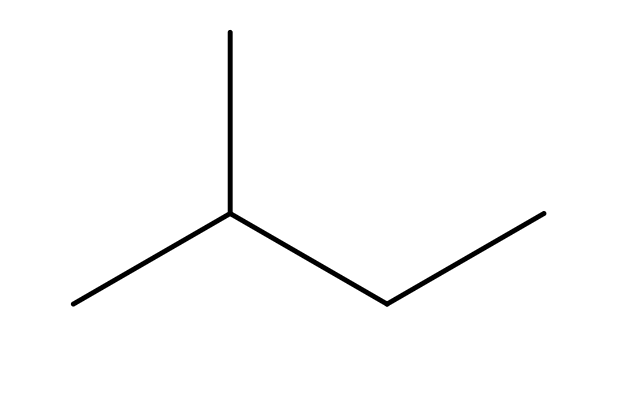
Branched-chain example
5 carbons
The branch endpoint is also a carbon. Branches count the same way as the main chain.
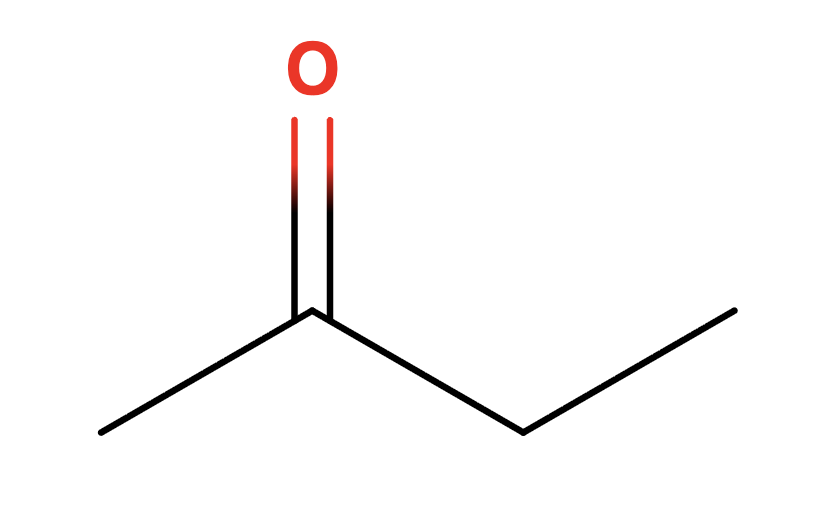
Heteroatom example
4 carbons
Oxygen is written explicitly, so it is not counted as carbon.
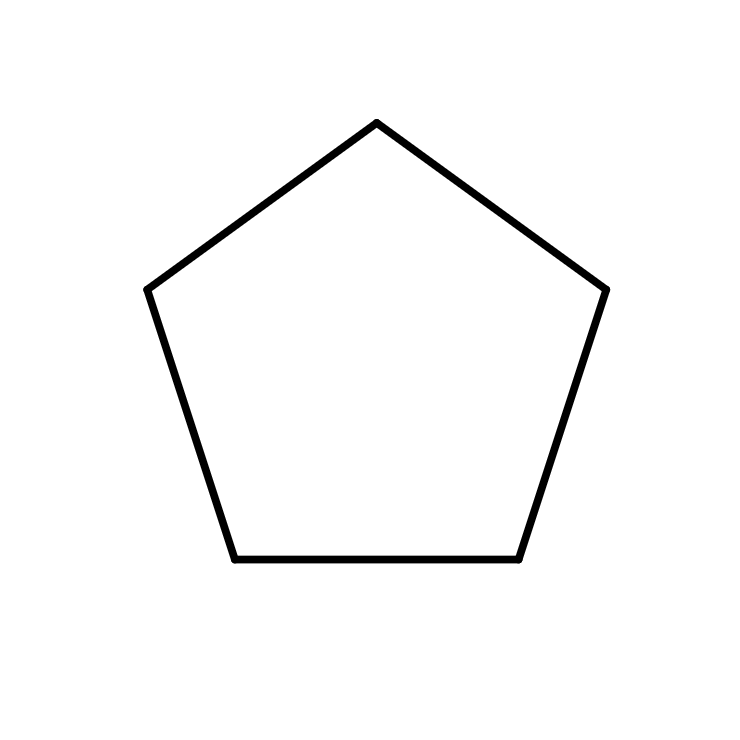
Ring example
5 carbons
Each unlabeled corner of the ring is a carbon atom.
Section 4
Basic Structures: Methane to Decane
These are the first ten straight-chain alkanes. Learn their names, carbon counts, and how their bond-line shapes grow as the chain gets longer. For alkanes, the general formula is CₙH₂ₙ₊₂.
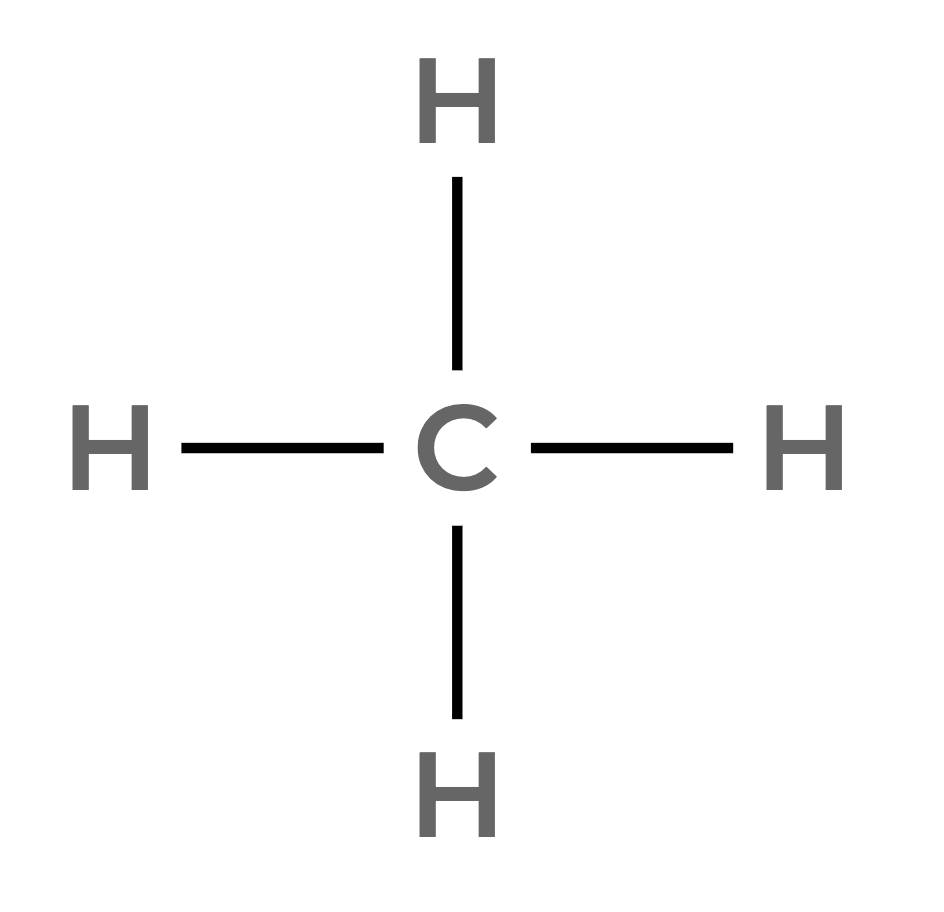
Methane · CH₄
Methane
CH₄
Methane has one carbon, so it is usually shown as CH₄ rather than as a bond-line skeleton.
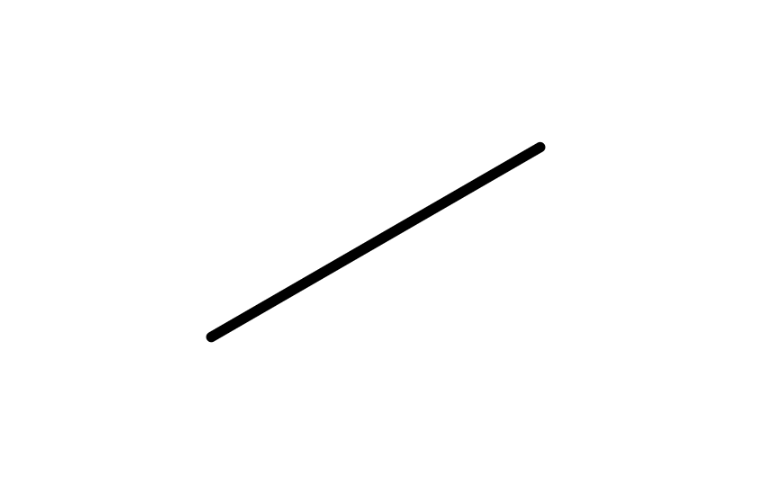
Ethane · C₂H₆
Ethane
C₂H₆
Two carbons joined by one single bond.
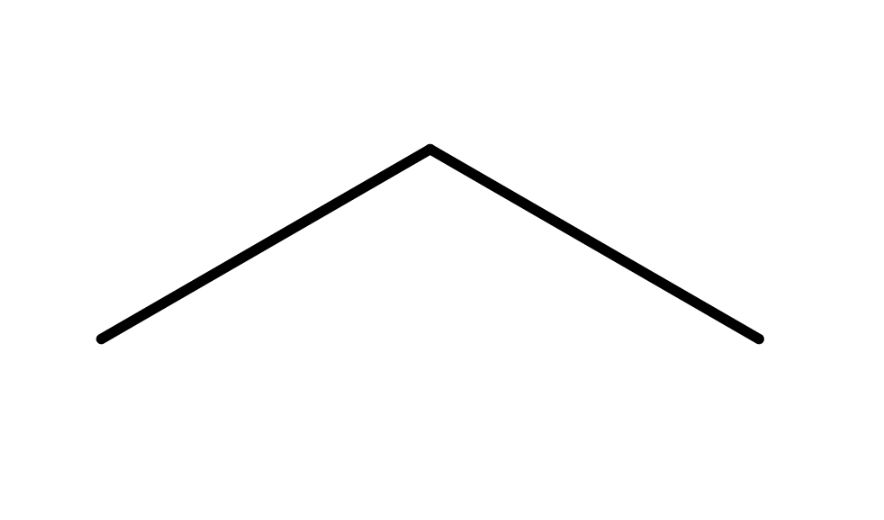
Propane · C₃H₈
Propane
C₃H₈
Three carbons. Two endpoints and one middle carbon.
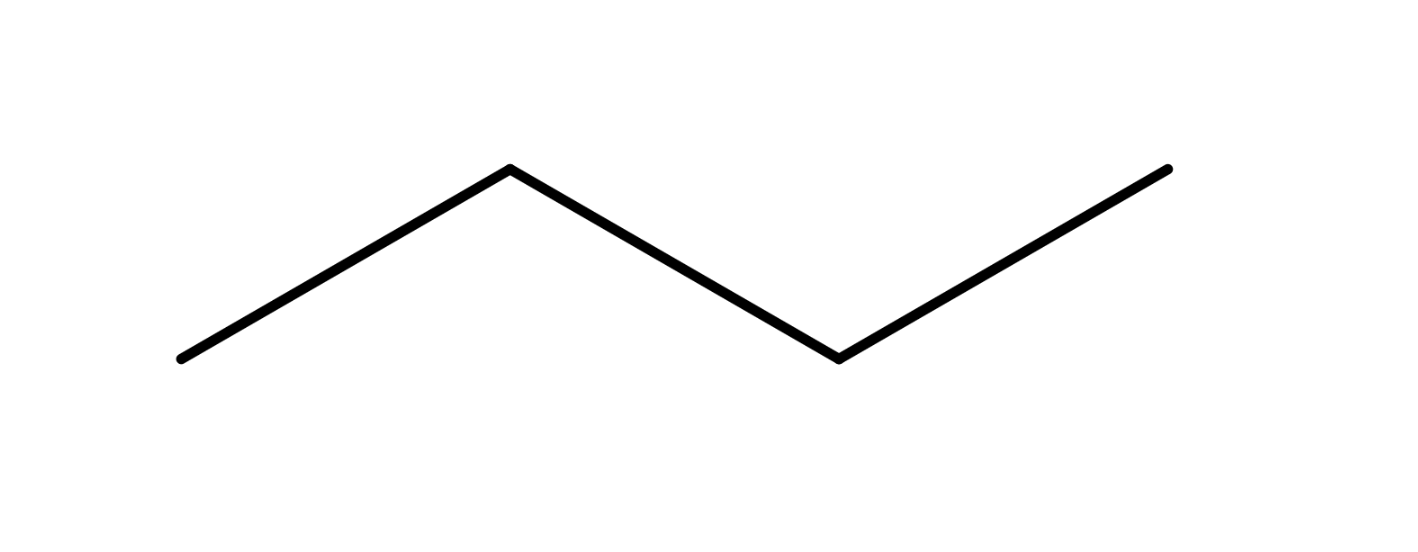
Butane · C₄H₁₀
Butane
C₄H₁₀
Four carbons in a simple zigzag chain.
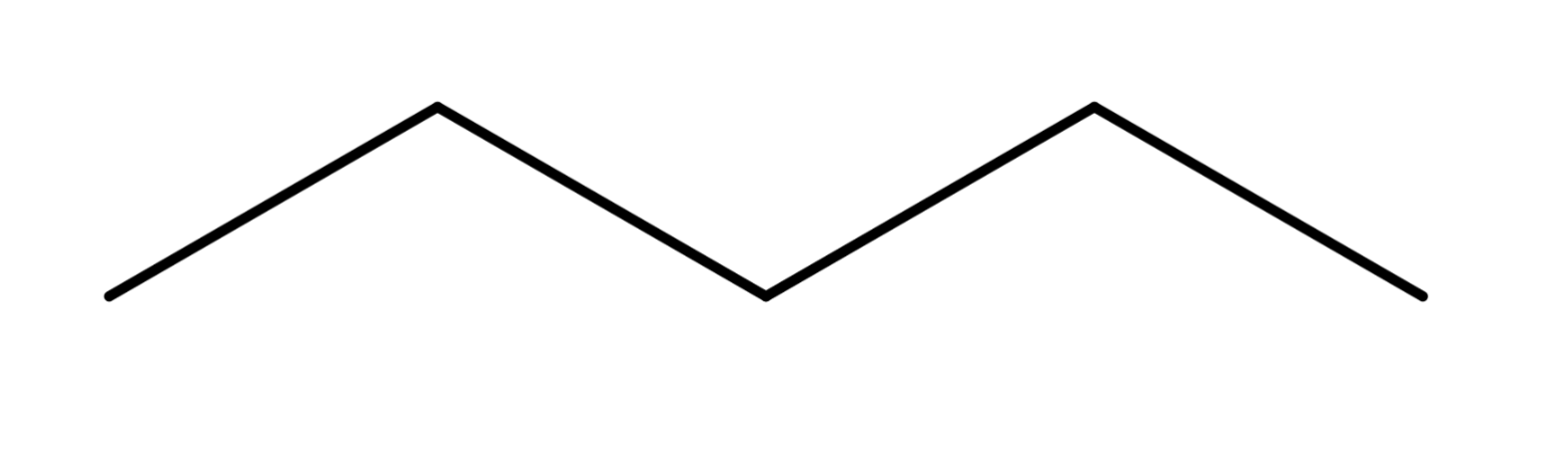
Pentane · C₅H₁₂
Pentane
C₅H₁₂
Five carbons. Two endpoints and three carbon positions in between.
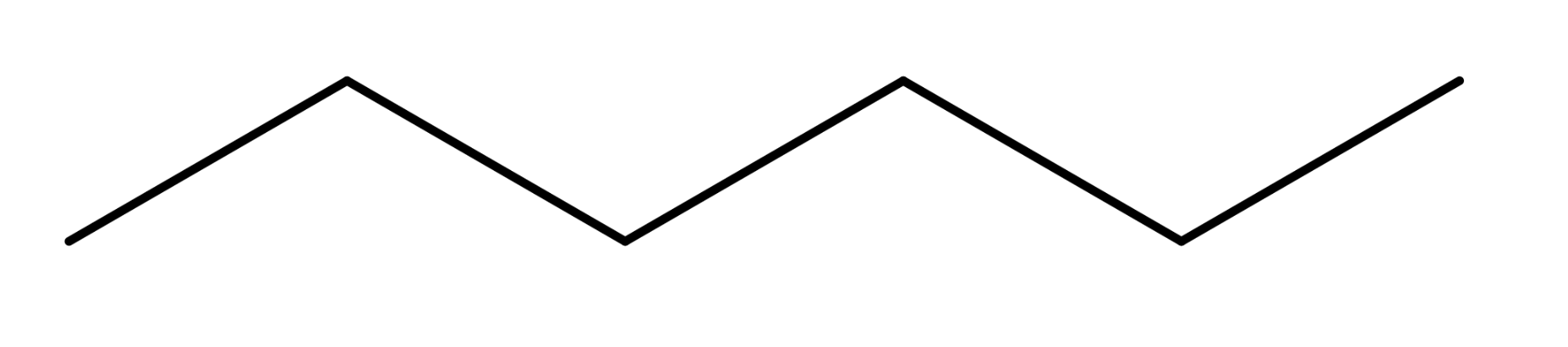
Hexane · C₆H₁₄
Hexane
C₆H₁₄
Six carbons in a straight-chain alkane.
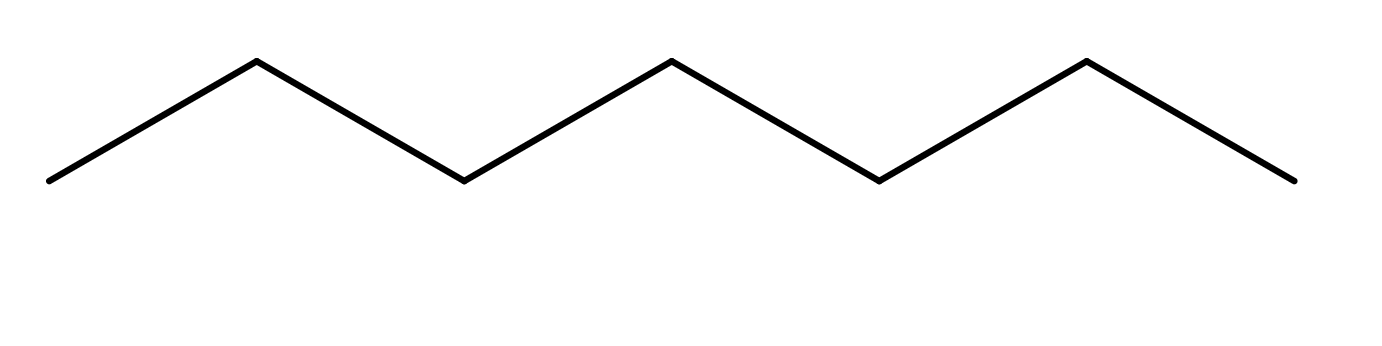
Heptane · C₇H₁₆
Heptane
C₇H₁₆
Seven carbons. Count every endpoint and every corner.
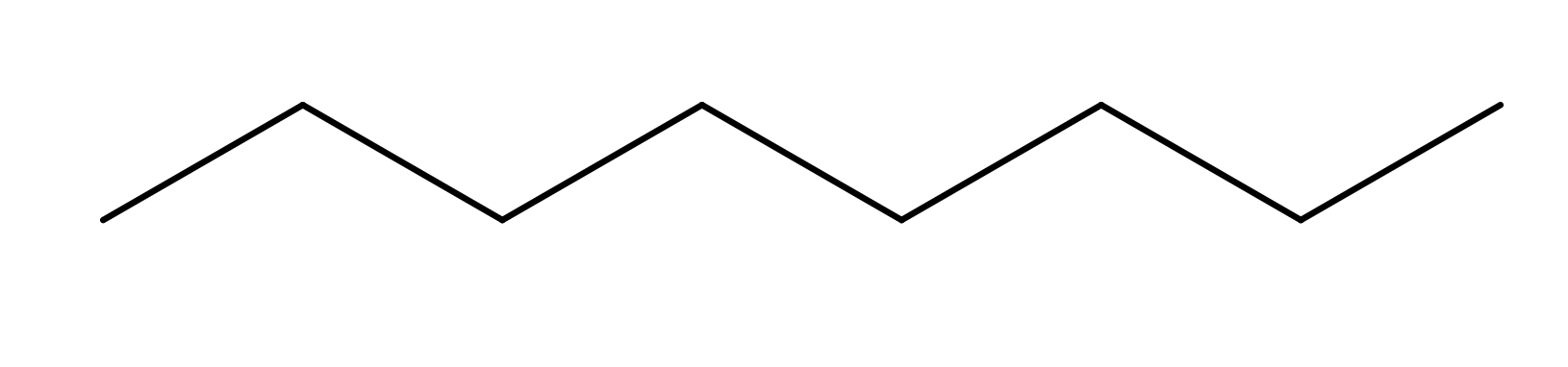
Octane · C₈H₁₈
Octane
C₈H₁₈
Eight carbons.

Nonane · C₉H₂₀
Nonane
C₉H₂₀
Nine carbons.

Decane · C₁₀H₂₂
Decane
C₁₀H₂₂
Ten carbons.
Pattern to notice
Here is the pattern I want you to catch: starting after methane, each new alkane adds one carbon to the chain and bumps the hydrogen count up by two. In bond-line form, that just means one more carbon position gets added to the zigzag.
Section 5
Endpoints, Corners, and Branches
The mistake I see most often here is counting only the bends and forgetting the ends. Both matter. A straight line has two carbons, one at each end. A zigzag chain has carbons at both ends and at every bend.
Rule
My one-line rule for counting: endpoint OR corner OR branch endpoint = carbon, unless another atom symbol is written.
Section 6
Double Bonds and Triple Bonds
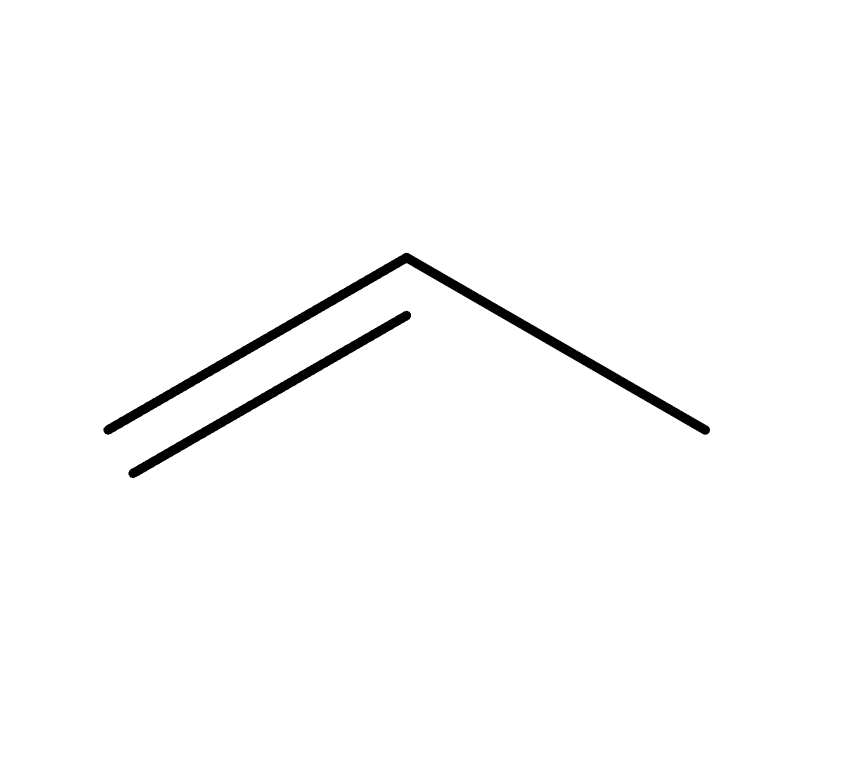
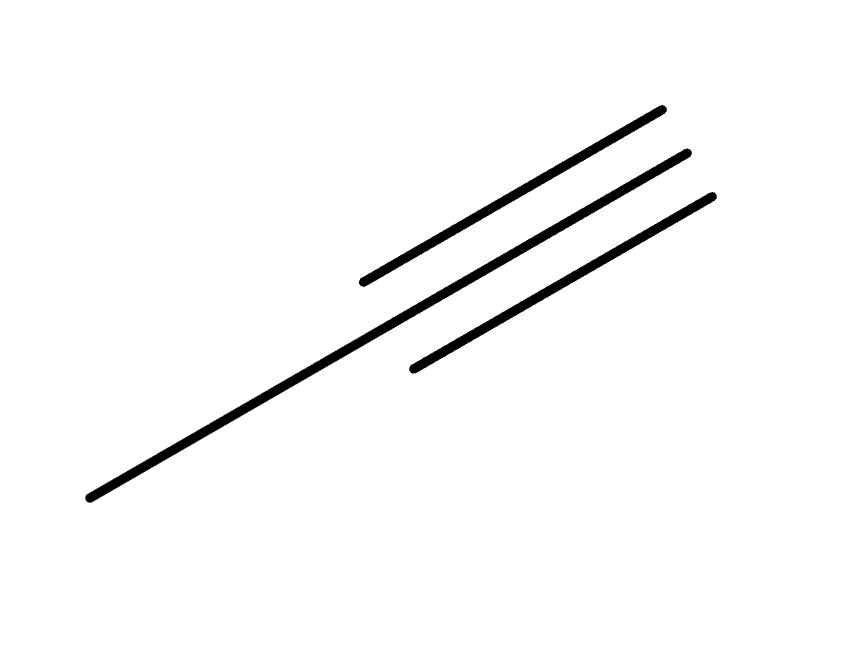
A double bond is drawn with two lines. A triple bond is drawn with three lines. Triple bonds are usually drawn straight because the atoms involved are linear.
Double bond example
Double bond
Two lines between the same two atoms mean a double bond.
Triple bond example
Triple bond
Three lines mean a triple bond. Notice how the triple-bond region is linear, NOT bent into an angle.
Section 7
How to Count Hidden Hydrogens
Hydrogens attached to carbon are usually not drawn. To find them, count how many visible bonds the carbon already has, then add enough hydrogens to give neutral carbon four total bonds.
| Visible bonds | Carbon type | Hidden H | Reason |
|---|---|---|---|
| 1 visible bond | CH3 | 3 hydrogens | Carbon needs four total bonds, so three hydrogens are hidden. |
| 2 visible bonds | CH2 | 2 hydrogens | Two visible bonds means two more bonds to hydrogen. |
| 3 visible bonds | CH | 1 hydrogen | Three visible bonds means one hidden hydrogen. |
| 4 visible bonds | C | 0 hydrogens | Carbon already has four bonds, so no hydrogens are attached. |
Key rule
The rule I always fall back on: for neutral carbon, visible bonds + hidden hydrogens = 4 total bonds.
Section 8
Drawing Bond-Line Structures from Expanded Structures
To convert an expanded structure into a bond-line drawing, first find the carbon skeleton. Draw the carbon chain or ring as lines. Then add any atoms that are not carbon or hydrogen, such as oxygen, nitrogen, chlorine, bromine, or sulfur.

Condensed formula converted into a bond-line drawing
- 01Identify the main carbon chain or ring.
- 02Draw the carbon skeleton as a zigzag.
- 03Add branches in the correct positions.
- 04Show heteroatoms and hydrogens attached to heteroatoms.
- 05Do not draw hydrogens attached to carbon.
Section 9
Common Bond-Line Mistakes
Section 10
Comparing Reactants and Products
Once you can read bond-line drawings, reactions become easier to understand. Here is the move I want you to practice: compare the starting material and the product, then ask yourself what changed. Don't worry about the extra substances like NaOH(aq). Those are reagents, chemicals used to help the reaction happen. For now I just want you getting comfortable with how reactions are written.
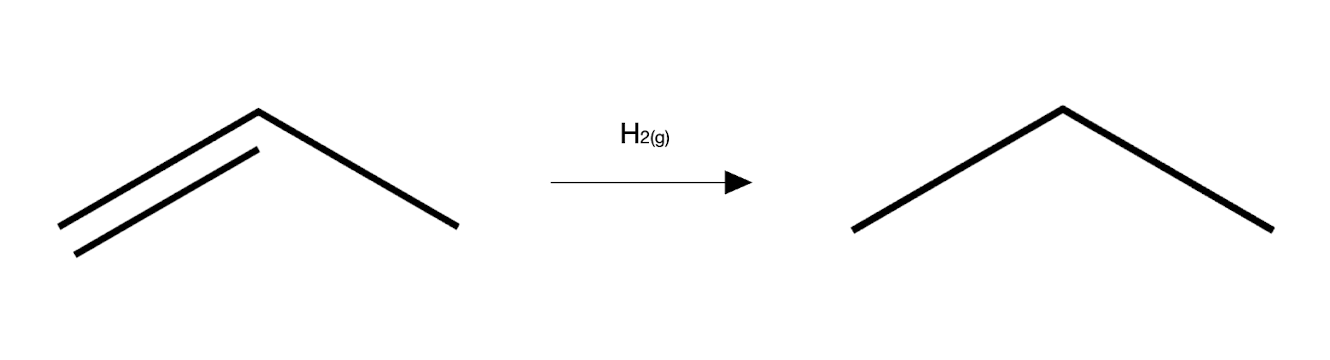
Double bond converted into a single bond
In this example, a C=C double bond becomes a C-C single bond. Two hydrogens are added across the double bond.
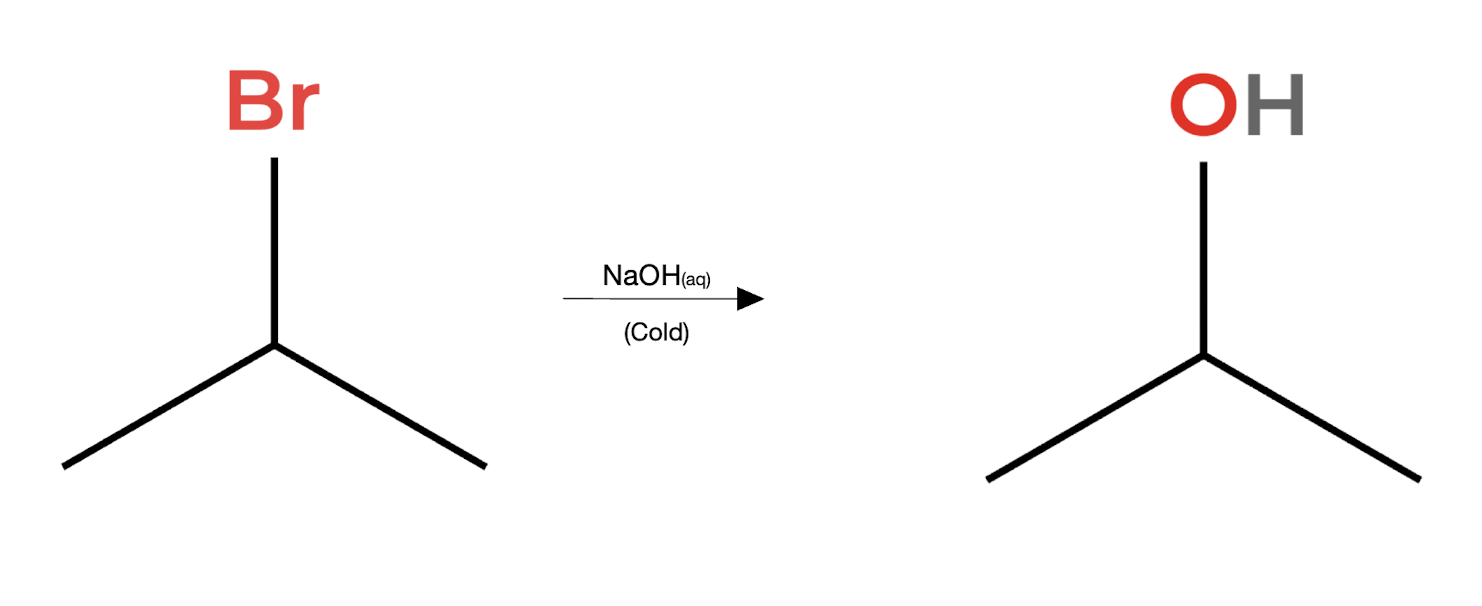
Atom replacement example
In this example, bromine is replaced with OH. The carbon skeleton stays the same.
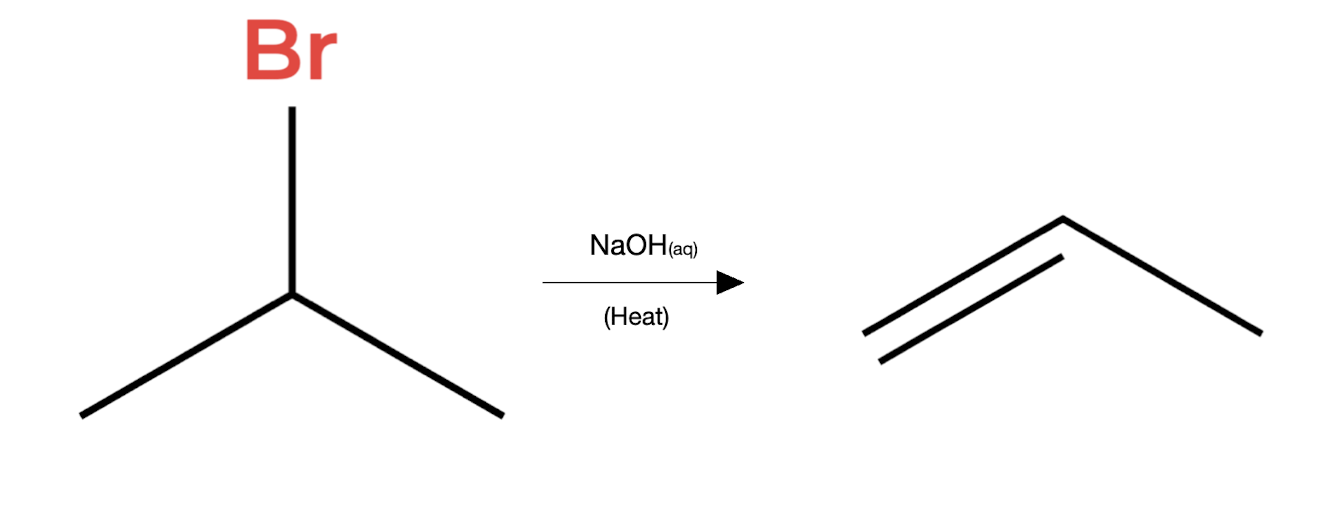
Removal of H and Br forms a double bond
In this example, H and Br are removed, and a new double bond is formed between two carbons.
Ask yourself these (and don't worry about the details yet).
- ›Was a bond formed?
- ›Was a bond broken?
- ›Was a double bond changed into a single bond?
- ›Was a single bond changed into a double bond?
- ›Was one atom replaced by another atom?
- ›Were hydrogens added or removed?
Practice Set
Try each question before opening the answer.
1. In a bond-line drawing, what does each corner usually represent?
Answer: A carbon atom, unless another atom symbol is written there.
2. In a bond-line drawing, what does each line ending usually represent?
Answer: A carbon atom. Endpoints count too.
3. A neutral carbon has two visible single bonds. How many hydrogens are attached?
Answer: Two hydrogens. Neutral carbon usually has four total bonds.
4. A neutral carbon has three visible bonds. How many hydrogens are attached?
Answer: One hydrogen.
5. Why are most hydrogens attached to carbon not drawn?
Answer: Because they can be inferred from carbon's usual four-bond pattern. The drawing is faster and cleaner without showing every C-H bond.
6. Why are atoms like O, N, Cl, and Br written explicitly?
Answer: Because they are not carbon. Bond-line drawings hide most carbons and carbon-bound hydrogens, but heteroatoms must be shown.
7. A reaction changes a C=C double bond into a C-C single bond and adds one H to each carbon. What changed?
Answer: Hydrogen was added across the double bond. The double bond was converted into a single bond.
8. A molecule loses H and Br, and a single bond becomes a double bond. What kind of visible change happened?
Answer: H and Br were removed, and a double bond formed between two carbons.
Ready for a bigger set?
Work through the full Structure and Bonding practice page with more questions on carbon counting, hidden hydrogens, heteroatoms, branches, rings, and bond interpretation.
Do More Practice QuestionsLesson Summary
Bond-line drawings are the language of organic chemistry. Every corner and endpoint is a carbon unless another atom is shown. Hydrogens attached to carbon are usually hidden, but you can always find them by giving neutral carbon four total bonds. Once you can count carbons, hydrogens, double bonds, and triple bonds, you can start reading reactions clearly.