Acids and Bases · Practice Workbook
Acids and Bases Practice Questions
Nineteen questions across six skills: comparing acidity with ARIO, predicting equilibrium direction, identifying acid-base roles, ranking compounds, choosing reagents, and explaining the reasoning behind it all.
Part A
Compare Acidity or Basicity
Use ARIO — Atom, Resonance, Induction, Orbital — to justify your answer.
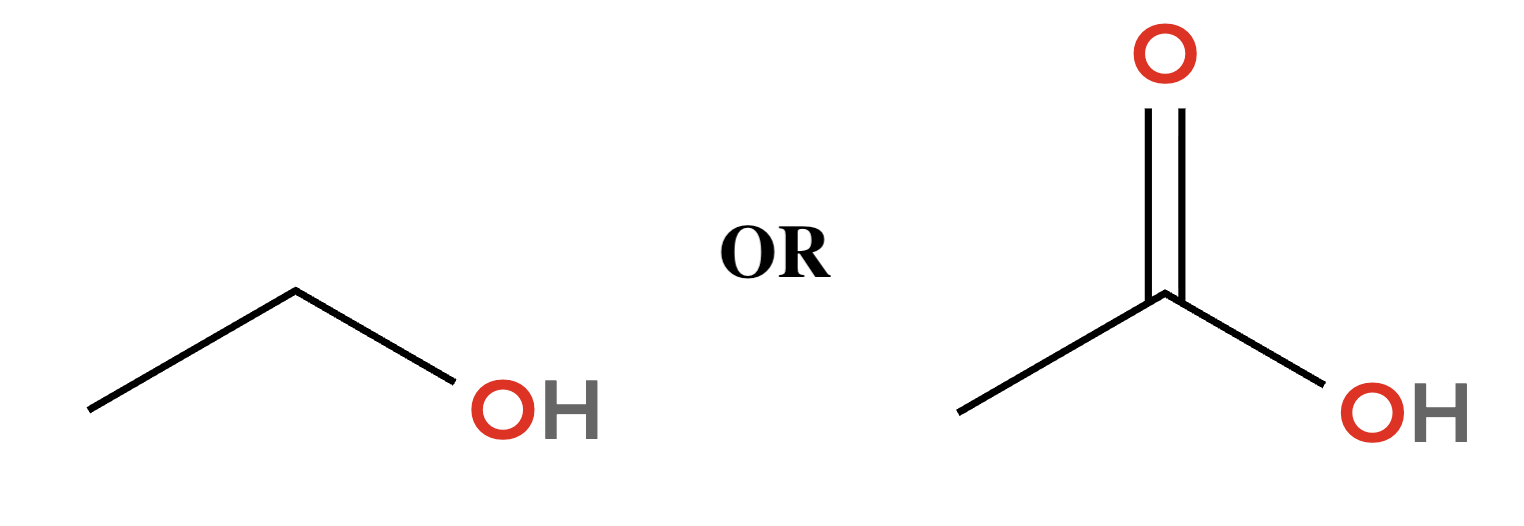
Which is more acidic: ethanol or acetic acid? Why?
Show answer
Acetic acid is more acidic.
Use ARIO. Resonance is the deciding factor here: the conjugate base of acetic acid (acetate) delocalizes its negative charge across two oxygens, while the conjugate base of ethanol (ethoxide) has the charge stuck on one oxygen. A resonance-stabilized conjugate base means a much stronger acid — acetic acid's pKa (~4.8) is far lower than ethanol's (~16).
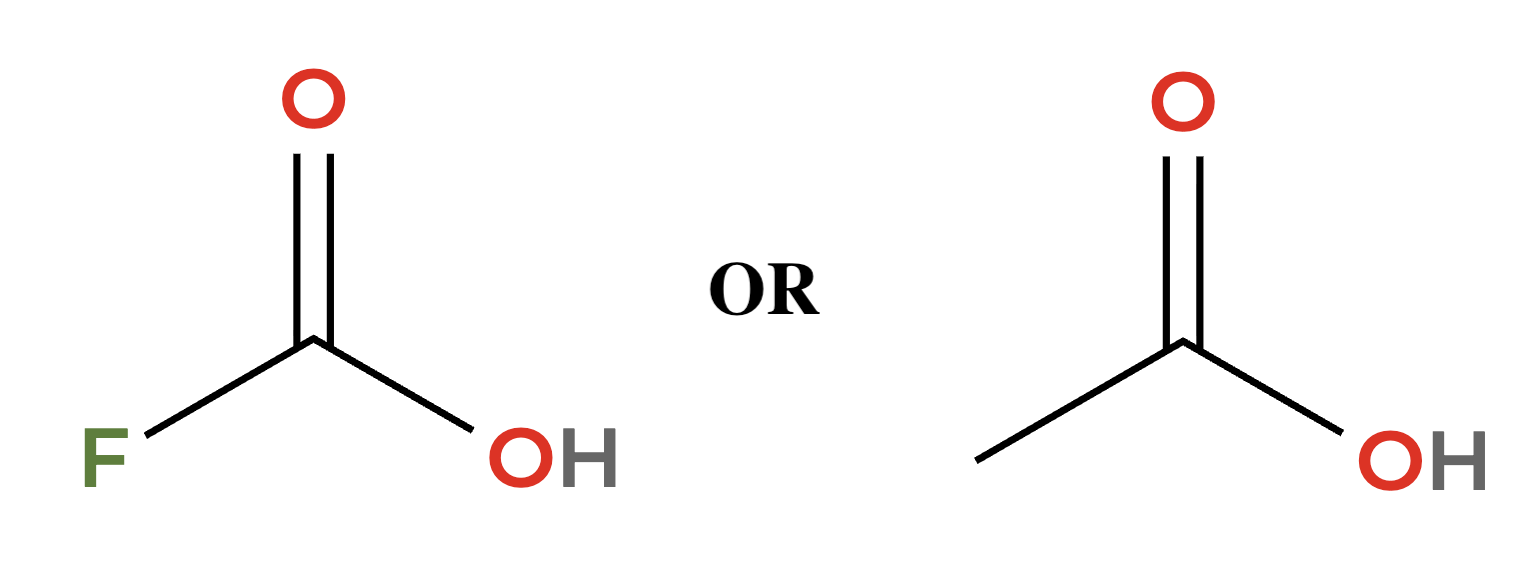
Which is more acidic: fluoroacetic acid or acetic acid? Why?
Show answer
Fluoroacetic acid is more acidic.
Use ARIO. Both conjugate bases have the same resonance stabilization (both are carboxylates), so resonance is a tie. The deciding factor is induction: fluorine is highly electronegative and pulls electron density through the σ bonds, further stabilizing the negative charge on the conjugate base.
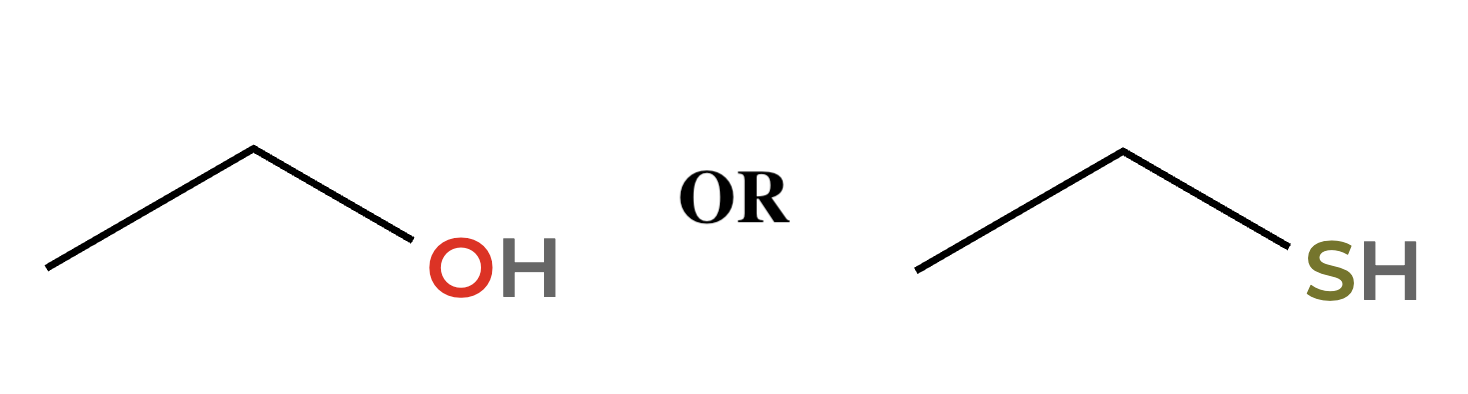
Which is more acidic: an alcohol (R-OH) or a thiol (R-SH)? Why?
Show answer
The thiol is more acidic.
Use ARIO. Resonance and induction are not relevant here, as both conjugate bases lack resonance and have no extra electronegative substituents. The deciding factor is Atom: sulfur is larger and more polarizable than oxygen. Even though oxygen is more electronegative, sulfur's larger size spreads out the negative charge on the conjugate base more comfortably, making the thiol more acidic despite the electronegativity trend.
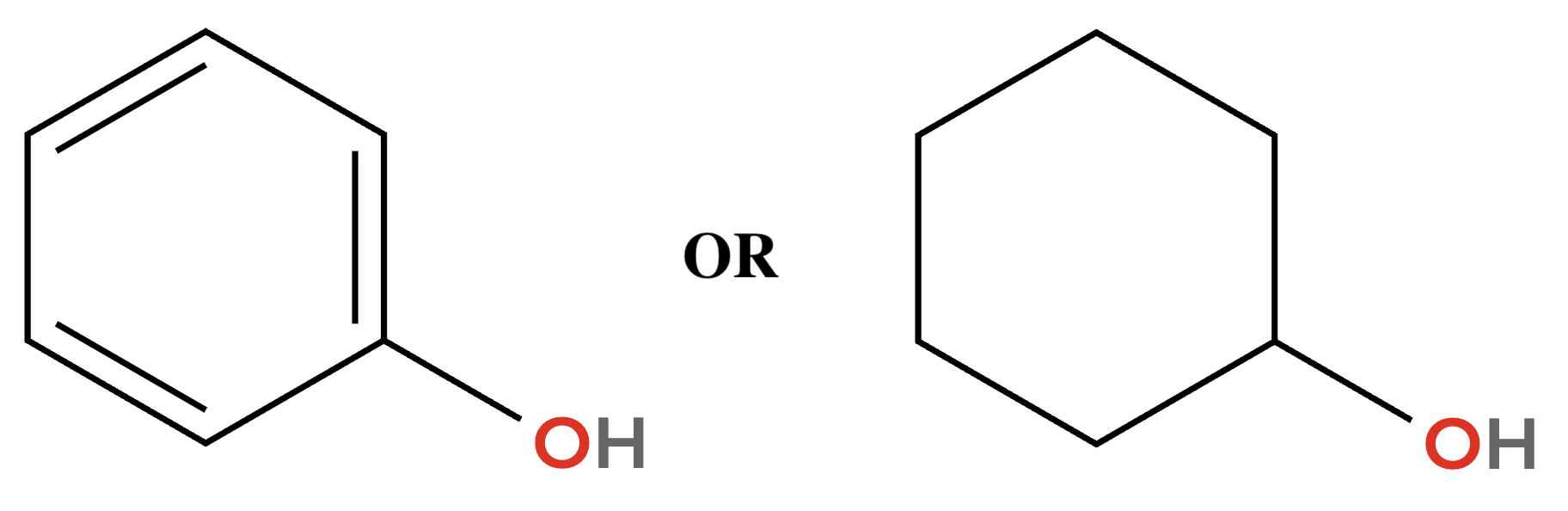
Which is more acidic: phenol or cyclohexanol? Why?
Show answer
Phenol is more acidic.
Use ARIO. Resonance is the deciding factor: phenol's conjugate base (phenoxide) can delocalize its negative charge into the aromatic ring through resonance, spreading it across multiple ring carbons. Cyclohexanol's conjugate base has no adjacent π system, so the charge stays localized entirely on oxygen.
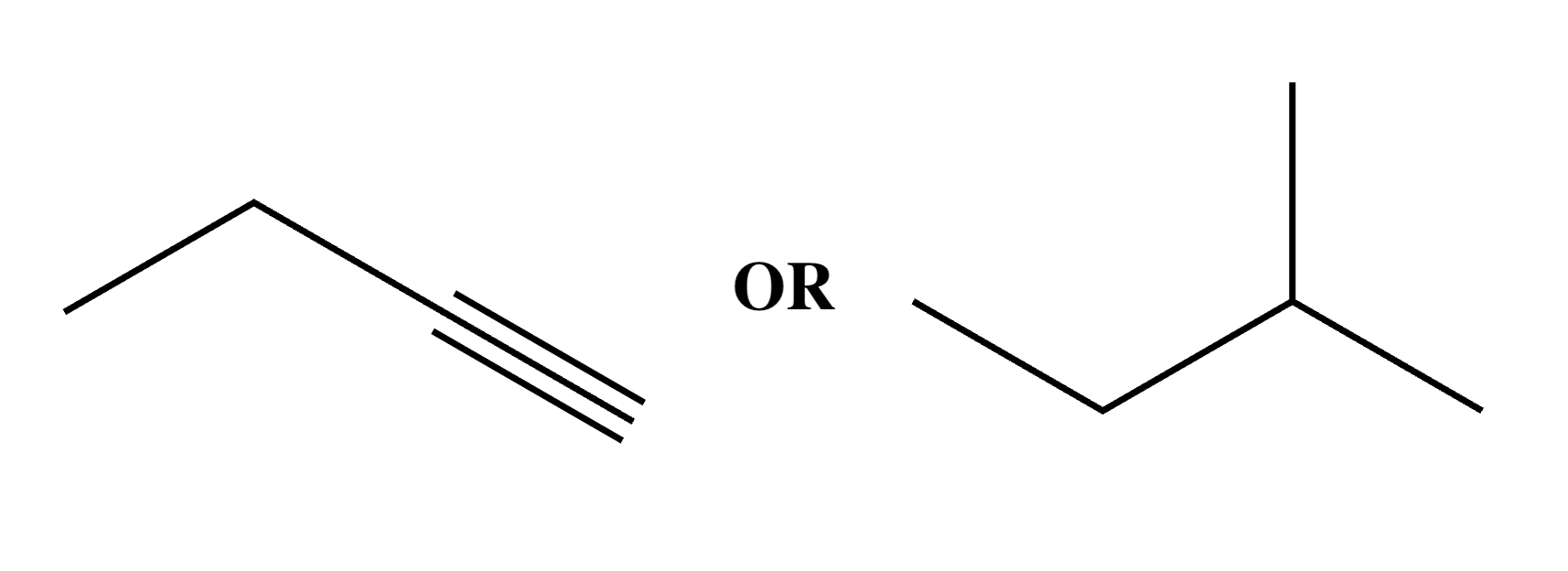
Which proton is more acidic: a terminal alkyne C-H or an alkane C-H? Why? (explain the molecular reasoning)
Show answer
The terminal alkyne C-H is more acidic.
Use ARIO. With no resonance or induction differences relevant here, the deciding factor is Orbital hybridization. The terminal alkyne carbon is sp hybridized (50% s-character), while the alkane carbon is sp3 (25% s-character). More s-character means electrons sit closer to the nucleus, stabilizing the negative charge on the conjugate base. This is why terminal alkynes (pKa ≈ 25) are dramatically more acidic than alkanes (pKa ≈ 50).
Part B
Predict the Direction of Equilibrium
Equilibrium favors the side with the weaker acid — the acid with the higher pKa.
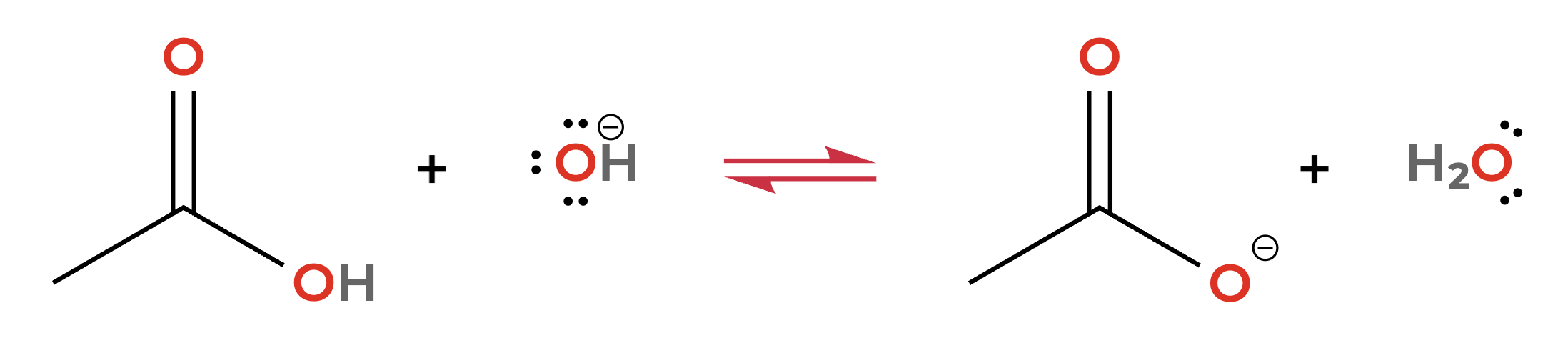
Acetic acid (pKa ≈ 4.8) reacts with hydroxide (conjugate acid water, pKa ≈ 15.7). Will this equilibrium favor reactants or products?
Show answer
Products.
Equilibrium favors the side with the weaker acid — the acid with the higher pKa. Water (pKa ≈ 15.7) is a much weaker acid than acetic acid (pKa ≈ 4.8), so the reaction strongly favors the product side, where water now holds the proton.
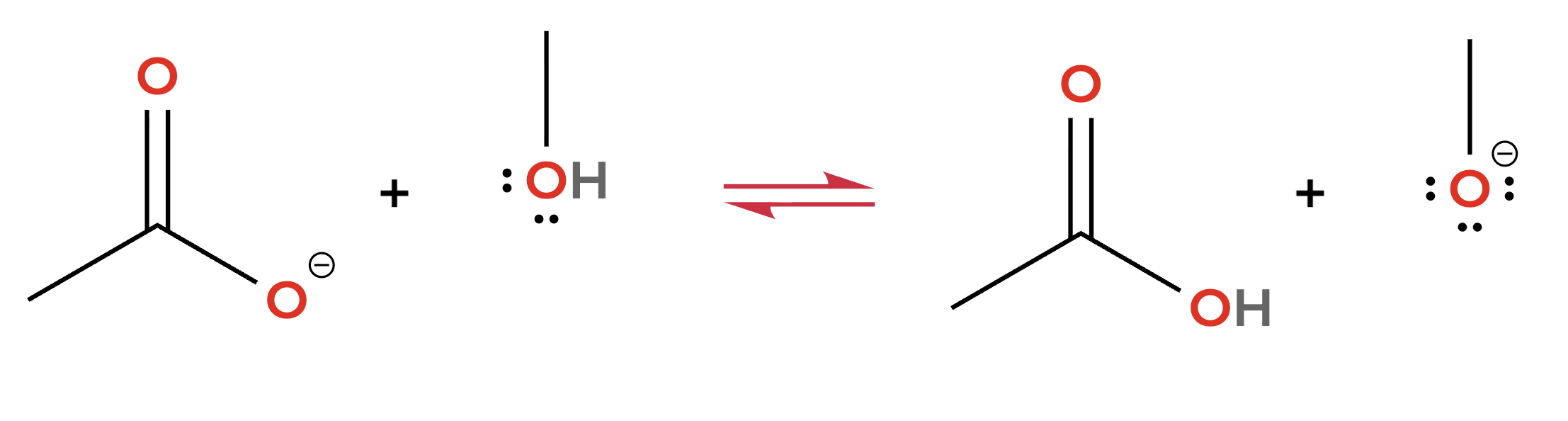
An alcohol (pKa ≈ 16) reacts with acetate (conjugate acid acetic acid, pKa ≈ 4.8). Will this equilibrium favor reactants or products?
Show answer
Reactants.
Compare the pKa values of the acid on each side. On the reactant side, the alcohol has pKa ≈ 16. On the product side, the acid formed is acetic acid with pKa ≈ 4.8. Since the reactant side has the weaker acid (higher pKa), equilibrium favors staying on the reactant side — acetate is not a strong enough base to deprotonate the alcohol significantly.
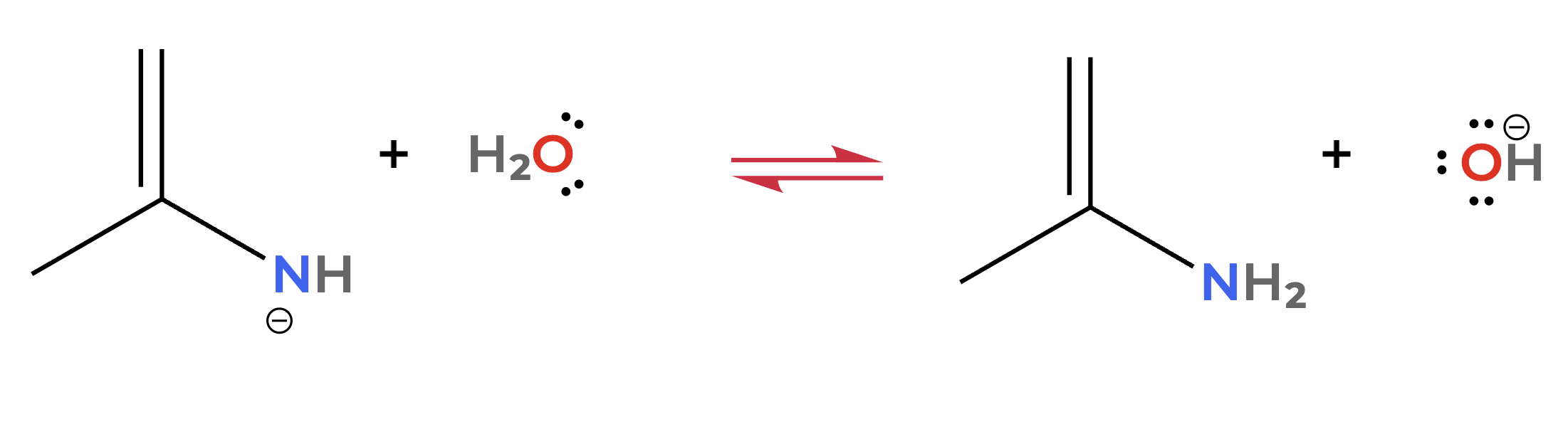
Water (pKa ≈ 15.7) reacts with an amide base, forming an amine (conjugate acid pKa ≈ 38). Will this equilibrium favor reactants or products?
Show answer
Products.
The acid on the product side (the amine, pKa ≈ 38) is far weaker than water (pKa ≈ 15.7) on the reactant side. Equilibrium favors the weaker acid, so this strongly favors products — this is exactly why strong bases like NaNH₂ are destroyed instantly by water or any protic solvent.
Part C
Identify Acid, Base, Conjugate Acid, Conjugate Base
Track exactly which species gains or loses the proton.
In this reaction, label the acid, base, conjugate acid, and conjugate base.

Show answer
HCl is the acid. Water is the base. Hydronium (H3O+) is the conjugate acid. Chloride (Cl-) is the conjugate base.
The acid donates a proton and becomes the conjugate base. The base accepts a proton and becomes the conjugate acid. Track which species gained or lost the H+ to identify each role correctly.
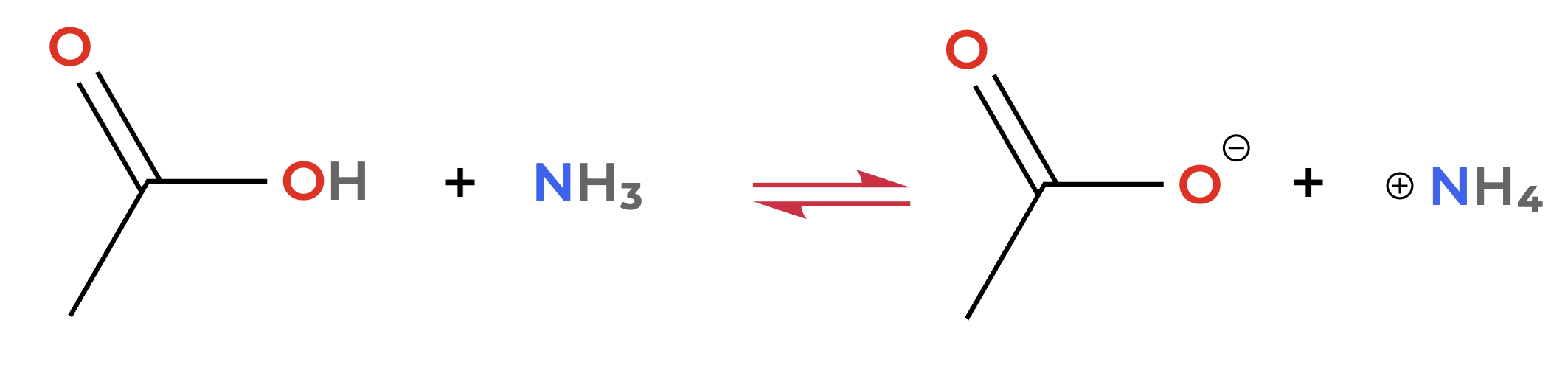
In this reaction, label the acid, base, conjugate acid, and conjugate base.
Show answer
The carboxylic acid is the acid. The amine is the base. The ammonium ion is the conjugate acid. The carboxylate is the conjugate base.
The amine's nitrogen lone pair accepts the proton from the carboxylic acid's O-H, making the amine the base and the resulting ammonium the conjugate acid.
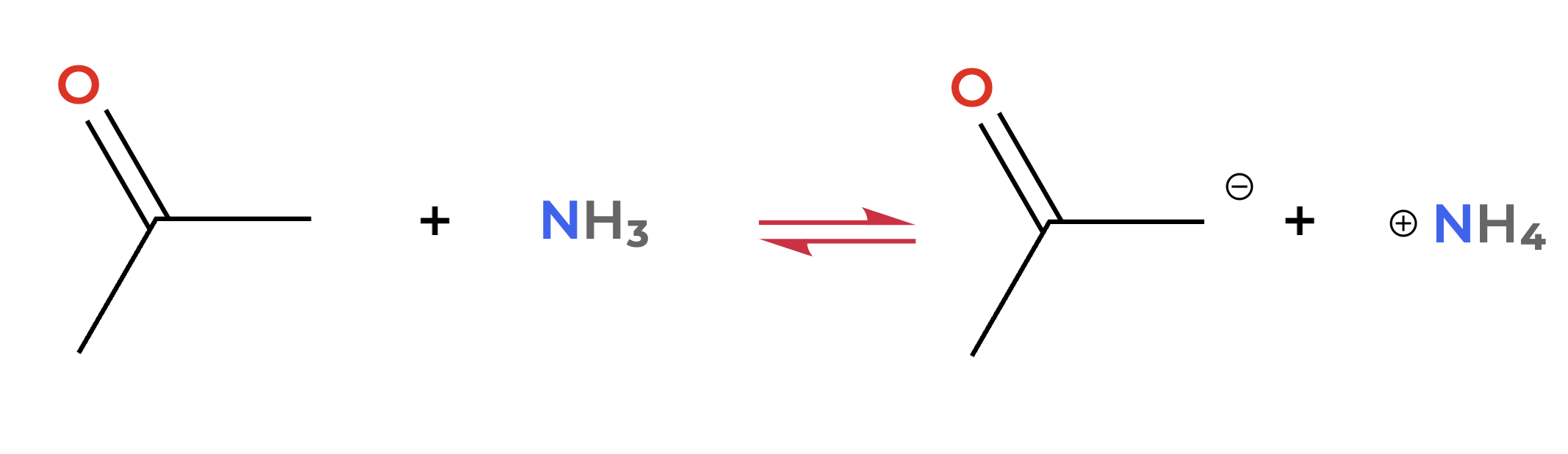
A ketone is treated with a strong base, removing an alpha C-H proton to form an enolate. Label the acid, base, conjugate acid, and conjugate base.
Show answer
The ketone (specifically its alpha C-H) is the acid. The amine is the base. The protonated amine is the conjugate acid. The enolate is the conjugate base.
Even though the ketone doesn't look like a typical acid, any molecule donating a proton in the reaction is acting as the acid. The enolate that remains after proton loss is the conjugate base — and it's resonance stabilized, which is why this proton is acidic enough to remove at all.
Part D
Rank Compounds by Acidity or Basicity
Use resonance, induction, charge, and atom effects together.
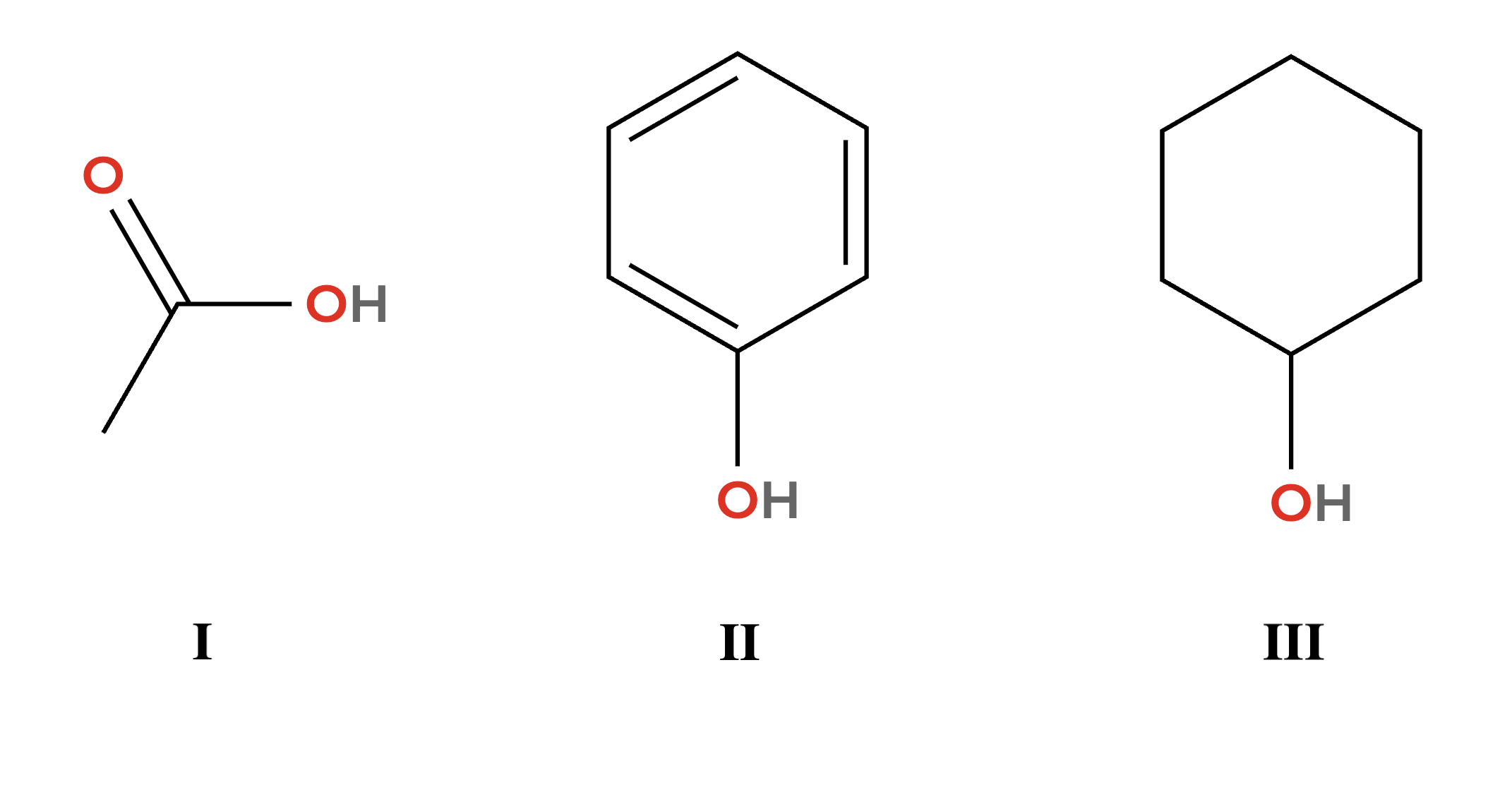
Rank phenol, cyclohexanol, and acetic acid from most acidic to least acidic.
Show answer
Acetic acid > phenol > cyclohexanol.
Acetic acid's conjugate base delocalizes charge across two oxygens (strongest resonance stabilization). Phenol's conjugate base delocalizes into an aromatic ring (moderate resonance stabilization, but spread across carbon, which is less electronegative than oxygen). Cyclohexanol's conjugate base has no resonance at all, leaving charge stuck on one oxygen — making it the weakest acid of the three.
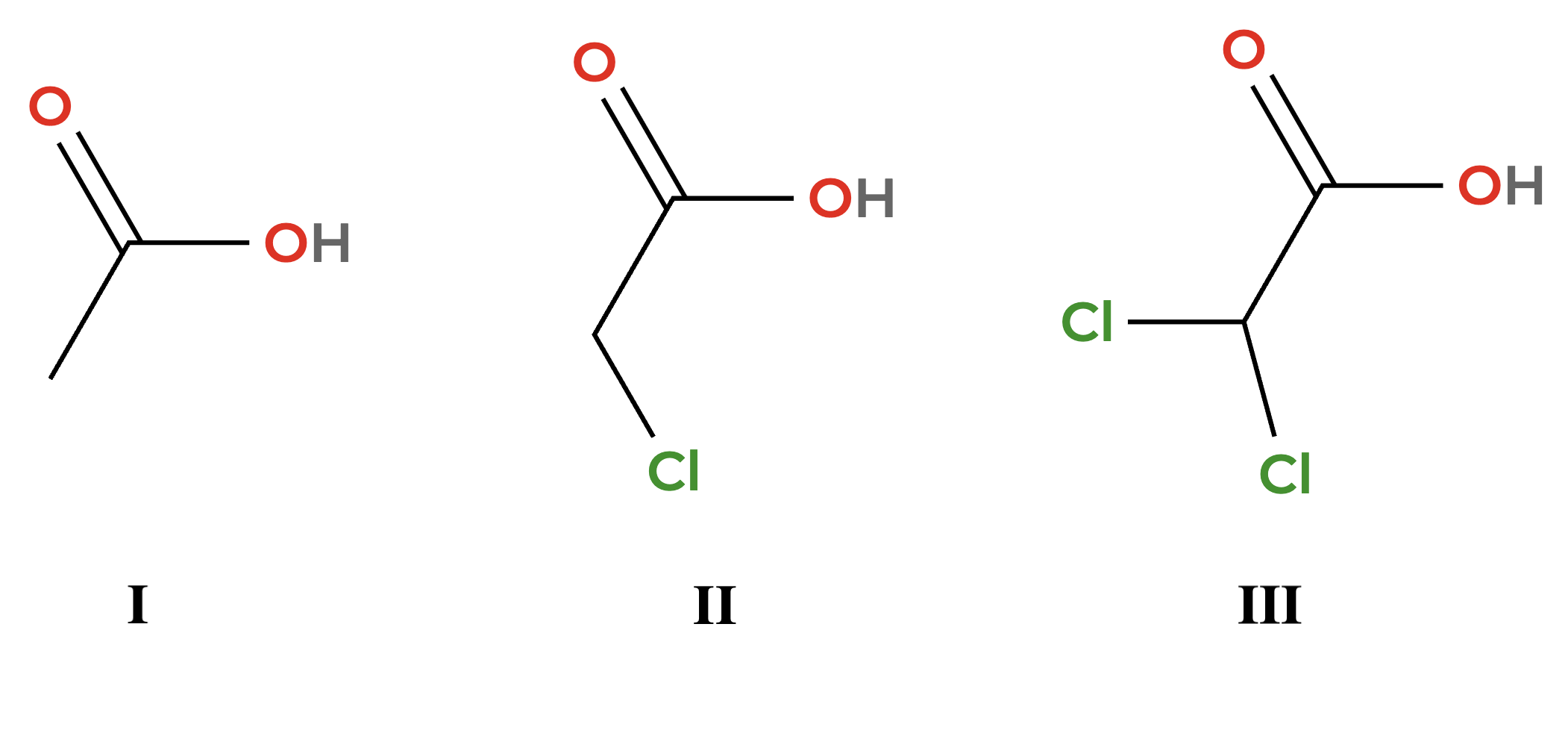
Rank acetic acid, chloroacetic acid, and dichloroacetic acid from most acidic to least acidic.
Show answer
Dichloroacetic acid > chloroacetic acid > acetic acid.
All three share identical resonance stabilization in their conjugate bases (all are carboxylates). The deciding factor is induction: each additional electronegative chlorine atom withdraws more electron density, further stabilizing the negative charge. More inductive withdrawal means a stronger acid.
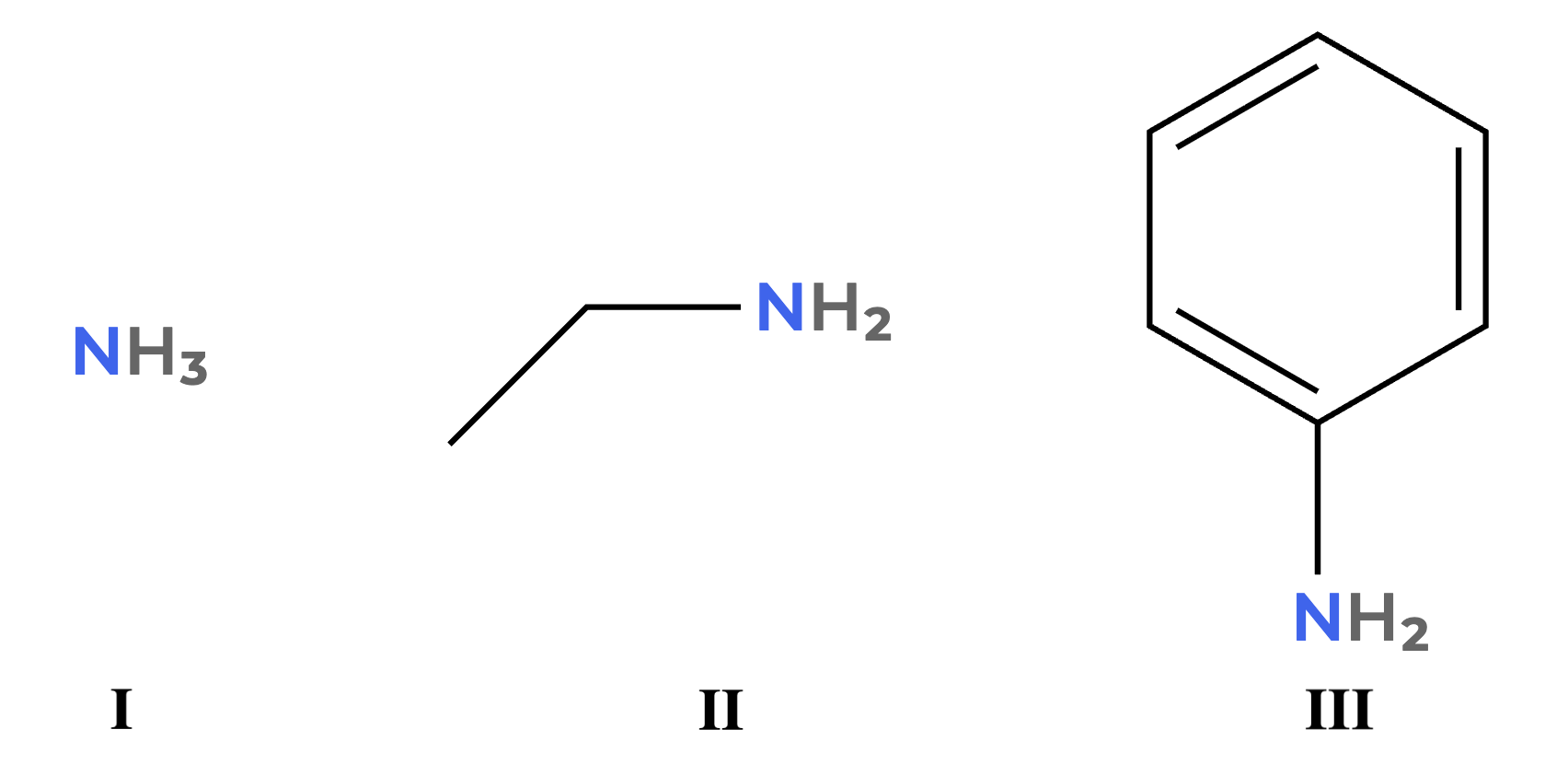
Rank ammonia, aniline, and an alkylamine from most basic to least basic.
Show answer
Alkylamine > ammonia > aniline.
Alkyl groups donate electron density inductively, making the nitrogen lone pair more available and the amine more basic than ammonia. Aniline is the weakest base because its nitrogen lone pair is delocalized into the aromatic ring through resonance, making it less available to accept a proton — the same resonance effect that makes phenol more acidic makes aniline less basic.
Part E
Choose the Correct Reagent or Base
The base's conjugate acid must have a higher pKa than the acid being deprotonated.
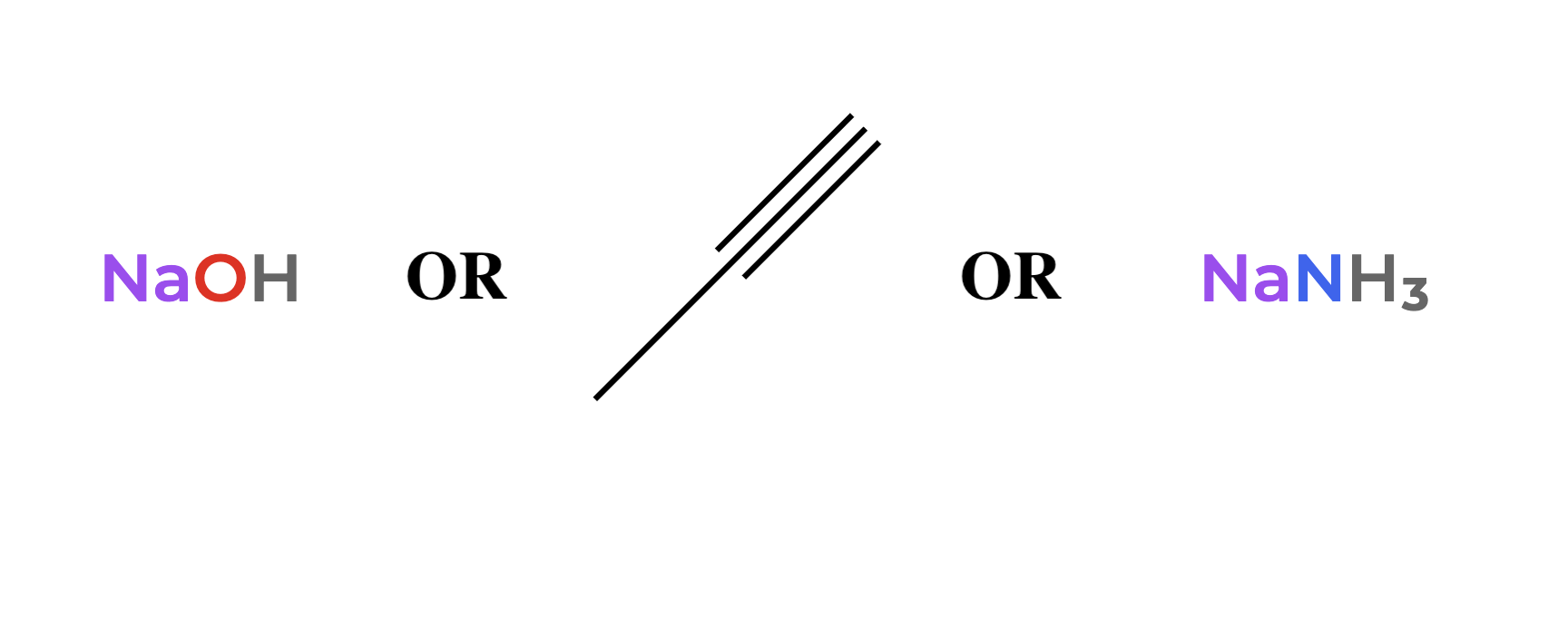
Which base can deprotonate a terminal alkyne (pKa ≈ 25): NaOH (conjugate acid water, pKa ≈ 15.7) or NaNH₂ (conjugate acid ammonia, pKa ≈ 38)?
Show answer
NaNH₂ works. NaOH does not.
A base can only deprotonate an acid if its own conjugate acid has a higher pKa than the acid being removed. Ammonia's pKa (≈ 38) is higher than the alkyne's pKa (≈ 25), so NaNH₂ can deprotonate it. Water's pKa (≈ 15.7) is lower than the alkyne's pKa, so NaOH cannot.
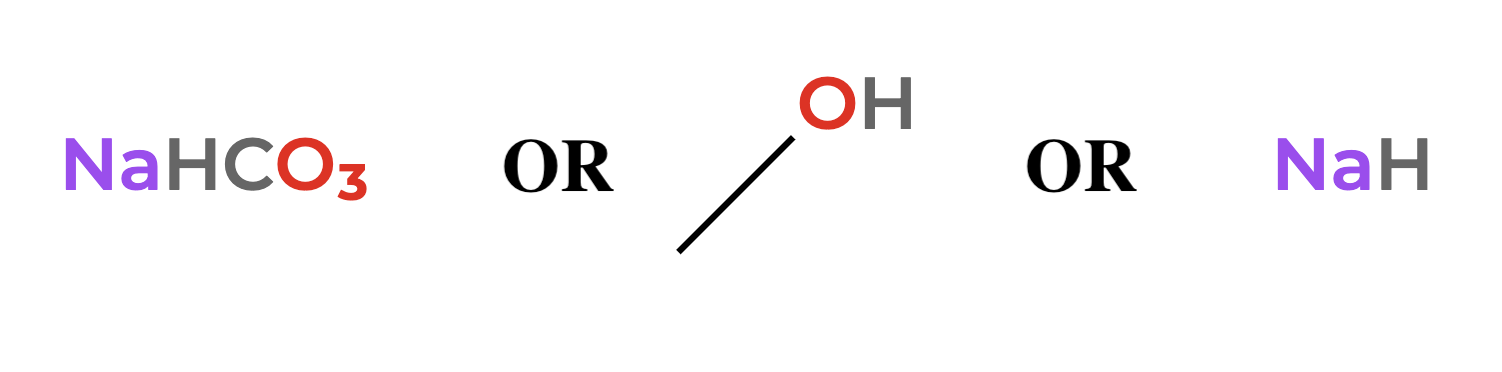
Which reagent is strong enough to fully deprotonate an alcohol (pKa ≈ 16): NaHCO₃ (conjugate acid carbonic acid, pKa ≈ 6.3) or NaH (conjugate acid H₂ gas, pKa ≈ 36)?
Show answer
NaH works. NaHCO₃ does not.
NaH's conjugate acid (H₂, pKa ≈ 36) is far higher than the alcohol's pKa (≈ 16), making this reaction essentially irreversible and complete. NaHCO₃'s conjugate acid (carbonic acid, pKa ≈ 6.3) is much lower than the alcohol's pKa, so it cannot deprotonate the alcohol at all.
Summary checkpoint
Ready to move on?
You are ready for Alkanes and Conformations when ARIO feels automatic. Basically, when you can glance at two structures and immediately know which factor decides the comparison.
Go to Alkanes and Conformations