Organic Chemistry I · Lesson 06
Stereochemistry
Two molecules can have exactly the same atoms connected in exactly the same order and still be different compounds, because their atoms point in different directions in space. Stereochemistry is the toolkit for seeing, naming, and comparing those 3D differences.
Learning Goals
- Read wedge-dash drawings and translate them into 3D arrangements.
- Determine whether a molecule is chiral or achiral.
- Find stereocenters in a structure.
- Assign R/S configuration using CIP priority rules.
- Assign E/Z configuration to alkenes.
- Classify two structures as enantiomers, diastereomers, or the same compound.
- Recognize meso compounds and explain why they are achiral.
- Read Fischer projections and assign R/S from them.
Key Terms
Tap any term to see its definition.
Section 1
Reading 3D Drawings
Before any of the naming systems make sense, you have to read a molecule in three dimensions. Organic chemists do this with three kinds of bonds: a plain line stays in the plane of the page, a wedge points out toward you, and a dash points back away from you.
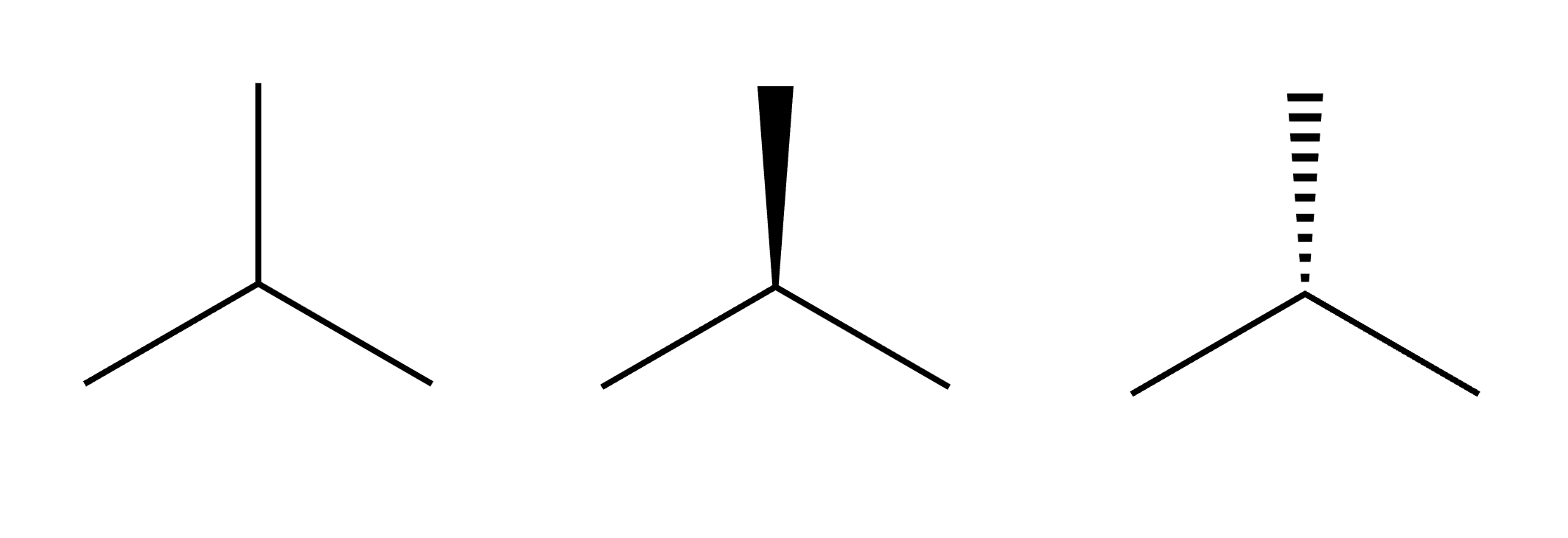
Line in plane, wedge toward you, dash away from you
The one thing to lock in first
Get wedge and dash burned into your memory before anything else. Wedge is toward you, dash is away. If you flip those two, every R/S and every stereoisomer comparison after this will come out backward.
Here are four molecules I want you practicing on. Read each one and picture which groups are coming toward you and which are going back.
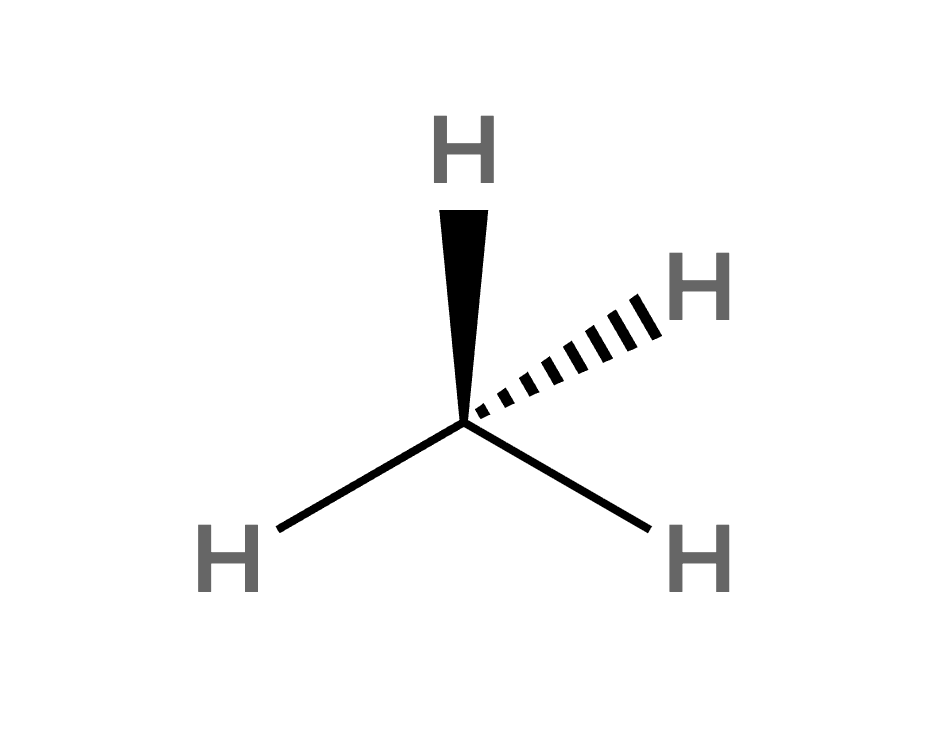
Methane
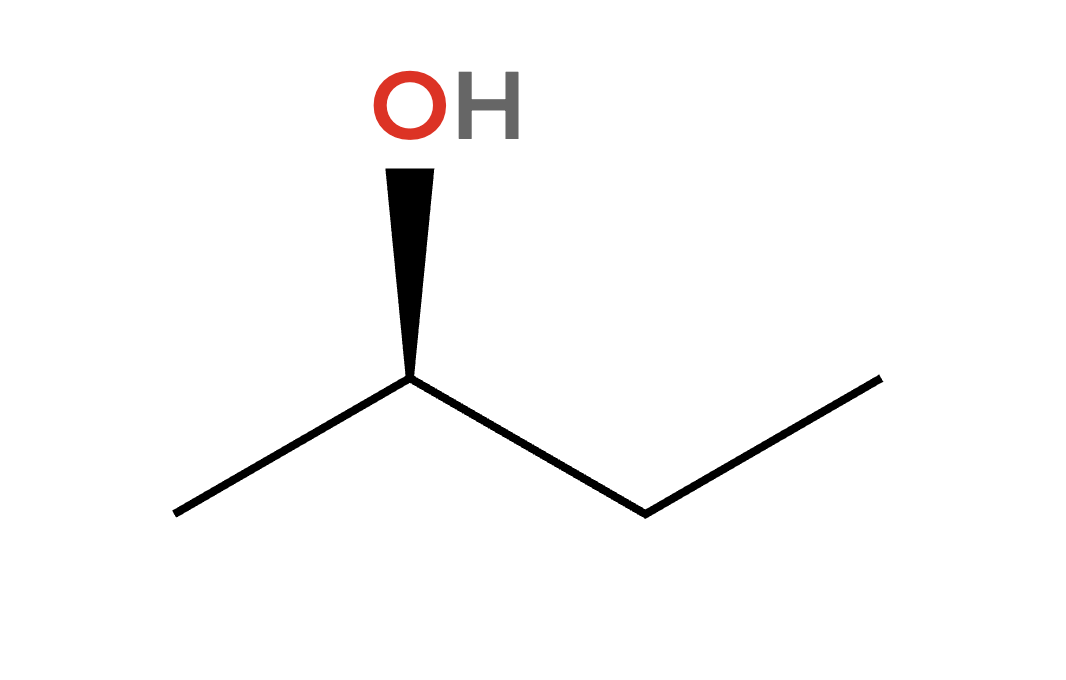
2-Butanol
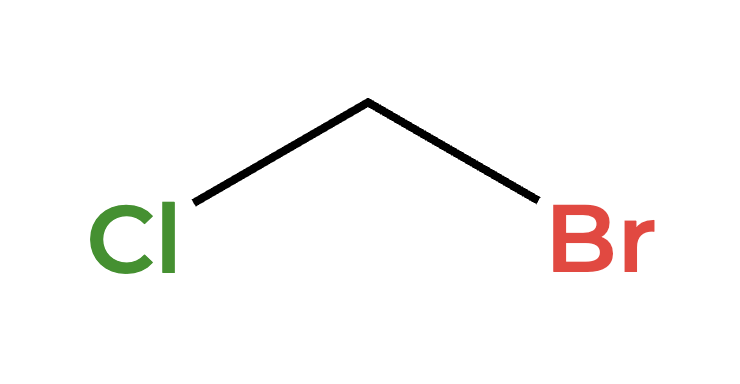
Bromochlorofluoromethane
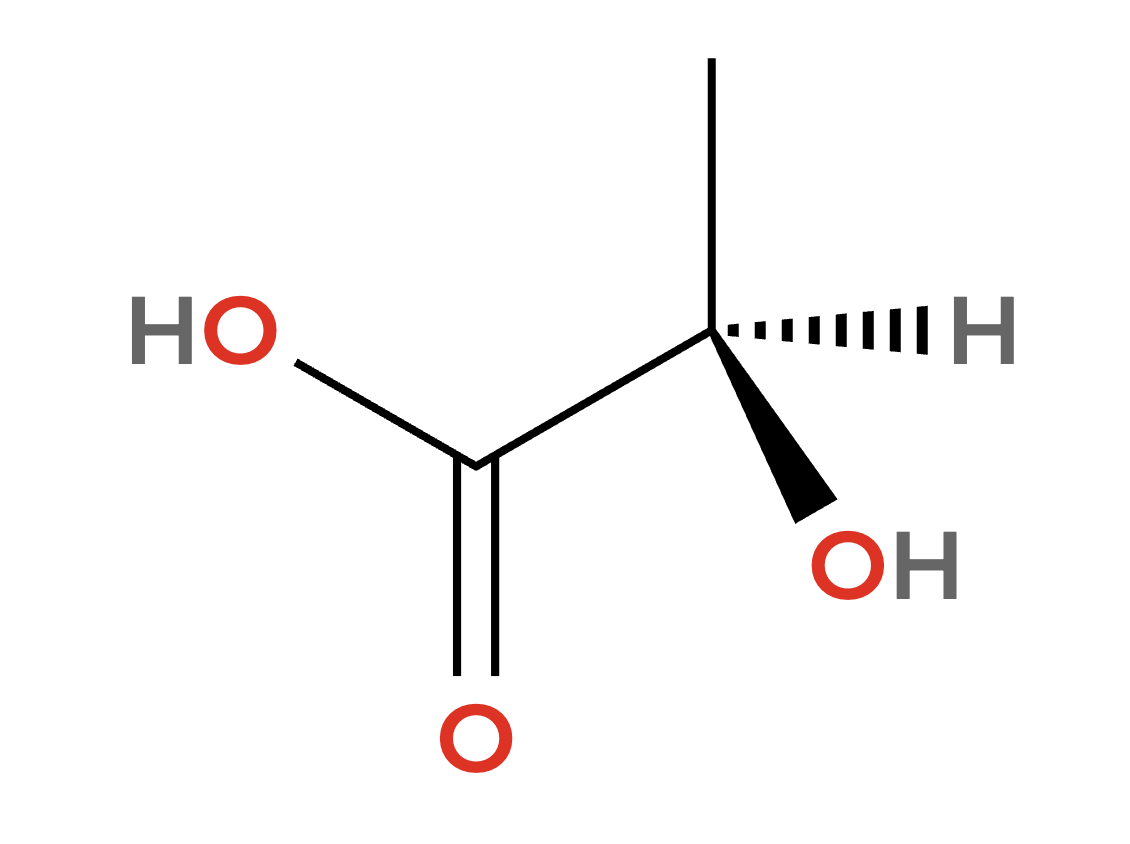
Lactic acid
The core idea underneath all of this: stereochemistry is about molecules with the same connectivity but a different arrangement in space. Same atoms, same bonds, different 3D shape.
Section 2
Chirality
A molecule is chiral if it is not superimposable on its mirror image. It is achiral if it is superimposable on its mirror image. That word "superimposable" is doing all the work here, so the way I always introduce it is with your own hands.
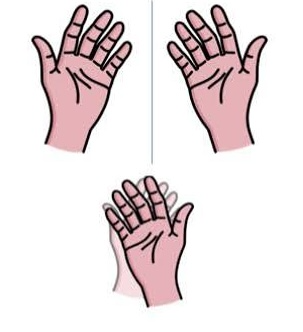
Your hands are mirror images that cannot overlap
Hold your hands up palm to palm and they look like perfect mirror images. Now try to stack one directly on top of the other, both palms down. They never line up. That failure to overlap is exactly what chirality means.
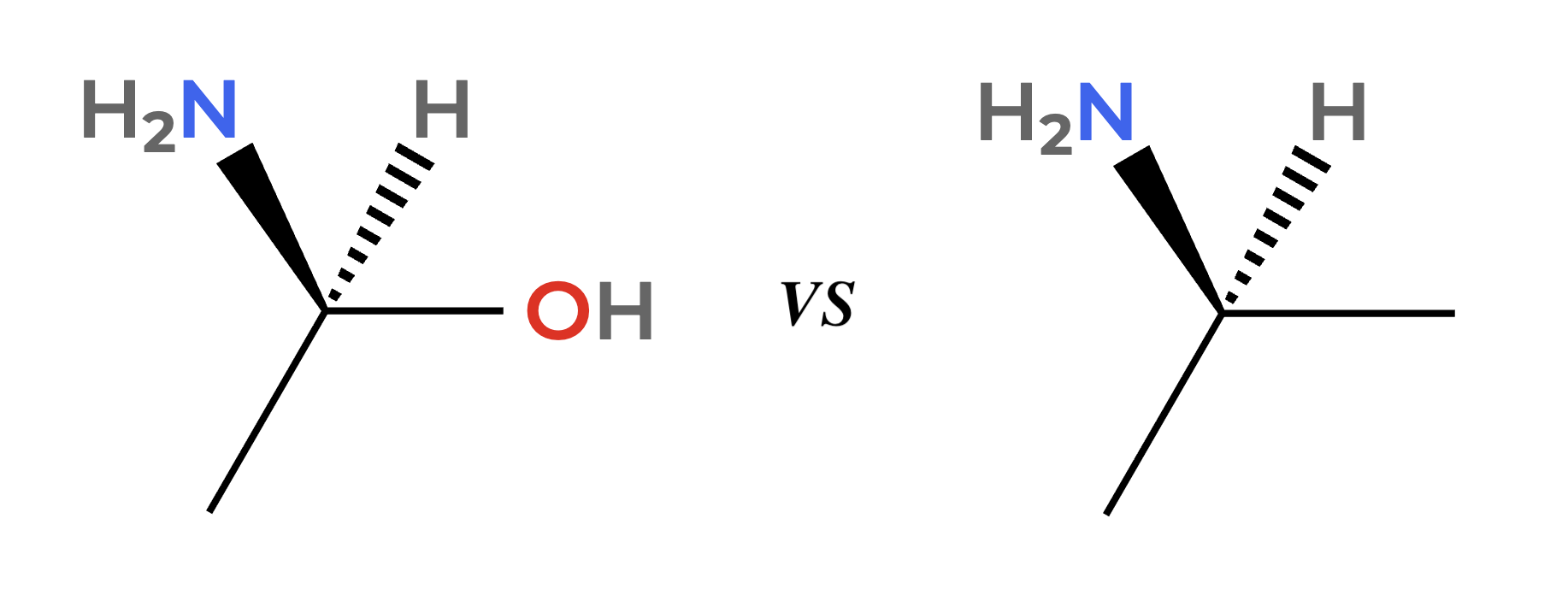
Chiral vs achiral
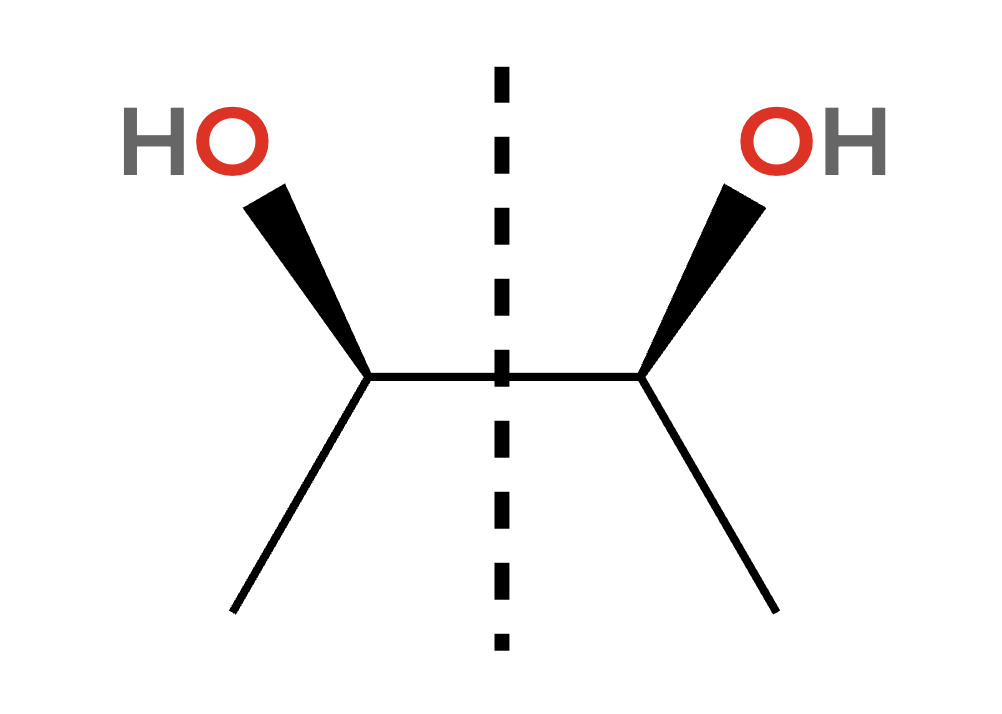
A plane of symmetry usually means achiral
My fastest chirality check
Before I do anything fancy, I look for an internal plane of symmetry. If a molecule has one, it is almost always achiral. If I cannot find one, that is my first hint the molecule may be chiral.
Section 3
Finding Stereocenters
The rule I want you reaching for first: a stereocenter is usually an sp³ carbon attached to four different groups. 2-butanol is the clean example. Its central carbon carries an OH, an H, a CH₃, and a CH₂CH₃, which are four genuinely different groups, so that carbon is a stereocenter.
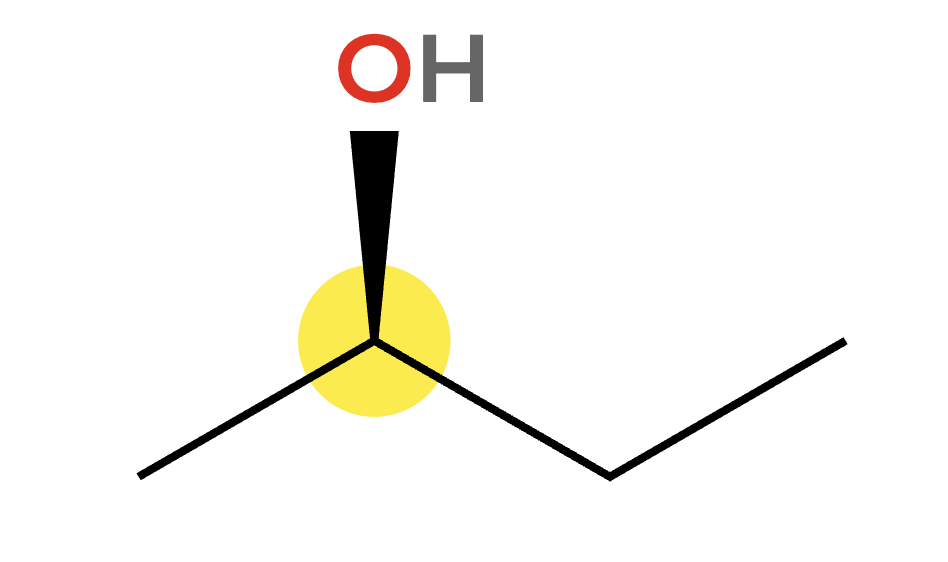
2-butanol: one stereocenter, four different groups
Now the warnings I do not want you skipping. Not every sp³ carbon is a stereocenter. If a carbon has even two identical groups, it is not a stereocenter. And a molecule can contain stereocenters and still be achiral overall if it turns out to be meso, which is a case we will get to.
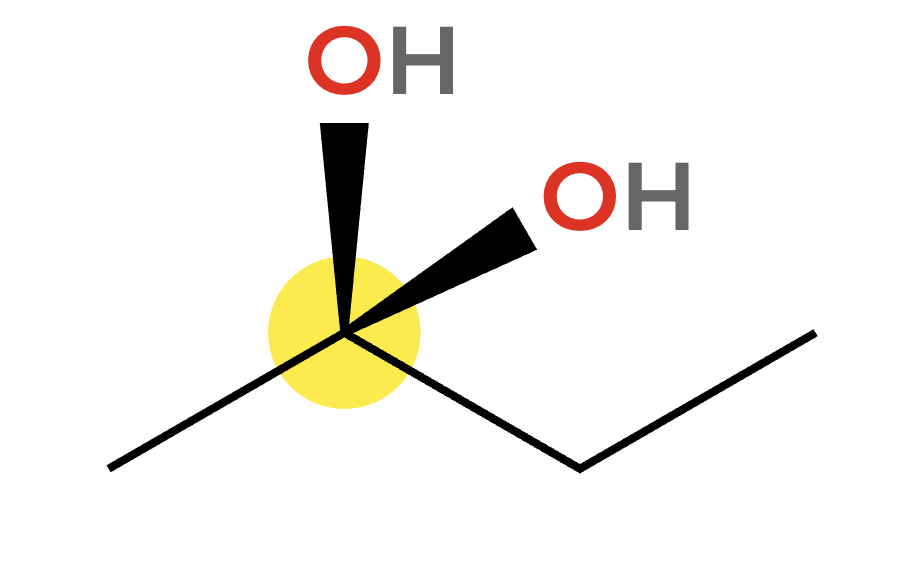
Two identical groups: not a stereocenter
Section 4
Assigning R/S Configuration
This is the core skill for chiral centers, and it comes in two halves: first rank the groups using the CIP rules, then trace them. Let me give you the priority rules.
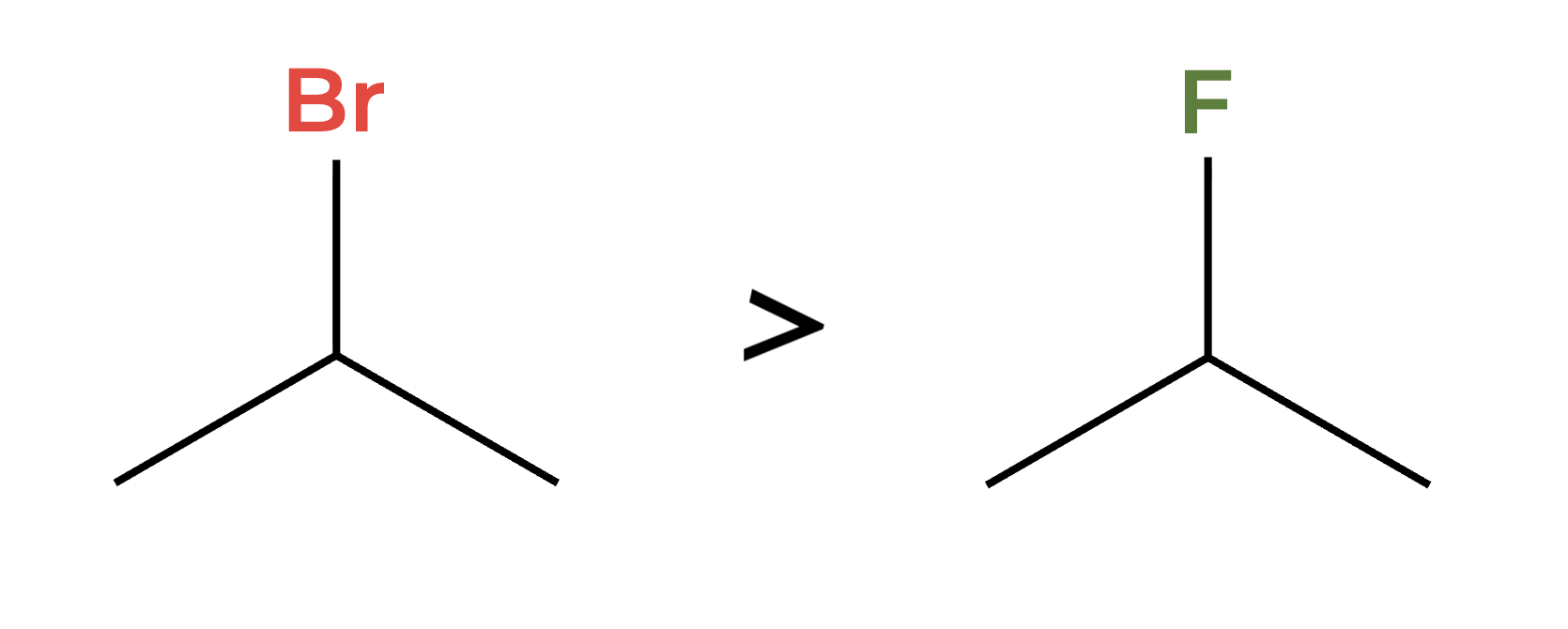
Ranking four groups by atomic number
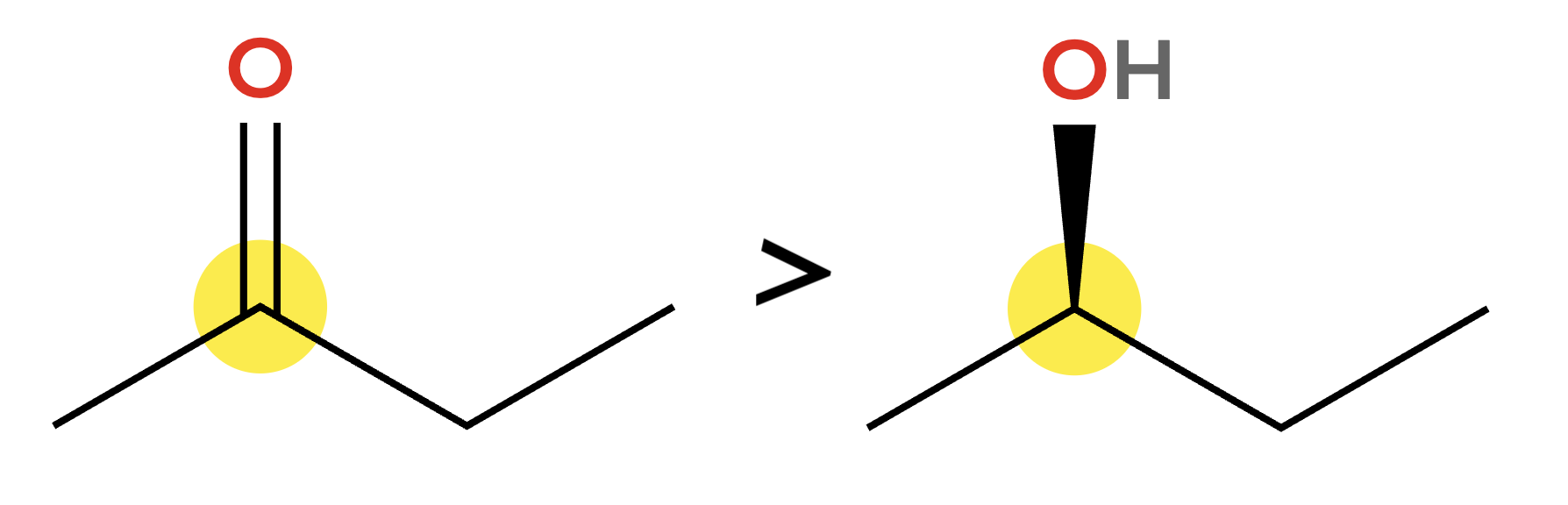
Multiple bonds become duplicate attachments (Note: The left structure is achiral)
Once the four groups are ranked, here is the exact sequence I trace every single time.
- 01Rank all four groups from priority 1 (highest) down to priority 4 (lowest).
- 02Orient the molecule so priority 4 points away from you, behind the page.
- 03Trace the path from priority 1 to 2 to 3.
- 04Clockwise means R. Counterclockwise means S.
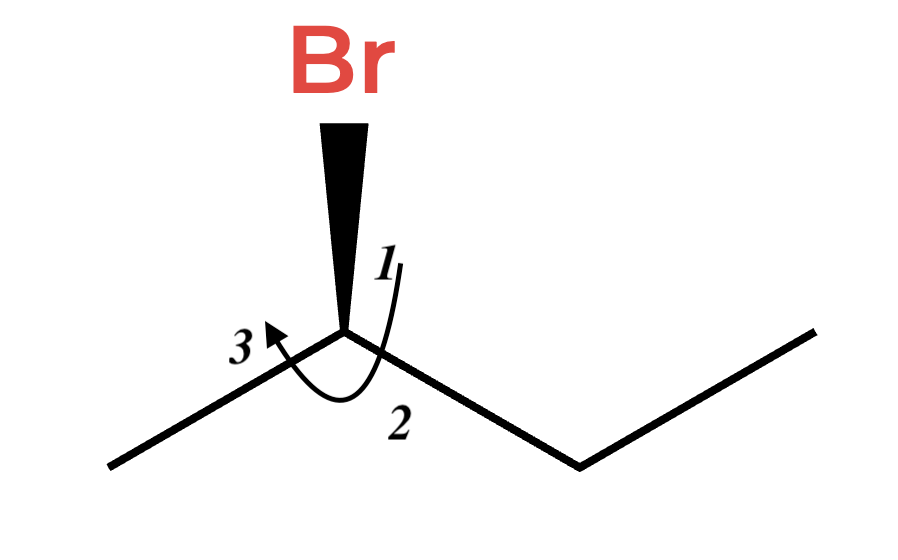
Priority 4 away, trace 1 to 2 to 3
The trap that catches everyone
If priority 1 is pointing away from you, you can simply just reverse your answer. So if you trace clockwise, it is actually S, not R. I check where group 1 is pointing before I trust any answer I get.
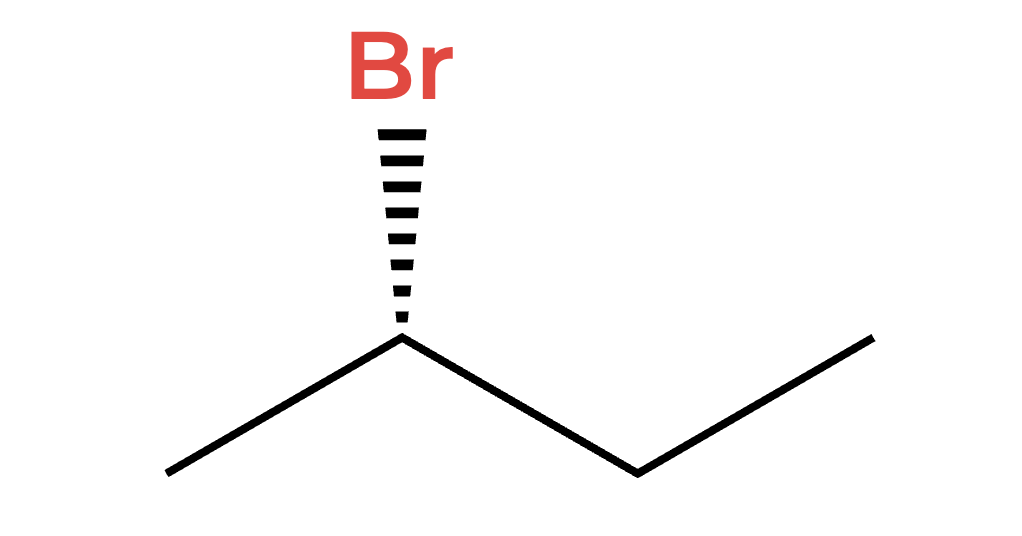
Group 1 away from you: reverse the result. If a wedge, this would be R, but since the Br is pointing away from us, we just reverse it and say this is S stereochemistry.
Section 5
E/Z Alkene Stereochemistry
A double bond cannot freely rotate the way a single bond can, and that locked geometry means alkenes can have stereochemistry too. We name it with E and Z.
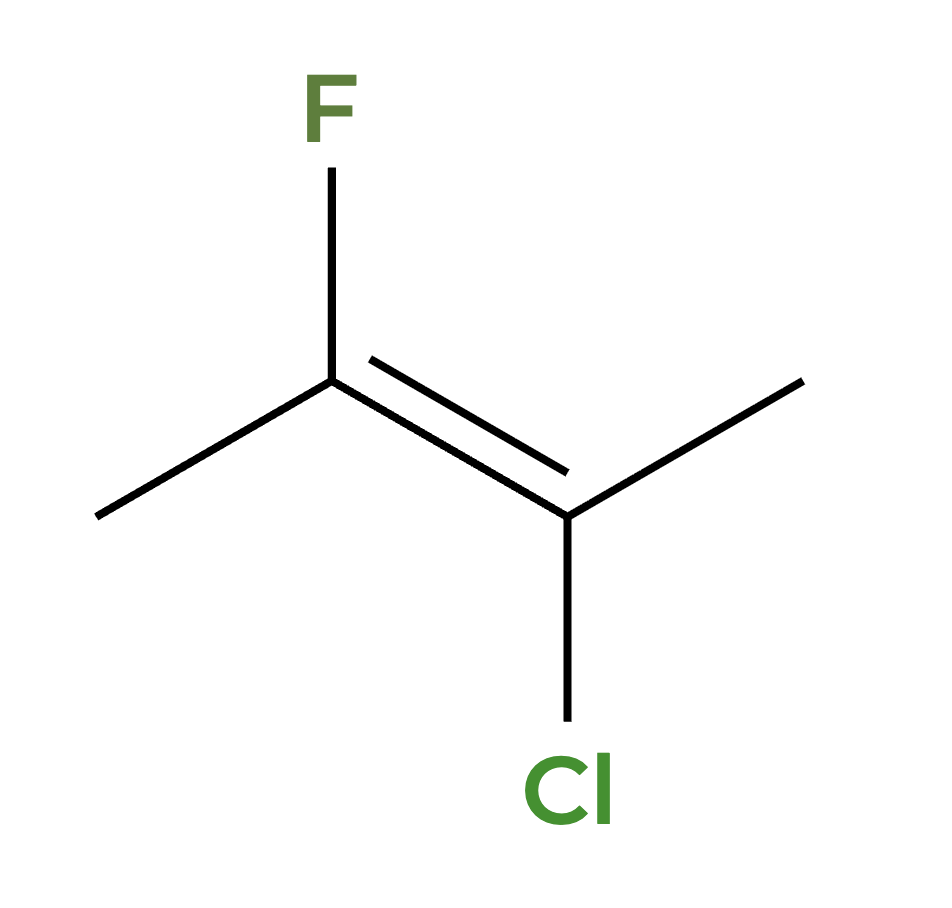
Rank the two groups on each alkene carbon
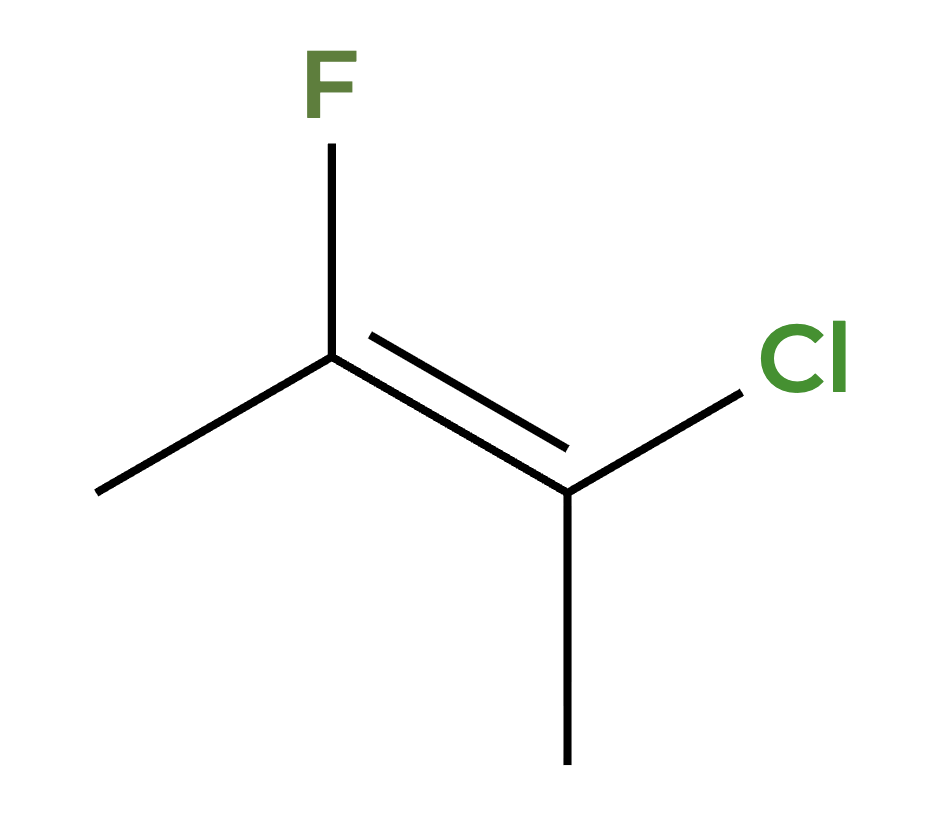
Z: highest priorities on the same side
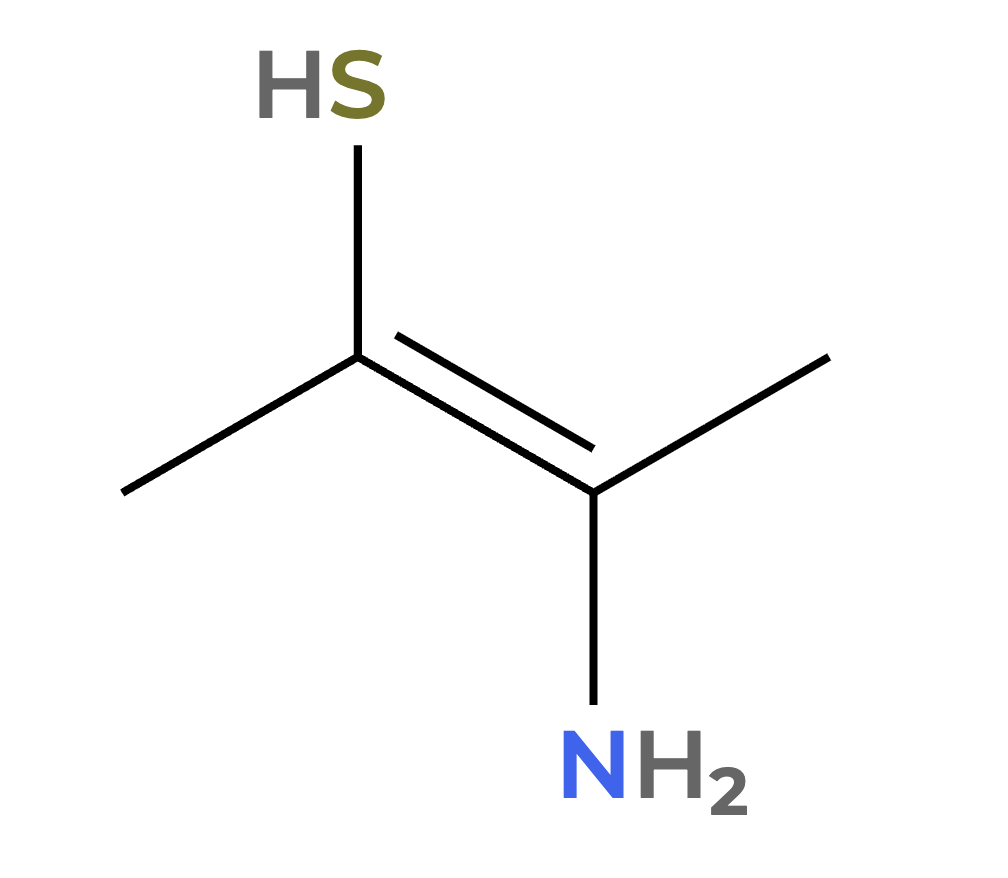
E: highest priorities on opposite sides
How I remember it
Z = "zame zide," the two top-priority groups are together. E = enemies, they are on opposite sides. That one piece of wordplay is all I have ever needed to keep them straight.
One caution: do not lean only on cis and trans. Those labels work for simple alkenes, but they break down once each carbon carries more than one kind of substituent. E/Z is the more general system and always gives a clear answer.
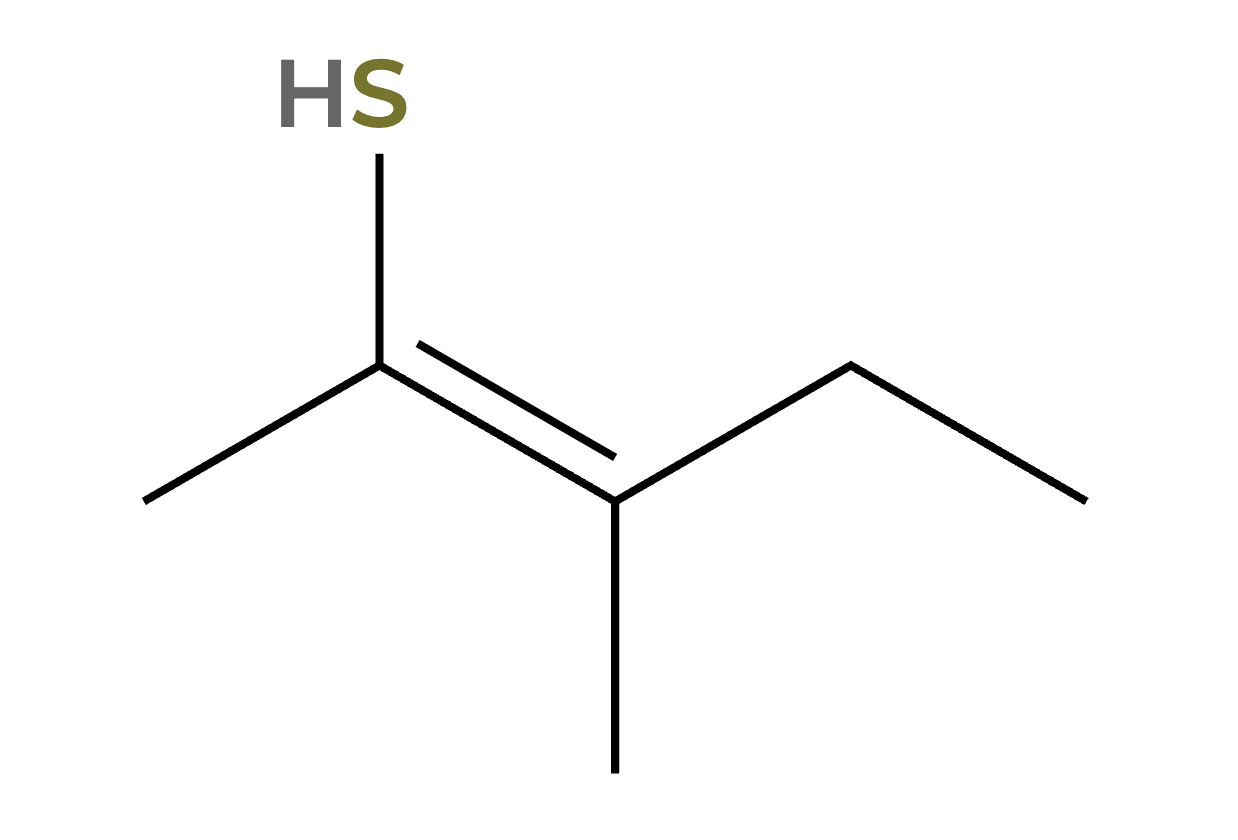
In this case, this structure is trans, you would think its E for enemies? This is WRONG: remember, that E/Z depends on CIP rules. In this case, the SH has higher priority, therefore the structure is Z. Rule to rememmber: Cis/trans: Longest carbon chain. E/Z: CIP
Section 6
Comparing Two Structures
When you are handed two structures and asked how they relate, I want you running the same decision process every time instead of guessing. Walk these four questions in order.
Same connectivity?
If the atoms are connected differently, they are constitutional isomers and you can stop here. If the connectivity matches, keep going.
Are they identical?
If every stereocenter and every double-bond geometry matches, they are the same compound, just drawn differently.
Are they mirror images?
If they are non-superimposable mirror images of each other, they are enantiomers.
Stereoisomers but not mirror images?
If they are stereoisomers and are not mirror images, they are diastereomers.
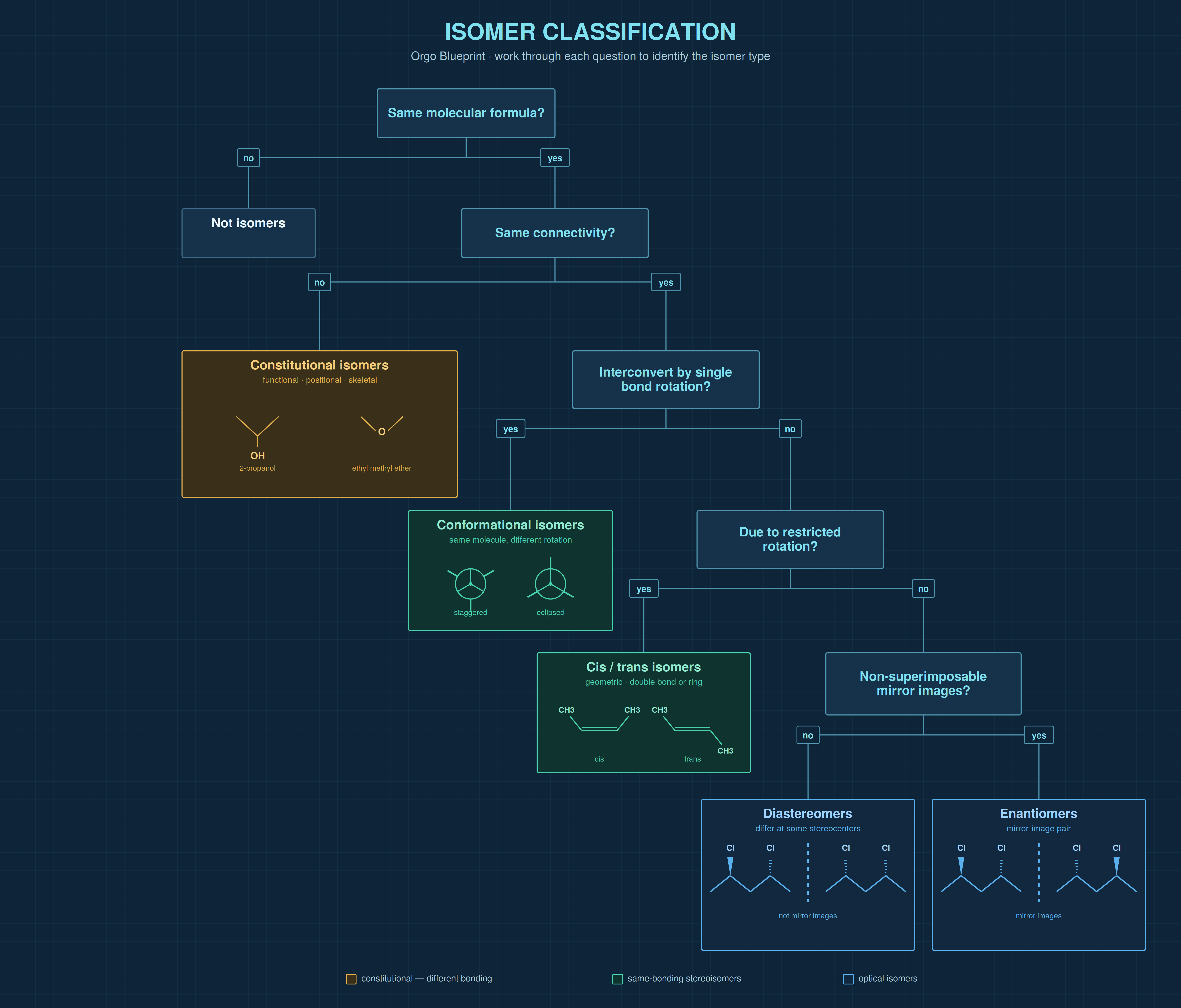
Isomer decision flowchart
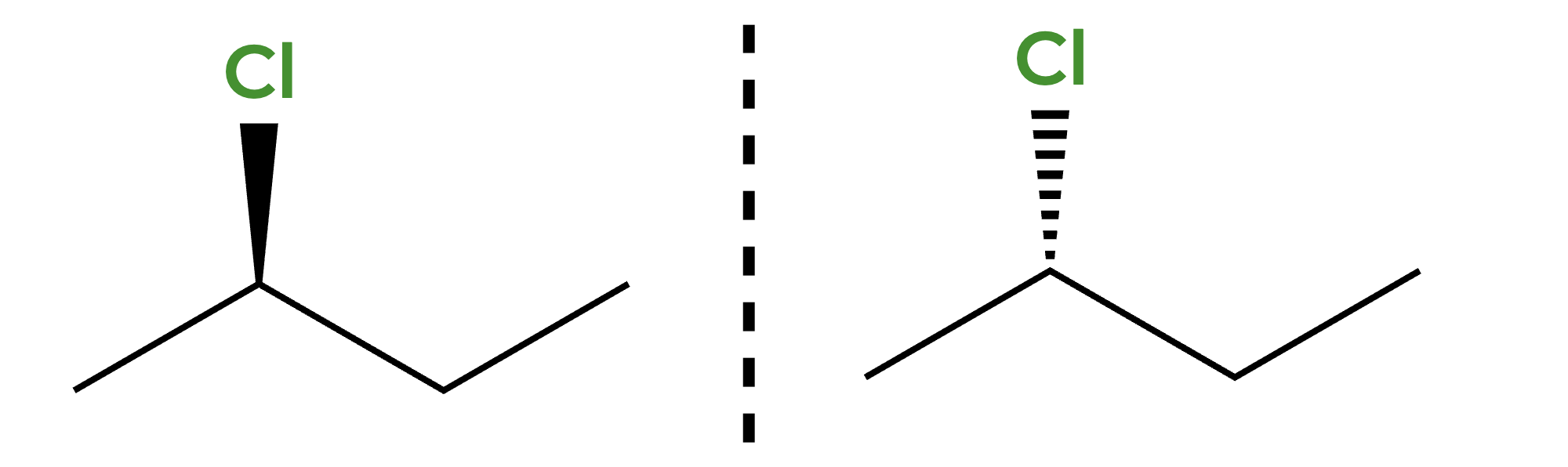
Enantiomers: mirror images
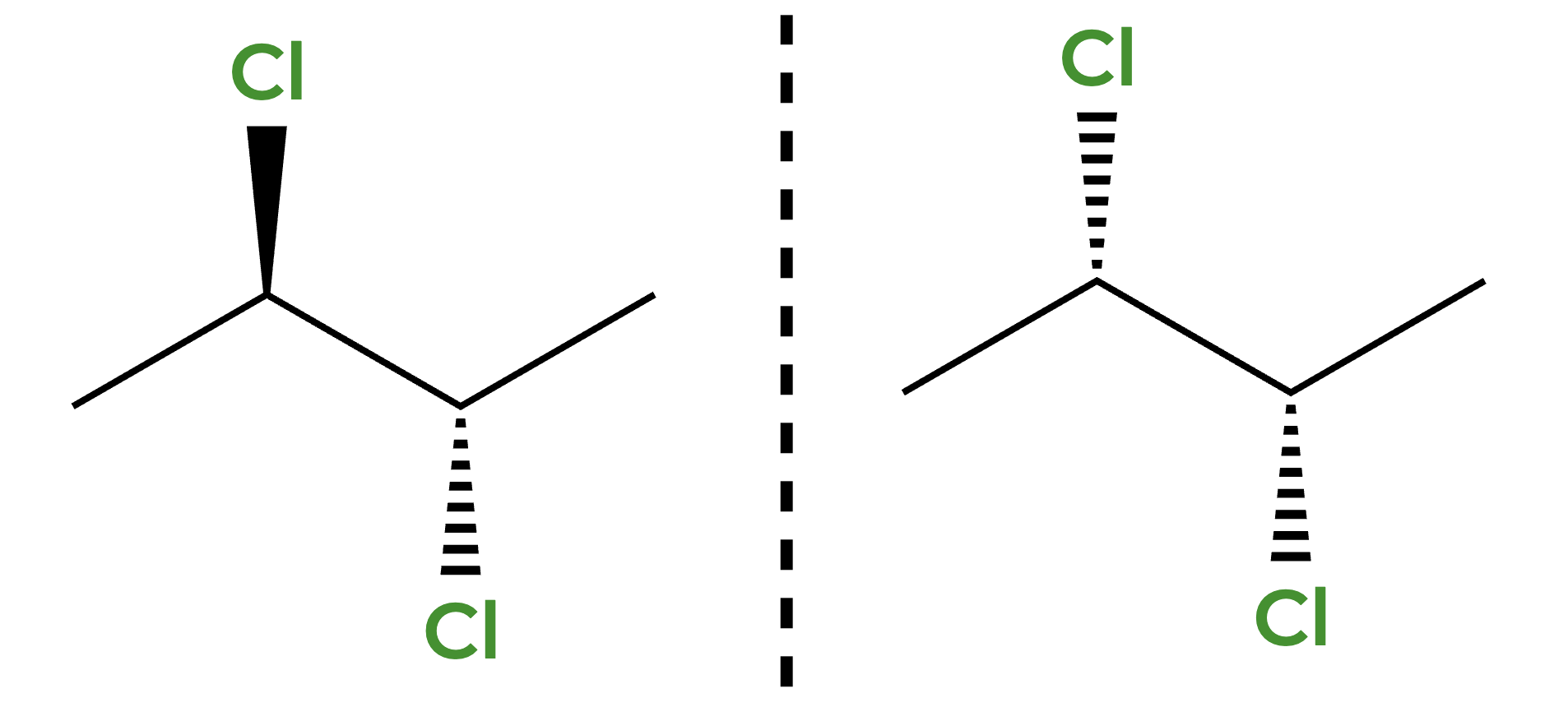
Diastereomers: not mirror images
The two definitions to anchor on
Enantiomers are non-superimposable mirror images. Diastereomers are stereoisomers that are not mirror images. Almost every comparison question comes down to deciding which of those two you are looking at.
Section 7
Meso Compounds
This is the section that breaks the assumption most students walk in with: that stereocenters automatically mean a chiral molecule. Not always. A meso compound has stereocenters but is achiral.
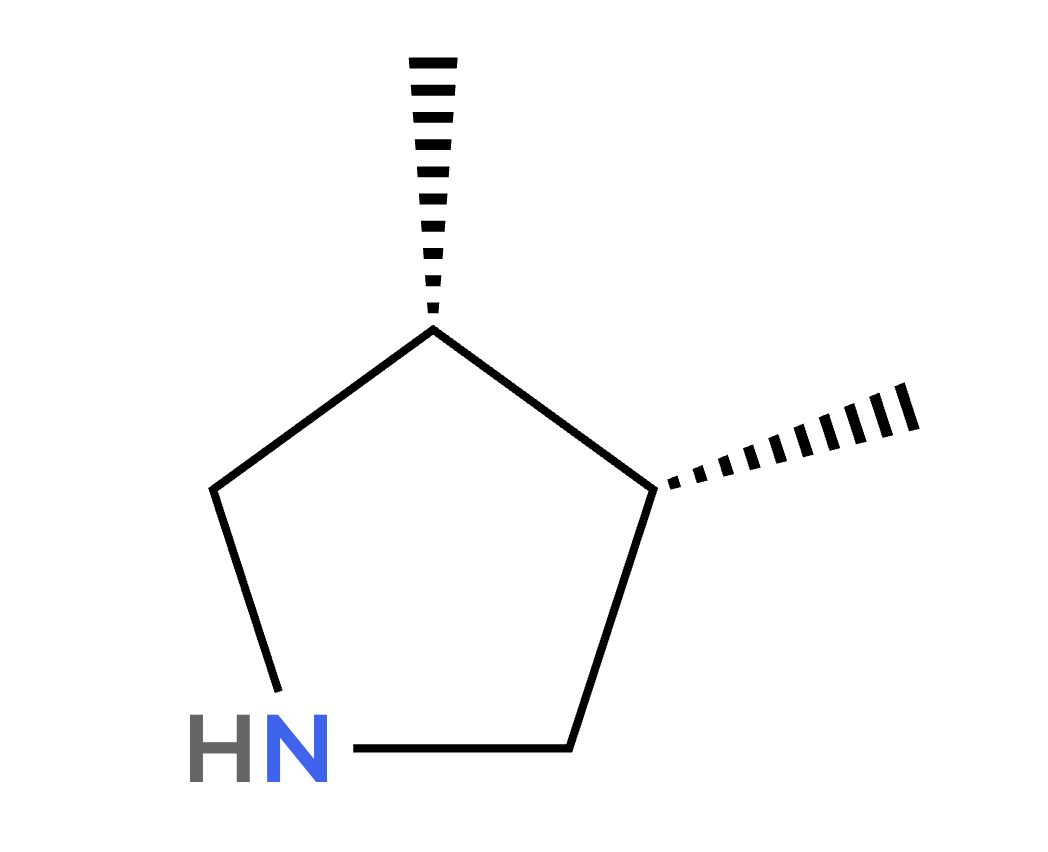
Meso compound: two stereocenters, internal symmetry
A molecule is meso when all of the following are true:
- It has two or more stereocenters.
- It has an internal plane of symmetry that makes one half the mirror image of the other.
- The whole molecule is achiral despite containing stereocenters, so it is not optically active.
The line I want you to remember
A meso compound has stereocenters but is not optically active, because the molecule is internally symmetrical and one half cancels the other. Whenever I see two stereocenters, the first thing I check is whether the molecule could be meso.
Section 8
Optical Activity and Racemic Mixtures
A substance is optically active if it rotates plane-polarized light. A racemic mixture is a 50:50 mixture of two enantiomers. Enantiomeric excess describes how much one enantiomer outweighs the other in a sample.
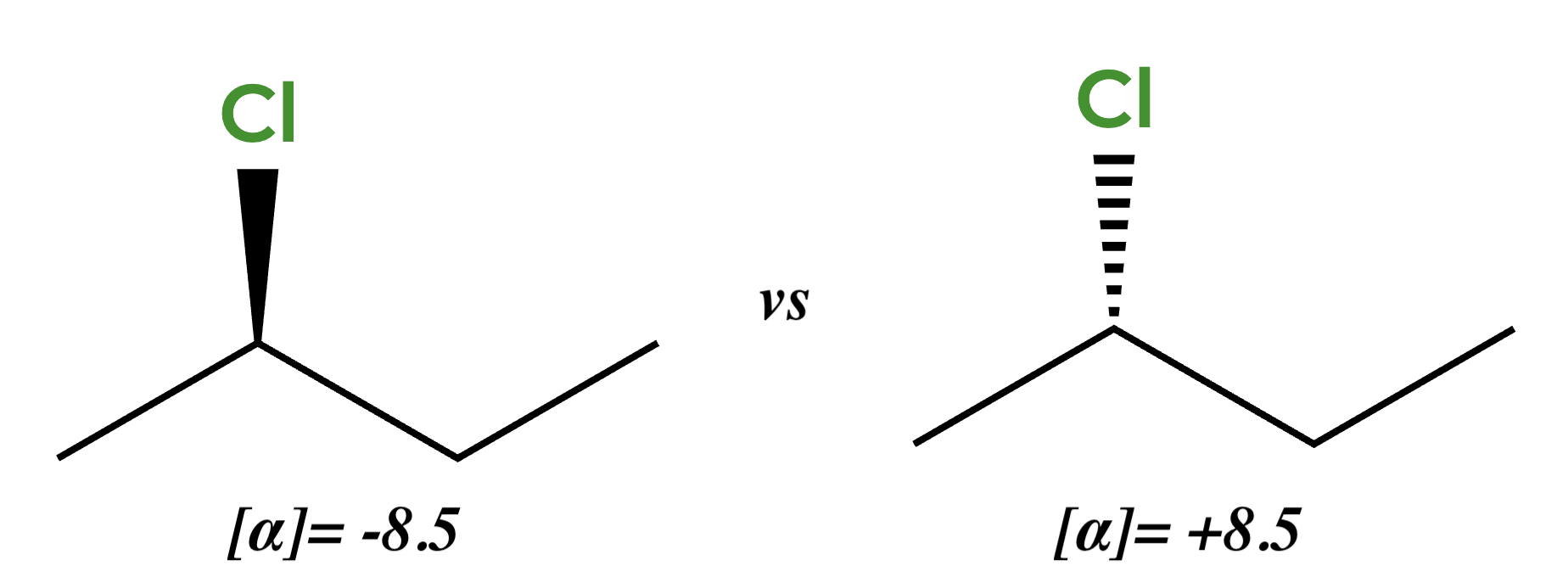
Pure enantiomers rotate polarized light. The numbers are the same with opposite symbols.
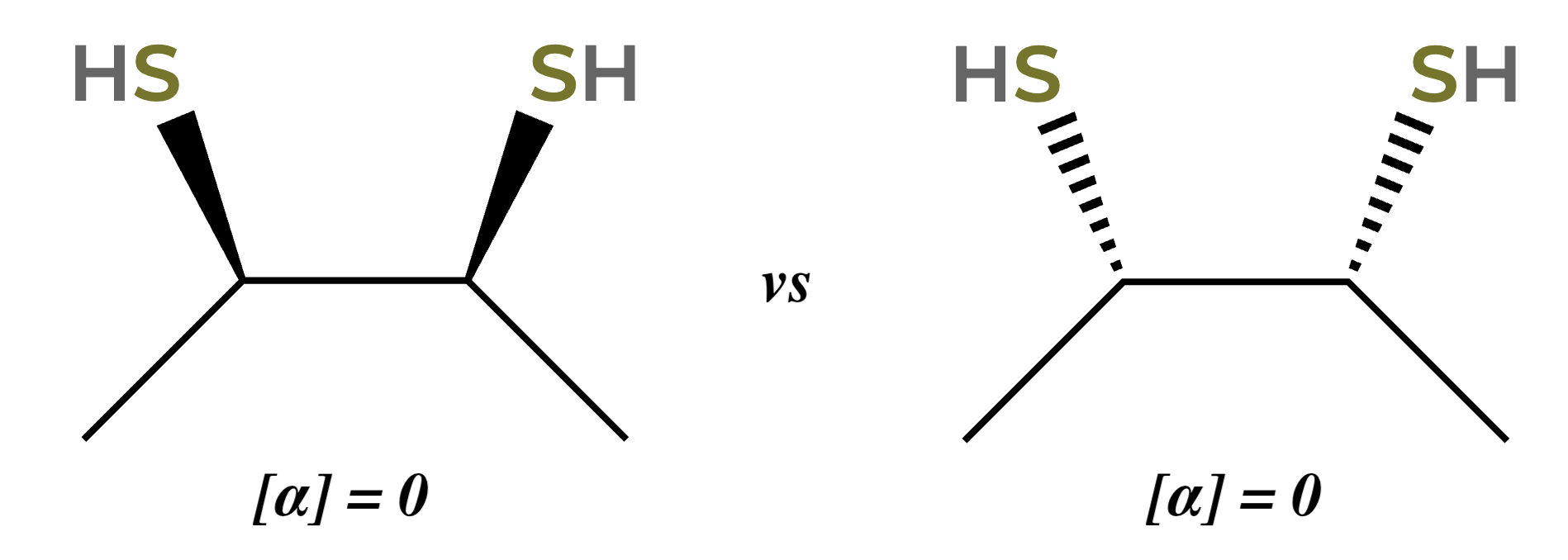
A meso compound shows no net rotation
A pure single enantiomer rotates plane-polarized light. A racemic mixture shows no net rotation, because the two enantiomers rotate light by equal and opposite amounts that cancel out.
Do not confuse these two
R/S does not tell you the sign of the rotation. A molecule labeled R can rotate light in either direction. The only way to know whether something is (+) or (−) is to measure it, so never try to predict the sign from the R/S label.
Section 9
Fischer Projections
A Fischer projection is a flattened way to draw a stereocenter, and it has its own built-in convention: every horizontal bond points toward you, and every vertical bond points away from you. Once you trust that convention, these are fast to read.
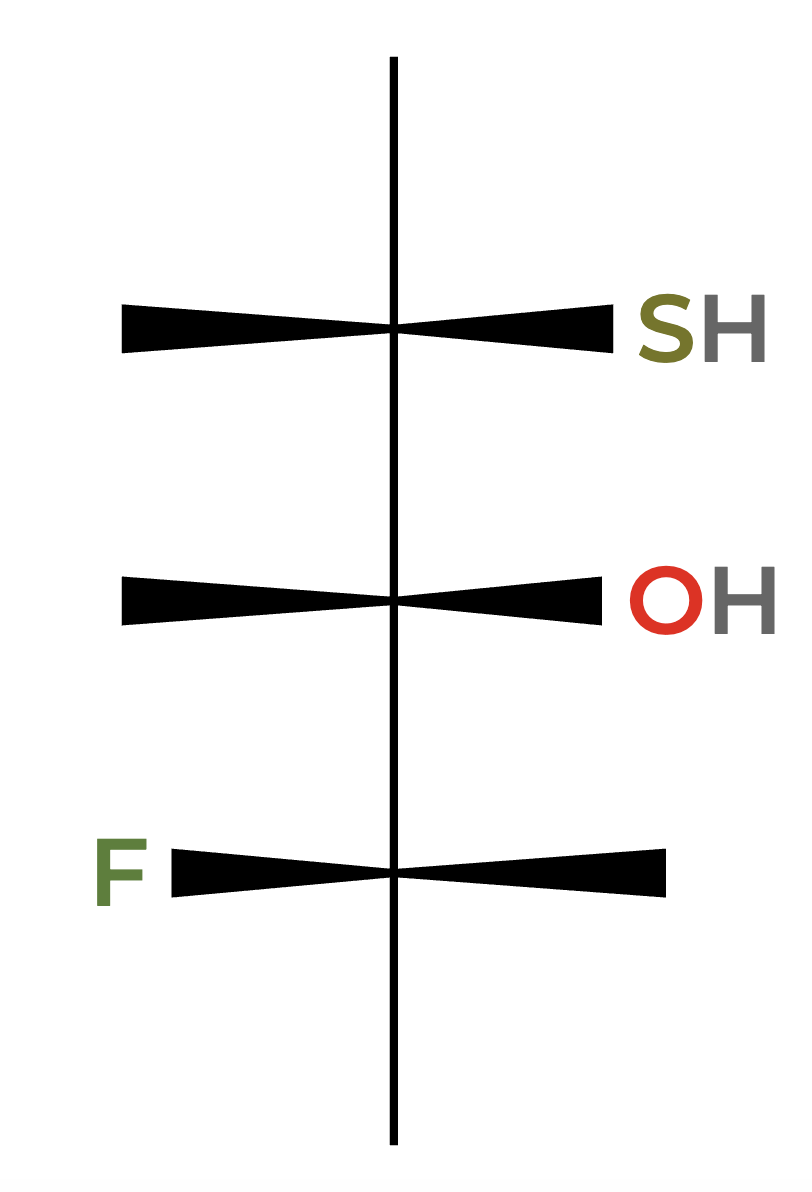
Horizontal toward you, vertical away
Assigning R/S from a Fischer projection works the same as always, with one shortcut for the lowest-priority group. If priority 1 sits on a horizontal bond, it is already towards you, so read the 1 to 2 to 3 path normally. If priority 1 sits on a vertical bond, it is pointing away from you, so reverse your result.
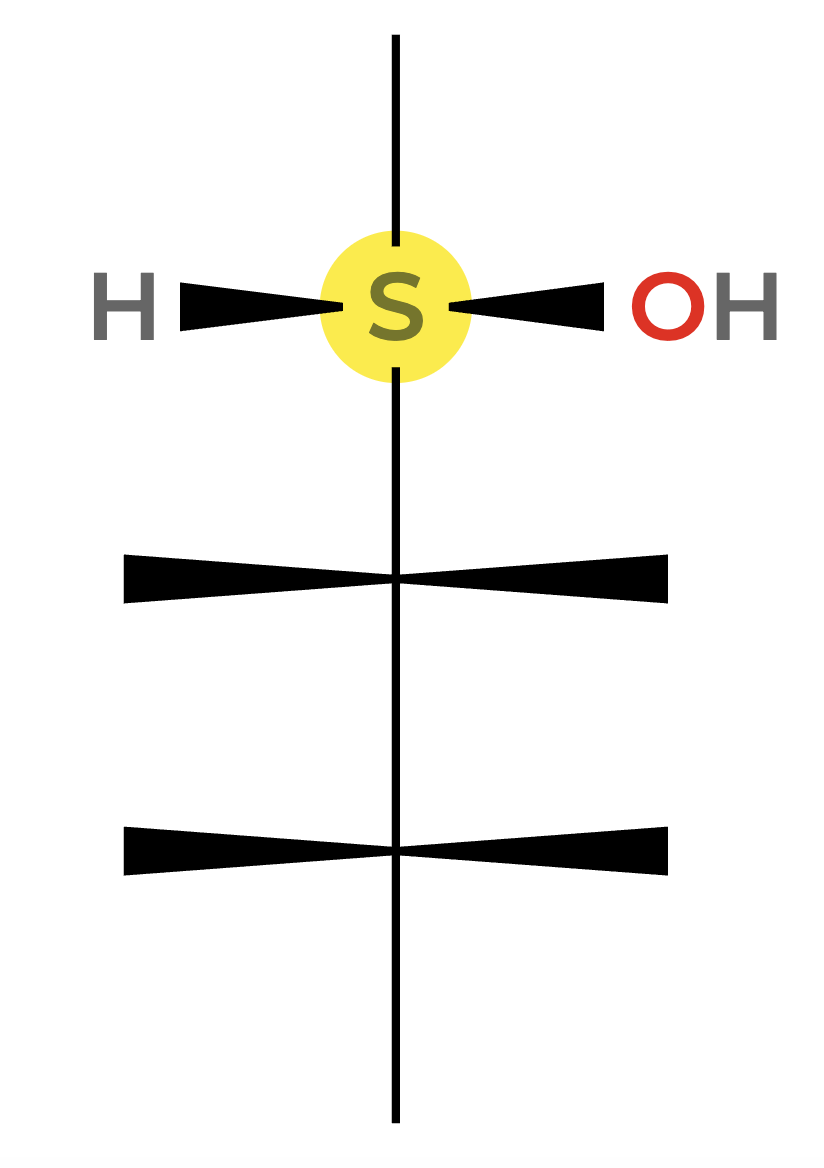
Priority 1 vertical: reverse the answer
The rotation rule I never break
You can rotate a Fischer projection 180 degrees and it stays the same molecule. You cannot rotate it 90 degrees, because that quietly inverts the stereochemistry and turns the molecule into its enantiomer. When in doubt, I only ever spin them by 180.
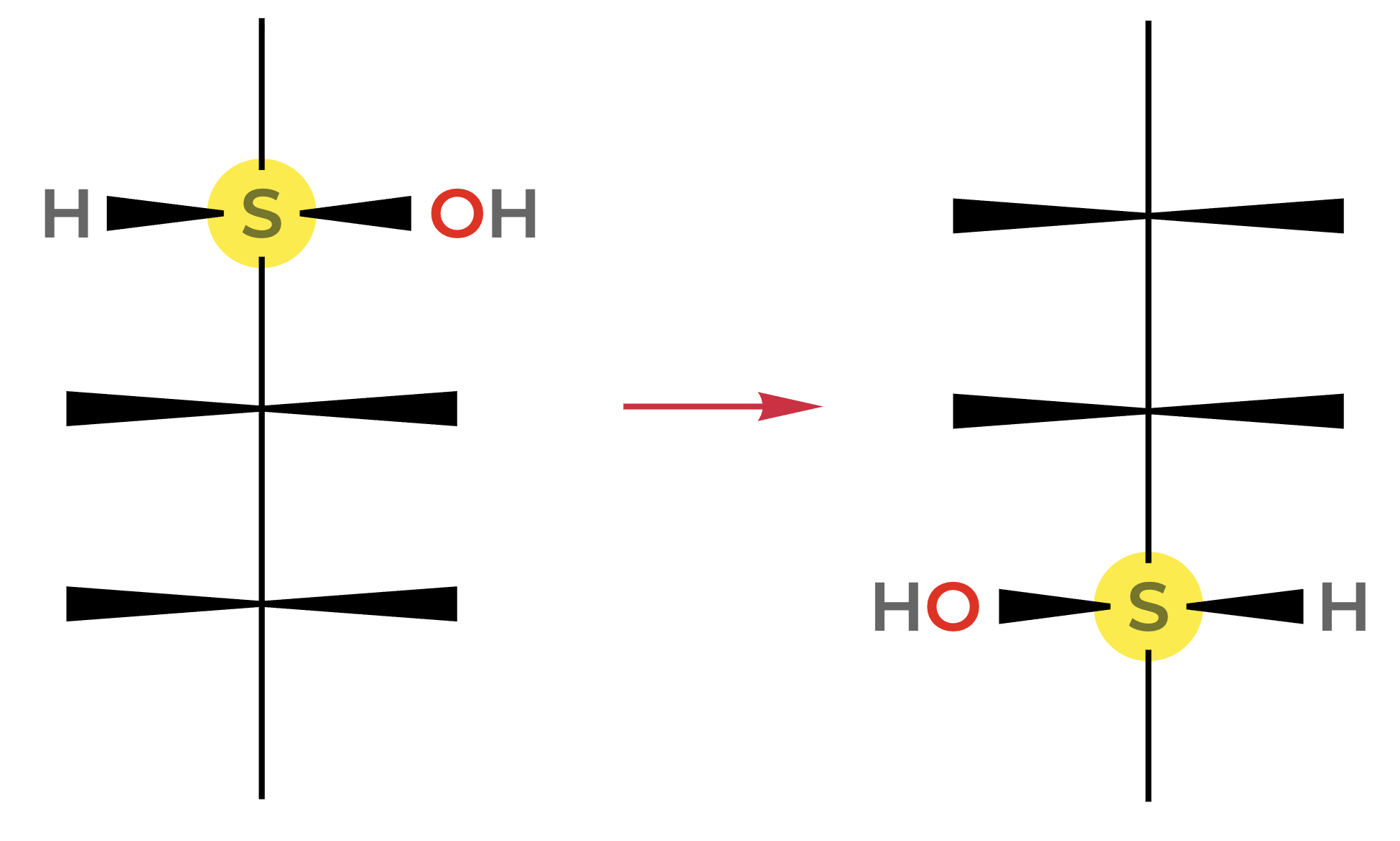
The above rotation is allowed. 180 is safe, 90 inverts
Section 10
A First Look at Stereochemistry in Reactions
Here is why all of this pays off. Reactions can create, destroy, or invert stereochemistry, and that turns everything in this lesson into a predictive tool rather than just a naming exercise.
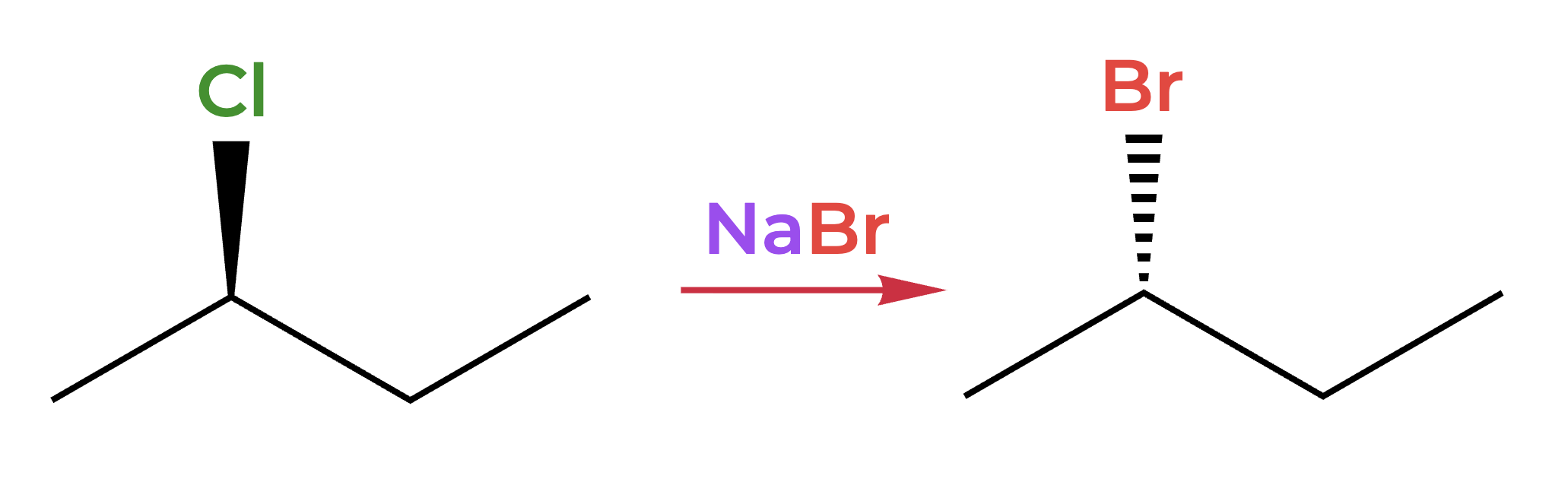
Reactions can set or flip 3D arrangement
Two ideas to carry forward. Some reactions favor one stereochemical product over another, and some reactions depend heavily on the stereochemistry of the starting material. I am keeping this short on purpose. The full mechanisms come in the substitution, elimination, and addition lessons, where you will use exactly the R/S and E/Z skills you just built.
Why I put this here
I want you finishing this lesson knowing stereochemistry is not trivia. It decides the outcome of real reactions, and the payoff shows up the moment we start pushing arrows in the reactions lessons.
Common Mistakes
Watch Out for These
Practice Set
Try each question before opening the answer.
1. In a wedge-dash drawing, which way does a wedge bond point?
Answer: Toward you, out of the page. A dash points away from you, behind the page, and a plain line stays in the plane of the page.
2. What is the most common definition of a stereocenter?
Answer: An sp³ carbon bonded to four different groups. Swapping any two of those groups produces a different stereoisomer.
3. Rank these by CIP priority: Br, H, OH, CH₃.
Answer: Br > OH > CH₃ > H. Priority follows atomic number at the first atom: Br (35) > O (8) > C (6) > H (1).
4. You trace priority 1 to 2 to 3 clockwise, but priority 4 is pointing toward you. Is it R or S?
Answer: S. Clockwise normally means R, but because the lowest-priority group is pointing toward you instead of away, you reverse the answer.
5. What does Z mean for an alkene?
Answer: The two highest-priority groups (one on each alkene carbon) are on the same side of the double bond. Z = zame zide. E means they are on opposite sides.
6. Two structures have the same connectivity and are non-superimposable mirror images. What are they?
Answer: Enantiomers. If they had the same connectivity, were stereoisomers, but were not mirror images, they would be diastereomers instead.
7. Can a molecule have stereocenters and still be achiral?
Answer: Yes. A meso compound has two or more stereocenters but an internal plane of symmetry, which makes the whole molecule achiral and optically inactive.
8. Does a racemic mixture rotate plane-polarized light?
Answer: No net rotation. A racemic mixture is 50:50 of two enantiomers, and their equal and opposite rotations cancel out.
9. In a Fischer projection, which way do horizontal bonds point?
Answer: Toward you. Vertical bonds point away from you. If priority 1 ends up on a vertical bond, reverse your R/S result.
10. Why can you rotate a Fischer projection 180 degrees but not 90 degrees?
Answer: A 180 degree rotation keeps horizontal bonds horizontal and vertical bonds vertical, so the stereochemistry is preserved. A 90 degree rotation swaps horizontal and vertical, which inverts the configuration.
Ready for a bigger set?
Work through the full Stereochemistry practice page: assigning R/S and E/Z, finding stereocenters, spotting meso compounds, and classifying enantiomers versus diastereomers.
Do Stereochemistry PracticeLesson Summary
Stereochemistry is about molecules with the same connectivity but different 3D arrangements. Read wedges and dashes first, then find stereocenters (sp³ carbons with four different groups), assign R/S by ranking with CIP rules and tracing 1 to 2 to 3 with priority 4 facing away, and assign E/Z by comparing the top-priority groups across a double bond. Compare two structures with the same four-step process every time to land on enantiomers, diastereomers, or identical. Watch for meso compounds, which carry stereocenters but stay achiral through internal symmetry. All of this becomes a prediction tool the moment reactions start changing 3D arrangement.